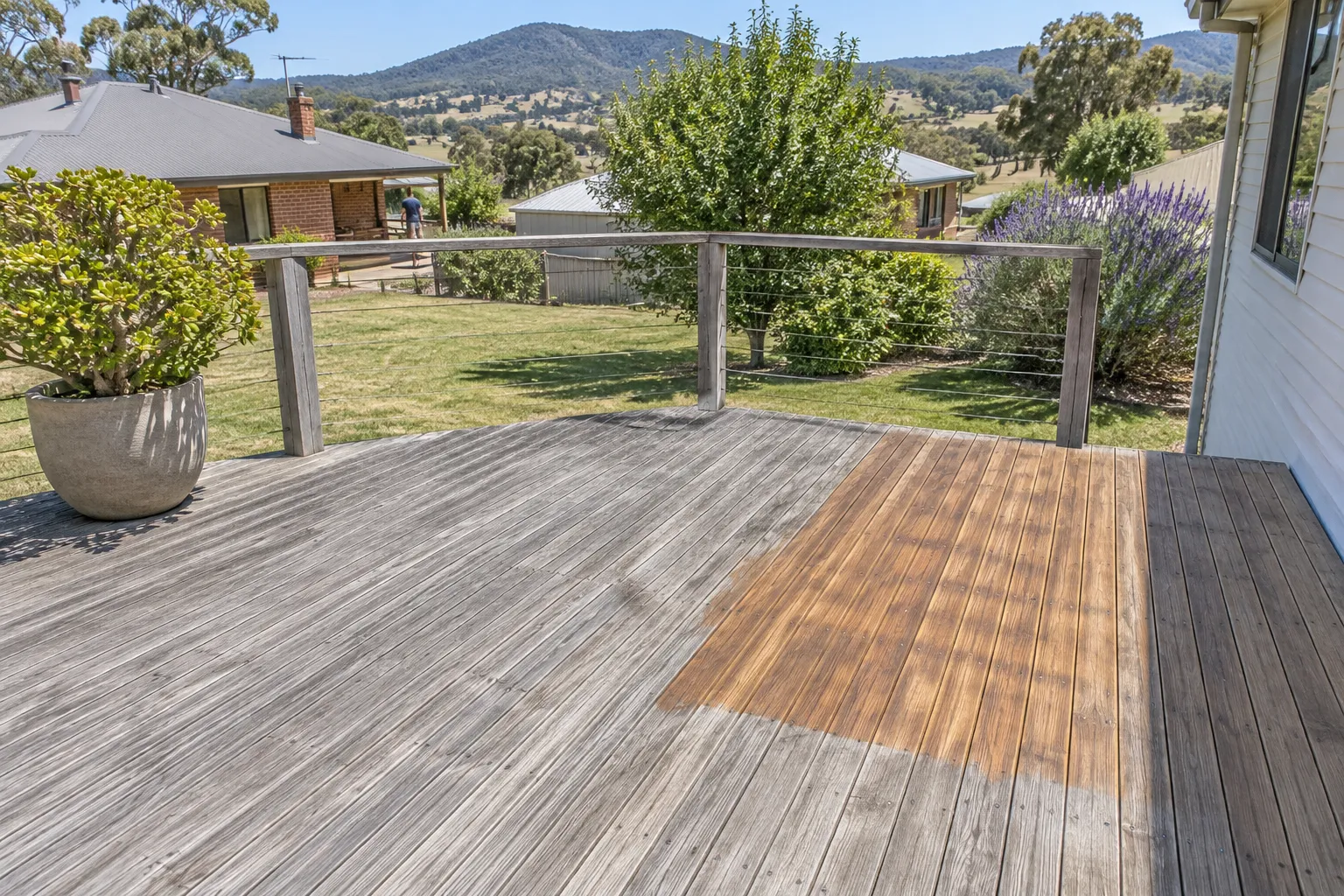
Deck restoration in Albury usually costs about $15 to $35 a square metre for a clean and re-oil on a deck that's been looked after, about $35 to $70 for a full sand back and two coats, and about $55 to $95 where a failed film stain has to be stripped first, according to published 2026 NSW price guides. So a 30 square metre deck often costs $450 to $900 to re-oil, or $900 to $1,900 to prepare and recoat properly. For how oiling is done and when, see our main deck oiling, staining and restoration page. When you want a firm price, we'll arrange a visit and a local deck specialist gives you a written quote.
What does deck restoration cost per square metre?
It depends on how far gone the deck is. Published NSW guides put a clean and re-oil at $15 to $35 a square metre, a sand and two coats at about $35 to $70, and stripping a failed coating at $55 to $95. Canberra figures for sanding and oiling are similar, around $28 to $66 with $44 typical. South Australian guides run higher for full restoration, up to $120.
| Level of restoration | Per m2 (NSW guide) | 30 m2 deck |
|---|---|---|
| Clean and re-oil | $15 to $35 | $450 to $1,050 |
| Sand back and two coats | $35 to $70 | $1,050 to $2,100 |
| Strip failed stain, then recoat | $55 to $95 | $1,650 to $2,850 |
A second NSW guide puts a typical 30 square metre clean and re-oil at $450 to $900, and a prepared two-coat job at $900 to $1,900. Materials for a 30 square metre deck are estimated at about $180 to $420 if you do it yourself.
Which level of restoration does your deck need?
If water still beads on the boards and they're only a little dull, a clean and re-oil is usually enough. If the boards are grey, rough, splintering or water soaks straight in, they need sanding back to fresh timber first. If an old stain or paint is flaking off in patches, it has to be stripped or sanded completely, because new oil won't soak through it.
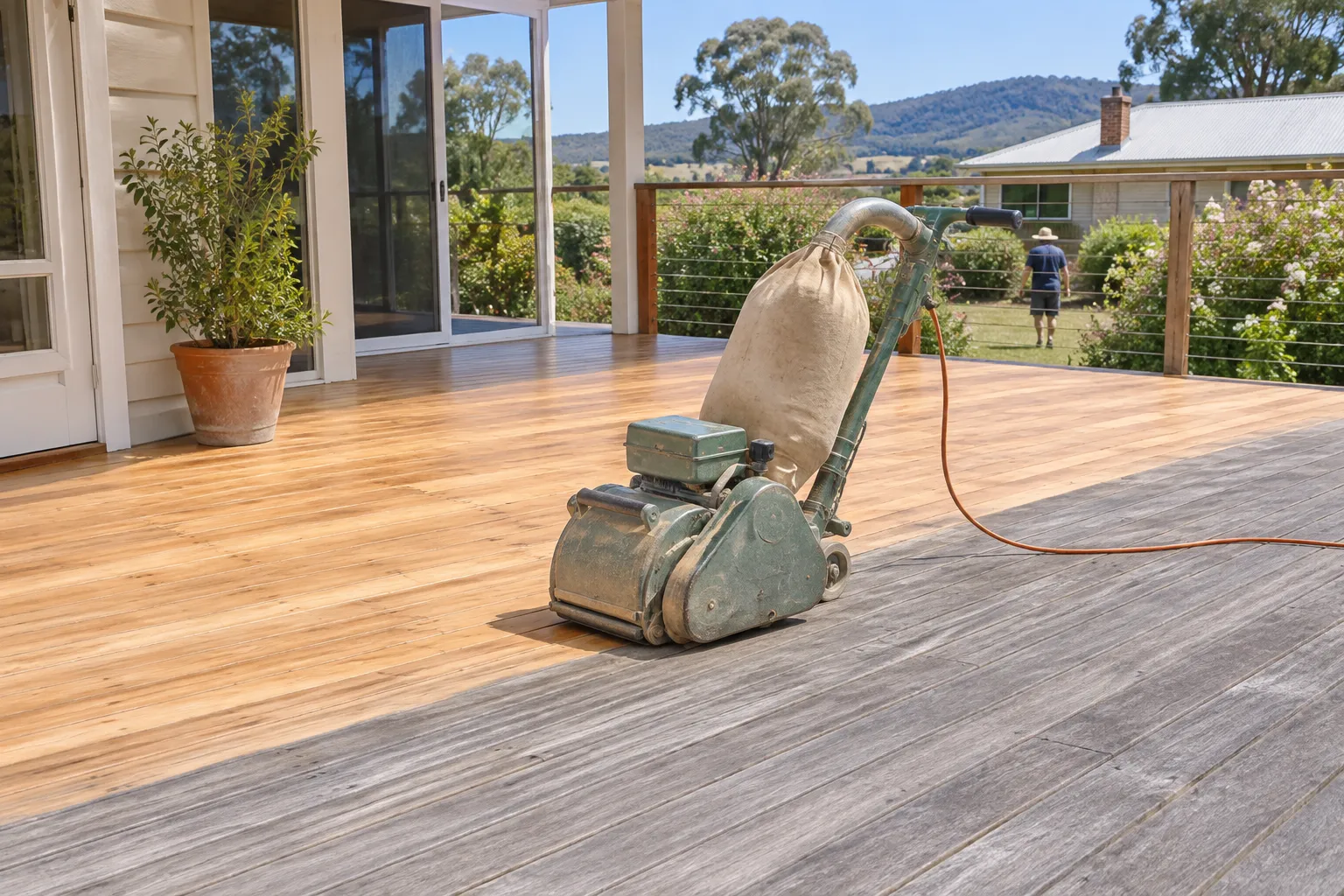
A quick check you can do:
- Sprinkle water on a board. Beads up: re-oil soon. Soaks in and darkens: time to restore.
- Run your hand along a board. Smooth: clean and oil. Rough or furry: sand.
- Look for peeling. Patches of old coating lifting off: strip or sand.
- Press boards with a screwdriver. Soft or spongy: the board may be rotten and need replacing, not just oiling.
For the DIY prep, see how to clean a deck before oiling and cleaning timber decking.
What pushes the cost of deck restoration up or down?
The deck's condition moves the price most, then its size, the old finish, access and the product. A well-kept deck needs a light clean and one or two coats. A neglected one needs sanding, filling, screw tightening and maybe some boards replaced. Steps, balustrades and screens are slow to sand and coat, so they cost more per square metre than flat decking.
Other things that change the price:
- Old film stain or paint. Stripping costs more than re-oiling over oil.
- Board repairs. Replacing rotten or split boards is usually priced per board or by the hour.
- Fixings. Popped nails and rusted screws replaced with new stainless or galvanised screws.
- Product. Premium decking oils cost more per litre.
- Weather. Restoration needs dry days, so a wet spell delays it.
How much does it cost to stain or paint a deck?
Staining a deck usually costs about the same as oiling it, because the preparation is the same and the coats go on the same way: around $15 to $35 a square metre on a sound deck and $35 to $70 with sanding, in published guides. Painting a deck often costs more, because paint needs thorough preparation and more coats, and it peels later.
Painted decks look neat at first, but solid paint traps water if it cracks, and stripping it later is the most expensive restoration of all. For most hardwood decks around Albury, a penetrating oil or a tinted oil is easier to maintain. See deck oil vs stain and painting decking timber.
Is it cheaper to restore or replace a deck?
Restoring is almost always much cheaper when the frame is sound, often a few dollars to under a hundred a square metre, compared with roughly $180 to $700 a square metre to build a new deck in published guides. Replacing makes sense when the frame is rotten, the footings have moved, or many boards are soft. Re-boarding a sound frame sits in between.
A builder can check the frame from underneath and tell you which option makes sense. See replacing deck cost and repair or replace deck boards.
Can you restore a deck yourself?
Yes. A clean and re-oil is a straightforward DIY job for a fine weekend, and you'll mostly pay for the cleaner, the oil and a good applicator. Sanding a whole deck is harder work and needs a floor sander or a large orbital sander. Stripping an old film stain is the hardest part. Products and timing matter more than tools.
A few tips for DIY:
- Pick two dry days in a row. Cabot's lists a 6 hour recoat time at 25 degrees and 50% humidity, longer when it's cooler.
- Don't oil in hot midday sun. It dries before it soaks in.
- Work board by board, end to end, so there are no lap marks.
- Wipe off excess. Oil that doesn't soak in stays sticky.
See how to oil a deck for the full method.
Questions people ask
How long does a deck restoration take?
A clean and re-oil on a 30 square metre deck usually takes a day or two, plus drying time. A full sand back and two coats often takes two to four days. Stripping an old coating adds more. The deck needs dry weather before and after, so a wet week can push it back. The specialist gives you a timeframe with the quote.
What should you ask before hiring someone to restore a deck?
Ask what level of preparation they'll do (clean, sand or strip), which product and how many coats, whether loose screws and damaged boards are included or extra, how they'll protect walls, windows and garden from oil and dust, and how long you must stay off the deck afterwards. Ask for it in writing.
Do you need to be home while a deck is restored?
Not usually. Most specialists need access to the deck, a tap and power, and the furniture moved off. Agree on which days they'll work, and keep pets and children off the deck until the oil has dried. You'll want to look over the finished deck with them, so be around at the end if you can.
How often does a deck need restoring in Albury?
With a clean and re-oil every 12 to 24 months, many decks never need a full sand back. Decks left for three or four years in Albury's sun usually go grey and rough and need sanding. West-facing and unshaded decks wear fastest. See how long decking oil lasts.
Budget sorted? deck builder across Albury explains the rest of the job.
Where these facts come from
- Cabot's Natural Decking Oil, product data sheet (recoat times at 25C and 50% humidity)
- Published deck oiling and restoration prices from four Australian cost guides covering NSW, South Australia, Canberra and Brisbane, checked November 2026
Updated