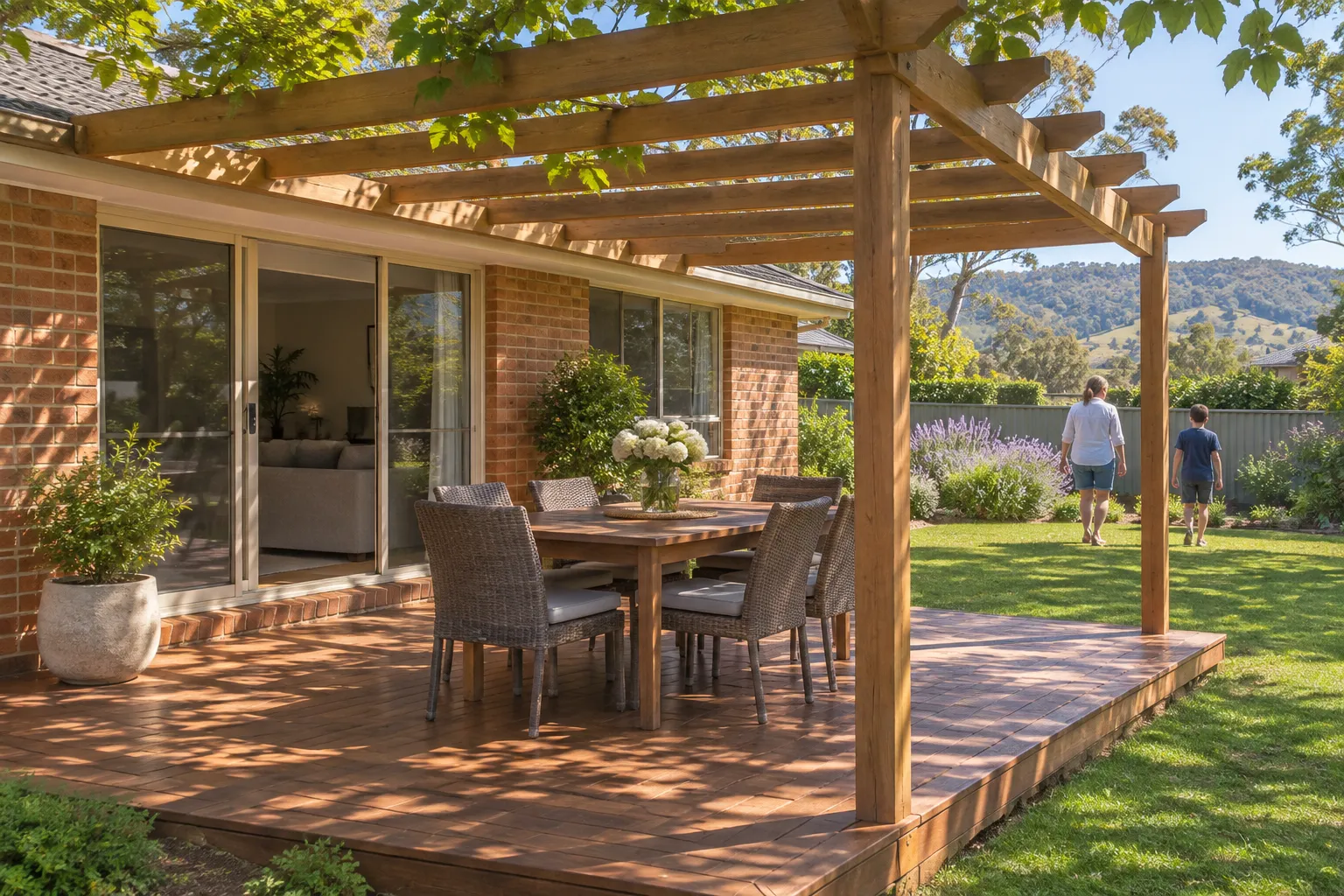
A professionally built pergola in Australia usually costs somewhere between $2,000 and $18,000, and one national guide says most homeowners spend about $6,000 to $9,000. The roof is the biggest factor: published Victorian figures put an open timber pergola at about $3,000 to $7,000, polycarbonate at $5,000 to $12,000, Colorbond at $6,000 to $15,000 and an insulated panel roof at $10,000 to $25,000. For styles, kits and approval in detail, see our main pergolas page. This page is about cost. When you want a firm figure, we'll arrange a visit and a local builder gives you a written quote.
How much does a pergola cost by roof type?
The cheapest pergola is an open timber frame with no roof, at about $3,000 to $7,000 installed in published Victorian figures. Adding a polycarbonate roof takes it to about $5,000 to $12,000, Colorbond to about $6,000 to $15,000, and insulated panels to about $10,000 to $25,000. Louvred roofs and large spans can go higher again.
| Roof type | Typical installed cost | What you get |
|---|---|---|
| Open timber, no roof | $3,000 to $7,000 | Filtered shade, no rain cover |
| Polycarbonate | $5,000 to $12,000 | Light and rain cover |
| Colorbond sheet | $6,000 to $15,000 | Full shade and rain cover |
| Insulated panel | $10,000 to $25,000 | The coolest shade, quiet in rain |
| Open steel frame, no roof | $5,000 to $12,000 | Long spans, low upkeep |
The open steel figure is from a South Australian guide, which also puts large covered insulated steel pergolas at $35,000 or more. For more on the steel roof option, see Colorbond pergolas.
What else changes the cost of a pergola?
After the roof, size and height matter most, then whether it's attached to the house or freestanding, the material of the frame, the site, and approval. Extras such as gutters, lights, ceiling fans, outdoor blinds and paint or stain add more. A small open pergola on flat ground is cheap. A large roofed one on a slope, fixed to a two-storey wall, is not.
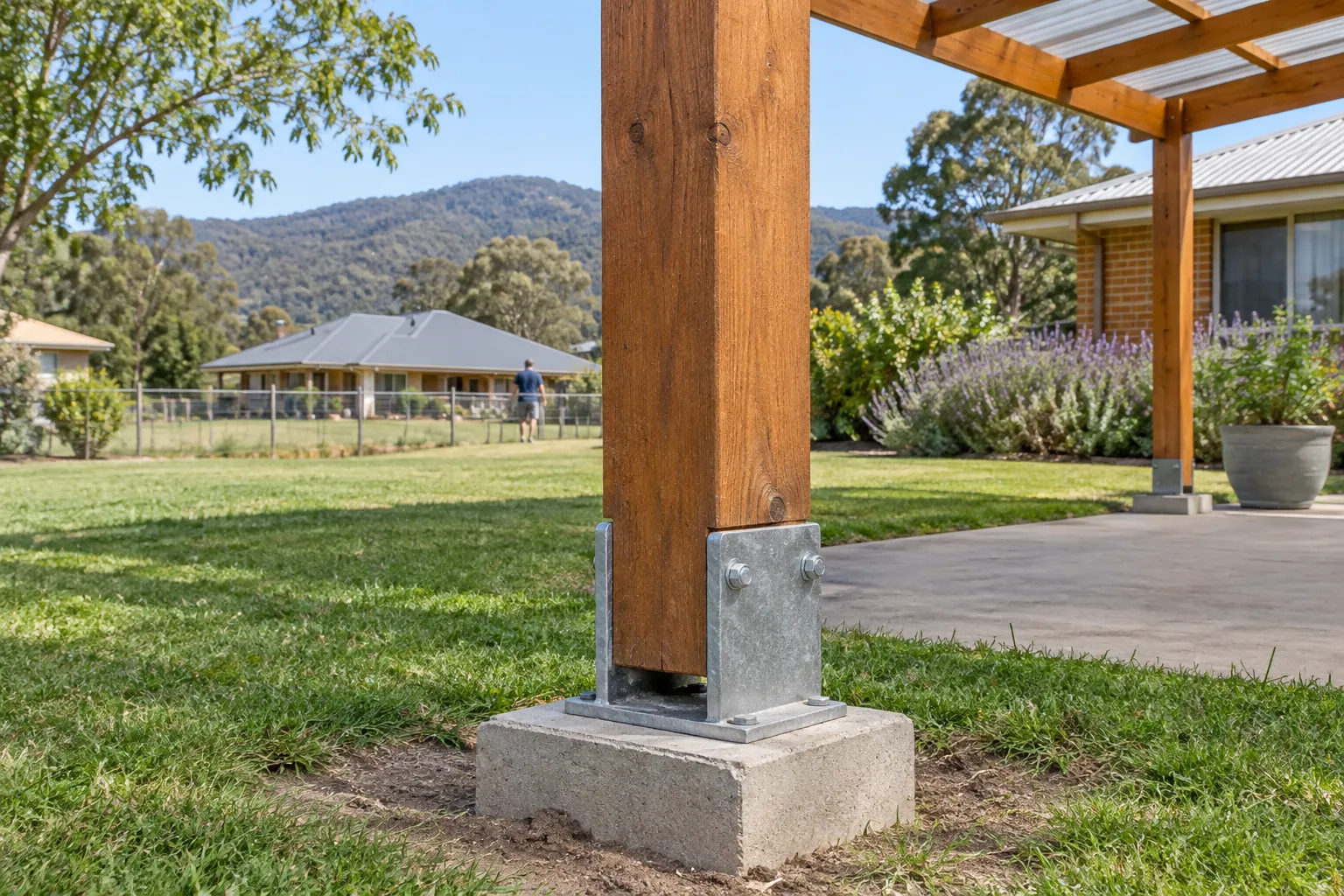
The common add-ons, roughly in order of cost:
- Size. Bigger pergolas need deeper beams or more posts.
- Frame material. Treated pine is cheapest, hardwood and steel cost more, aluminium more again.
- Attached or freestanding. Attached saves posts, freestanding saves the house fixing.
- Gutters and downpipes. Needed on any solid roof.
- Electrical. Lights and fans must be wired by a licensed electrician.
- Blinds and screens. For wind and winter.
- Approval. Fees, drawings and sometimes engineering.
How much does an aluminium pergola cost?
Aluminium pergolas, including louvred aluminium roofs, usually sit at the higher end of pergola prices, above timber and plain steel of the same size, because of the material and the moving parts on louvred models. Published guides don't give one clean national figure for aluminium alone. Expect it in the upper half of the ranges above, and get a written quote for your size.
Aluminium appeals because it doesn't rot, rust in the usual way or need painting. Kits range from simple fixed frames to motorised louvres. For the DIY side, see DIY louvred pergola kit.
Is it cheaper to buy a pergola kit or have one built?
A kit is often cheaper upfront if you do the work yourself, because you skip the builder's labour and design. It isn't always cheaper overall: you still pay for footings, concrete, fixings, delivery and approval, and mistakes on footings or the house fixing are costly to fix. Having a builder install a kit is a common middle path.
When a kit usually saves money:
- A simple, standard-sized, freestanding pergola on flat ground.
- When you're confident with footings, levels and a ladder.
When building custom often makes more sense:
- Odd shapes or sizes that a kit won't fit without cutting.
- Slopes and tricky access.
- Fixing to a two-storey wall or a complicated roof line.
Kit brands like Stratco sell through local dealers, and price depends on size and options. See the Stratco pergola price list guide for what affects kit prices.
How do you build a pergola on a budget?
The cheapest way to get a good pergola is to keep it simple: a freestanding or attached open timber frame in treated pine, at a standard size, on flat ground, with no roof. Add shade cloth or a sail for summer. You can add a roof later if the posts and beams are sized for it from the start.
Budget tips that don't backfire:
- Size the frame for the roof you'll want later. Upgrading posts later costs more than doing it now.
- Stay within exempt development rules in NSW if you can, to avoid approval costs.
- Choose a pale roof. It keeps the area cooler, so you may not need insulated panels.
- Skip built-in extras at first. Lights and fans can come later if the wiring is planned.
For layout ideas at every budget, see pergola designs and timber pergola designs.
How much do pergola permits and approvals cost?
If your pergola meets every NSW exempt development standard, there's no approval fee. If it doesn't, you'll need a development application or a complying development certificate, with council or certifier fees and sometimes drawings. In Victoria, a roofed pergola or verandah generally needs a building permit from a building surveyor, which has its own fee. Heritage areas can add a planning permit.
Costs vary by council and certifier, so ask for the approval cost to be shown separately in the quote. Our guide to pergola approval explains each path in Albury and Wodonga.
What size timber is used for a pergola, and does it change the cost?
Most timber pergolas use posts of about 90 by 90 or 100 by 100 millimetres and beams from about 140 to 240 millimetres deep, sized from span tables for the span and roof. Bigger spans and solid roofs need bigger timber, which adds cost. Hardwood costs more than treated pine but lasts longer in Albury's sun.
Questions people ask
Are Stratco pergolas good value?
Stratco is a long-established Australian maker of steel pergola and patio kits sold through local dealers, and many homes around Albury have them. Value depends on choosing the right size and roof for your site and having it installed well. Compare a kit quote with a custom quote for the same size and roof, including footings and approval, to see which is better value for you.
What is the best-value pergola?
For most Albury backyards, the best-value pergola is a simple attached frame with a pale Colorbond or polycarbonate roof, sized to the outdoor space you'll actually use. It gives all-weather cover at mid-range cost. An open timber pergola is cheaper but only gives filtered shade. Insulated roofs cost more but suit hot, west-facing areas.
Does a pergola add value to a house?
A well-built pergola can make a backyard more usable and appealing to buyers, especially in a hot climate like Albury's. How much value it adds isn't fixed: it depends on the house, the build quality and the local market. A pergola that needed approval should have it, so it doesn't cause problems when you sell.
How much does a pergola cost per square metre?
Published guides mostly price pergolas by job, not per square metre, because posts and beams cost roughly the same whether the roof is a bit bigger or smaller. As a rough guide, a 3 by 3 metre open timber pergola is about $3,500 to $7,500 in one Western Australian guide. Roofed pergolas are closer to patio prices, about $200 to $600 a square metre.
Budget sorted? Albury deck builder explains the rest of the job.
Where these facts come from
- NSW Planning Portal, exempt development for balconies, decks, patios, pergolas and verandahs
- Victorian Building Authority, landscaping and outdoor structures
- Published installed pergola prices from four Australian cost guides covering Victoria, South Australia, Western Australia and national averages, checked November 2026
Updated