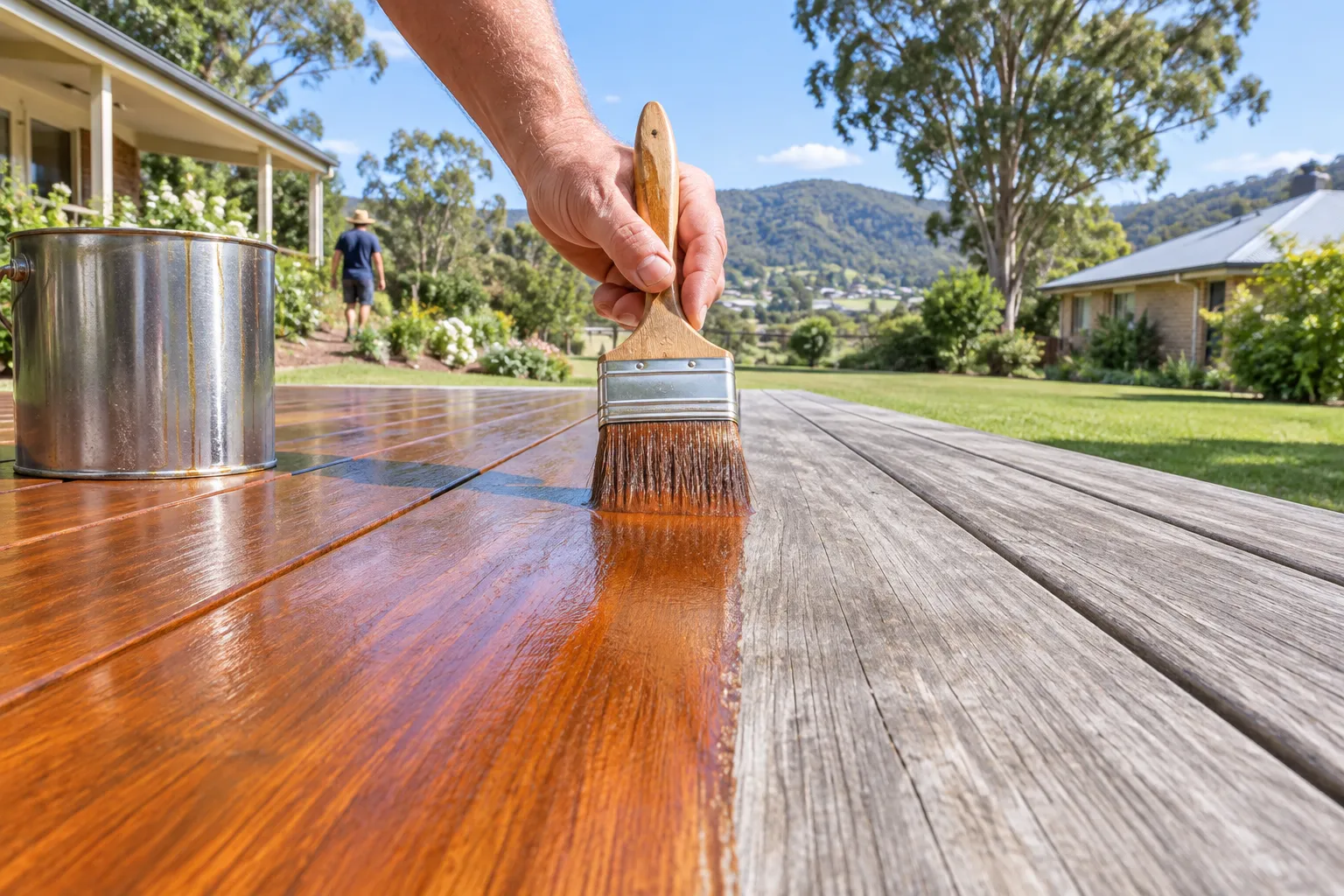
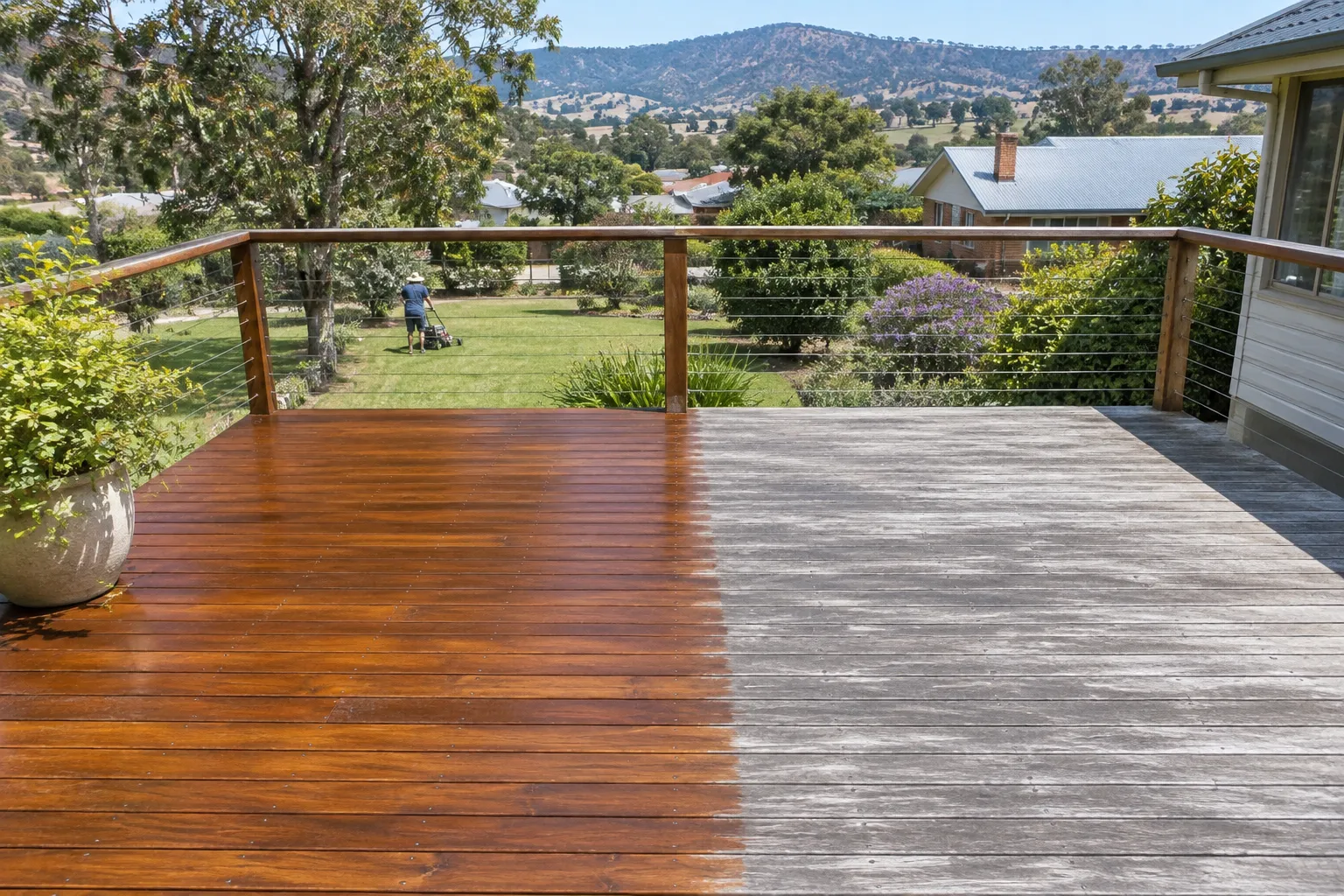
The right decking oil for merbau is usually a penetrating oil in a merbau tint, which keeps the red-brown colour even and soaks into this dense, oily timber. For spotted gum, a natural or lightly tinted penetrating oil shows off its varied colour. Oil-based products penetrate deeper and enrich colour. Water-based products dry faster, smell less and clean up with water. In Albury's strong sun, any good penetrating oil needs a clean and recoat every 12 to 24 months. For when and how to oil, see our main deck oiling, staining and restoration page.
What should you look for in a decking oil?
Look for a penetrating oil made for exterior decks, that suits dense hardwoods, has UV protection, and comes in a tint that suits your timber. Check the drying and recoat times, the coverage per litre, and whether it can be recoated without stripping. Penetrating oils are easier to maintain than film-forming finishes that peel.
| Feature | Why it matters |
|---|---|
| Penetrating, not film-forming | Recoat without stripping |
| Suits dense hardwoods | Merbau and spotted gum resist absorption |
| UV protection | Slows greying in Albury's sun |
| Tint | Evens colour, adds UV resistance |
| Recoat time | Fits a two-coat job into a day |
Oil-based or water-based decking oil?
Oil-based decking oils soak deeper into dense timbers, enrich the colour and are forgiving to apply, but take longer to dry and clean up with solvent. Water-based decking oils dry faster, smell less, clean up with water and some handle light rain on the day, but can sit more on the surface of very dense timbers. Both work well when applied as directed.
| Oil-based | Water-based | |
|---|---|---|
| Penetration | Deeper | Shallower on dense timber |
| Colour | Richer | Lighter |
| Drying | Slower | Faster |
| Clean-up | Solvent | Water |
| Smell | Stronger | Milder |
Cabot's lists a 6 hour recoat time at 25 degrees and 50% humidity for its natural decking oil. Intergrain's water-based UltraDeck says it can withstand light rain on the day of application.
Tinted or natural oil for merbau?
A merbau-tinted oil is the most popular choice, because it keeps the colour rich and even, blends new boards with old, and the pigment adds a little UV protection. A natural or clear oil lets more of merbau's own colour show, but the deck may look patchier as it weathers. See oiling a merbau deck for timing.
Which oil suits spotted gum?
Spotted gum is very dense, so it absorbs less oil than softer timbers. A penetrating oil made for hardwoods, in a natural or lightly tinted shade, suits it well and shows off its varied colours. A tinted oil can even out the difference between pale and dark boards. Apply thin coats and wipe off excess, because dense timber can't take thick coats.
Should you use an oil or a stain on merbau?
For most merbau decks, a tinted penetrating oil is easier to live with than a stain. Oils soak in and can be recoated without stripping. Film-forming stains give stronger colour and last longer between coats, but they peel when they fail and must be sanded off. Semi-transparent stains sit in between. See deck oil vs stain.
How much decking oil do you need?
Check the coverage on the tin, usually given in square metres per litre per coat. Dense hardwoods like merbau and spotted gum generally absorb less than pine, while weathered or freshly sanded boards absorb more. Multiply your deck area by the number of coats, divide by the coverage, and buy a little extra for steps and board ends.
How do you get the best result from any decking oil?
Preparation matters more than the brand. Clean the deck thoroughly, let it dry fully, sand rough patches, apply thin coats along the grain, wipe off excess, and respect the recoat time. Oil in mild, dry weather, out of midday sun. Most problems with decking oil, like stickiness and patches, come from preparation and application, not the product.
See how to oil a deck and why is my deck sticky after oiling.
Questions people ask
What is the best decking oil for merbau?
A good-quality penetrating decking oil in a merbau tint suits most merbau decks, because it evens the colour and suits the dense, oily timber. Whether you choose oil-based or water-based depends on how deep you want the colour, how fast you need it to dry and how you prefer to clean up. Follow the label closely.
What is the best oil for spotted gum decking?
A penetrating oil made for dense hardwoods suits spotted gum, in a natural shade to show its varied colours or a light tint to even them out. Thin coats work best, because spotted gum absorbs less than softer timbers. Recoat every 12 to 24 months in Albury's sun to slow surface checking.
Is water-based decking oil any good?
Yes. Water-based decking oils dry faster, smell less and clean up with water, and some tolerate light rain on the day. On very dense timbers they can sit a little more on the surface than oil-based products. Many owners like them for quick re-oils. Follow the label for preparation and recoat times.
Can you mix different decking oils?
It's best not to switch between very different products without preparing the surface, because some don't bond well over others. Moving from one penetrating oil to another is usually fine after a thorough clean. Moving to or from a film-forming stain usually needs sanding. Check both products' labels first.
This guide is one of many on deck builder albury.
Where these facts come from
- Cabot's Natural Decking Oil, product data sheet (recoat times at 25C and 50% humidity)
- Intergrain UltraDeck Timber Oil, product data sheet
Updated