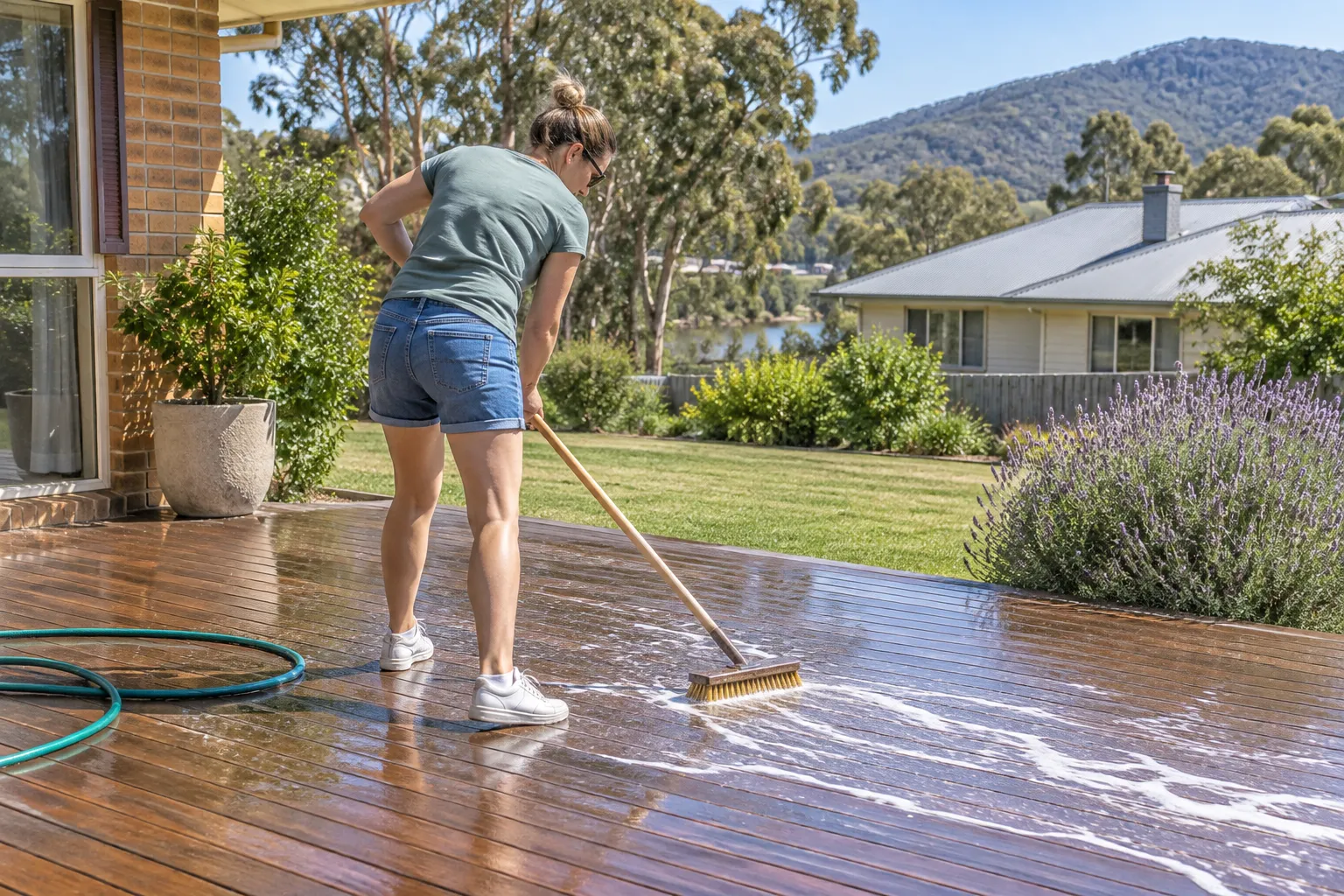
To clean composite decking, sweep it, wet it with a hose, scrub it with warm soapy water and a soft-bristled brush along the boards, then rinse well. Do that a few times a year, plus after big gatherings or leaf fall. For mould, grease or stubborn stains, use a cleaner the board's maker recommends, and always check its care guide first, because some chemicals and pressure washers can void the warranty. For everything else about composite, see our main composite decking page.
How often should you clean composite decking?
Most composite decks around Albury need a proper wash two to four times a year, with a quick sweep every week or two. Shaded decks, decks under trees and decks near gardens need washing more often, because leaves, pollen and damp feed mould and algae. Spills such as wine, oil and barbecue fat should be rinsed off straight away.
A simple routine:
| When | What to do |
|---|---|
| Every week or two | Sweep, clear leaves from the gaps |
| Each season | Wash with soapy water and a soft brush, rinse |
| After autumn leaf fall | Clear gaps and wash before winter |
| After a spill | Rinse and wipe while it's fresh |
How do you wash a composite deck?
Clear the deck, sweep it and clear the gaps between boards so water can drain. Wet the boards with a hose. Scrub with warm water and a mild detergent, using a soft or medium brush along the length of the boards, not across them. Rinse thoroughly so no soap dries on the surface. Let it dry before putting furniture back.
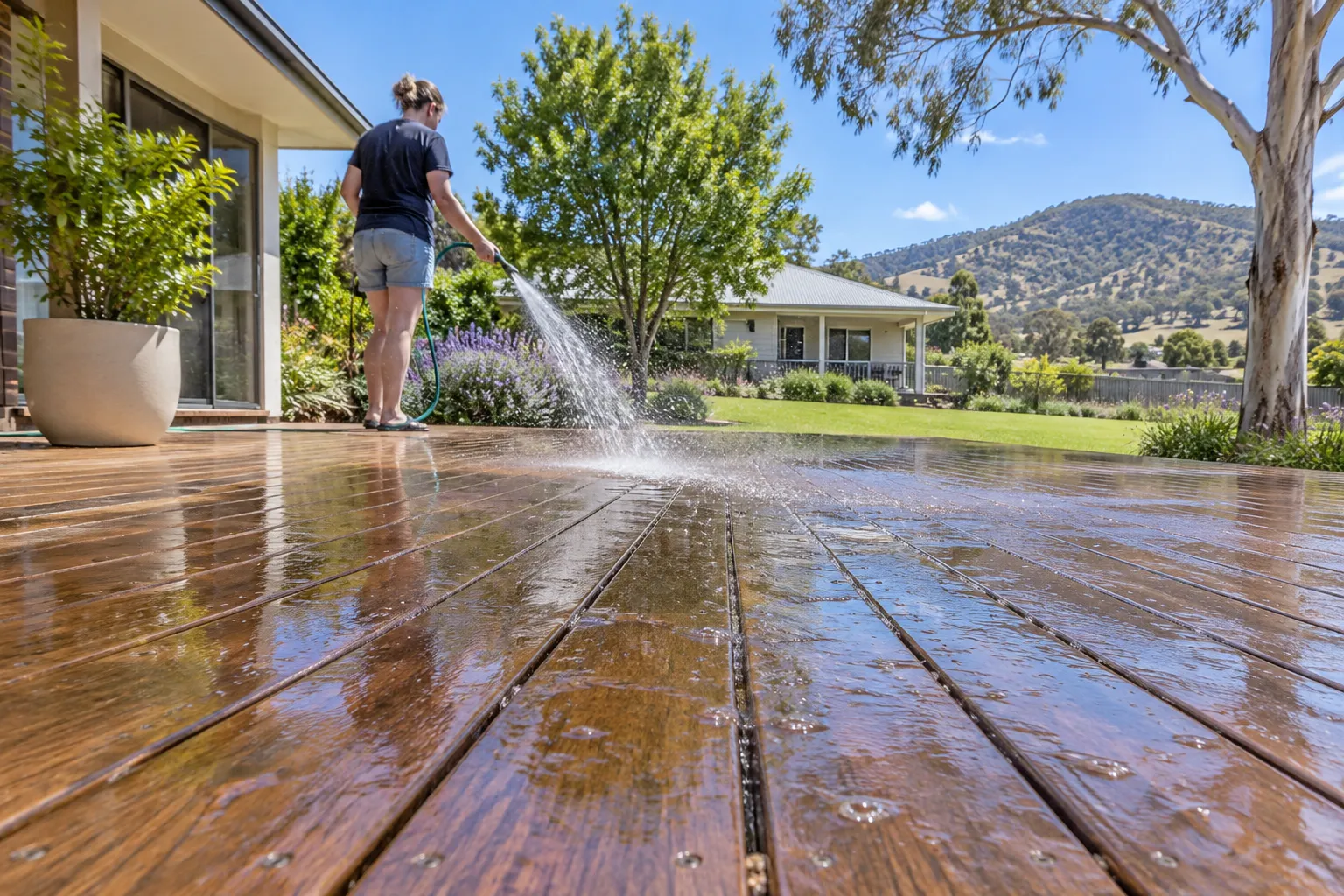
Tips that help:
- Work in sections so soap doesn't dry in the sun.
- Brush along the grain pattern, the way the embossing runs.
- Rinse the gaps so dirt doesn't build up underneath.
- Wash on a mild day, not in midday summer heat.
How do you remove mould from composite decking?
Mould and algae on composite usually grow in shaded, damp spots, on dirt and pollen sitting on the surface rather than in the board itself. Scrub the area with a composite deck cleaner that the board's maker approves, let it sit for the time on the label, then scrub again and rinse well. Fixing the cause, like shade, poor drainage or leaf build-up, stops it coming back.
On older uncapped boards, mould can get into the surface and leave dark spots that are harder to shift. Capped boards resist this much better. See capped composite decking.
How do you clean grease and food stains?
Wipe up grease and food as soon as possible. For a fresh spill, warm soapy water and a soft brush is usually enough. For older barbecue grease, a degreaser recommended by the board's maker works better. Put a mat under the barbecue to catch drips. On capped boards, most stains sit on the surface and lift with cleaning.
Common stains and what usually works:
- Barbecue fat and oil. Warm soapy water, then an approved degreaser if needed.
- Red wine and juice. Rinse and wipe quickly.
- Leaf and tannin marks. Wash, then let sunlight fade any shadow.
- Rust marks from furniture or tools. Use a cleaner the maker approves for rust.
- Chalk and kids' paint. Usually washes off with water and a brush.
Can you pressure wash composite decking?
Some composite brands allow a pressure washer on a low setting with a wide fan nozzle held well away from the surface. Others advise against it. Too much pressure, too close, can damage the surface texture or cap and void the warranty. Check your board's care guide first. A hose and a brush do the job on most decks.
If you do use one:
- Low pressure, within the maker's limit.
- Wide fan nozzle, never a pinpoint.
- Keep it moving, along the boards.
- Hold it well back from the surface.
What shouldn't you use on composite decking?
Avoid harsh solvents, bleach-based cleaners at full strength, steel wool, wire brushes, metal shovels and high-pressure blasting, unless the board's maker says they're fine. These can scratch or discolour the cap. Timber deck cleaners and oils aren't meant for composite either. When in doubt, use mild soap and water.
How do you stop a composite deck getting dirty?
Most dirt problems come from leaves, poor drainage and shade. Trim back overhanging plants, keep gutters clear above the deck, sweep often, and keep the gaps between boards open so water runs through. Put pads under pot plants, and mats under barbecues and outdoor dining.
For a broader view of composite upkeep and lifespan, see how long a composite deck lasts.
Questions people ask
What is the best cleaner for composite decking?
The best cleaner is usually the one your board's maker recommends, because it's tested on that cap and won't affect the warranty. For routine cleaning, warm water and a mild detergent is enough. Keep stronger cleaners for mould, grease or rust, and test them on a hidden spot first.
Why does my composite deck have white marks?
White or chalky marks are often dried soap, hard water spots or salt residue from pool water. Rinse the deck thoroughly with clean water after washing, and don't let soap dry in the sun. On some uncapped boards, light patches can also come from fading. If marks persist, ask the board's maker for advice.
Can you use vinegar on composite decking?
Many people use a diluted vinegar solution for light marks and hard water spots, and some brands say it's acceptable. Others don't mention it. Check your board's care guide before using it, rinse well afterwards, and test on a hidden area first. For mould and grease, an approved composite cleaner usually works better.
Does cleaning composite decking affect the warranty?
It can. Most warranties require reasonable care, and some exclude damage from certain chemicals or pressure washing. Following the maker's care guide keeps the warranty in force. Keep the guide, your receipts and the board's product name with the deck paperwork, so any claim is simple.
This guide is one of many on Border Outdoor Living.
Where these facts come from
Updated