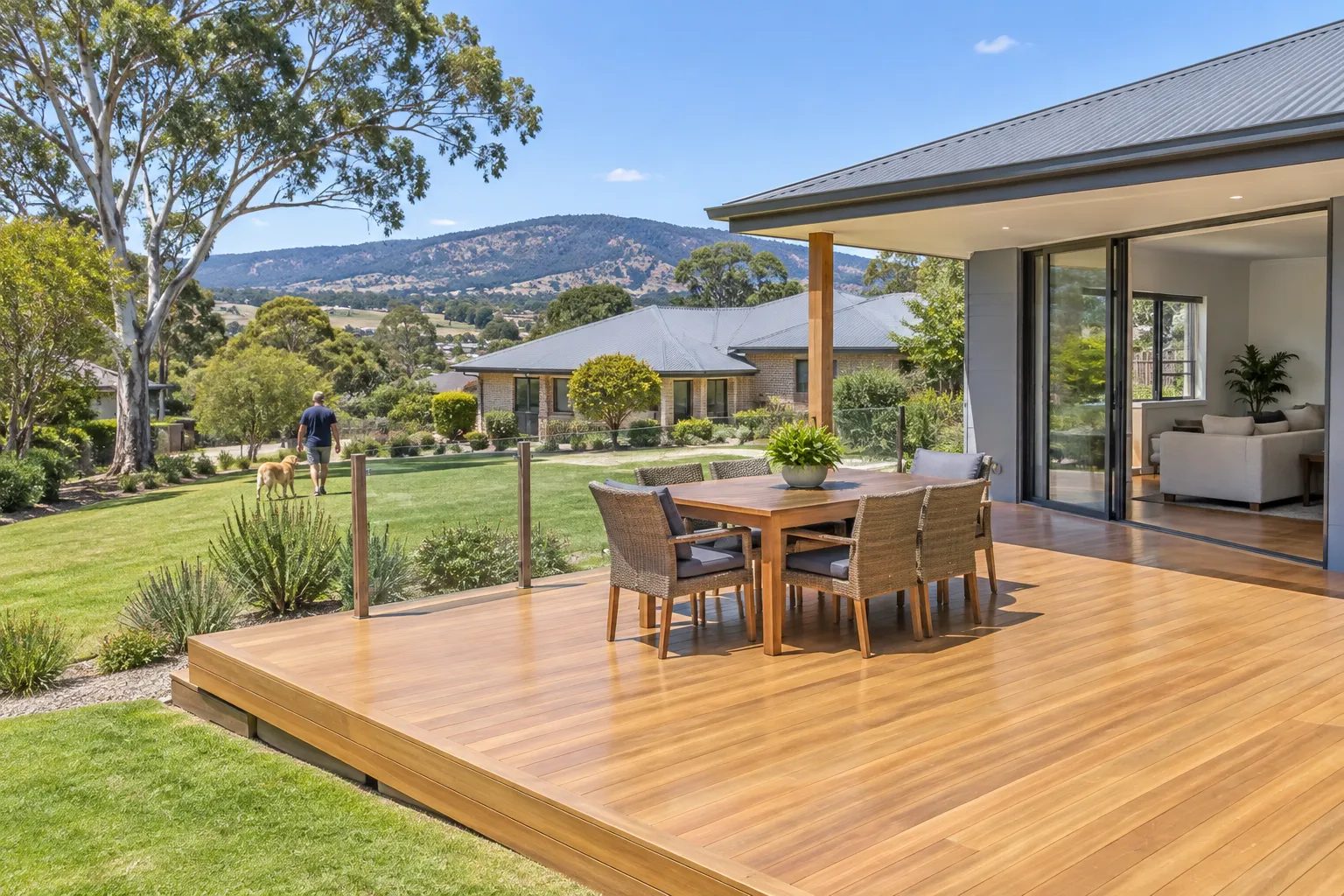
Blackbutt and spotted gum are both class 1 above ground and class 2 in the ground, both very hard, and both listed as bushfire-resisting timbers usable for decking up to BAL-29. The big difference is colour: blackbutt is pale golden to light brown and fairly even, while spotted gum varies from cream to dark brown on the same deck. Spotted gum is slightly denser. Both are Australian grown and readily available around Albury. For spotted gum sizes and costs, see our main spotted gum decking page.
How do blackbutt and spotted gum compare?
On the numbers, they're close. Business Queensland gives spotted gum a density of about 1,010 kilograms per cubic metre and blackbutt about 930, and rates both class 1 above ground and class 2 in the ground. Both are in the Queensland timber database's list of bushfire-resisting timbers. Their looks are what usually decides it.
| Blackbutt | Spotted gum | |
|---|---|---|
| Density | About 930 kg/m3 | About 1,010 kg/m3 |
| Above-ground durability | Class 1 | Class 1 |
| In-ground durability | Class 2 | Class 2 |
| Colour | Pale golden to light brown, fairly even | Cream to dark brown, varied |
| Listed bushfire resisting | Yes | Yes |
| Grown | NSW and Queensland | NSW and Queensland |
Note that "blackbutt" from Western Australia is a different species, so check the botanical name if comparing data.
Which looks better?
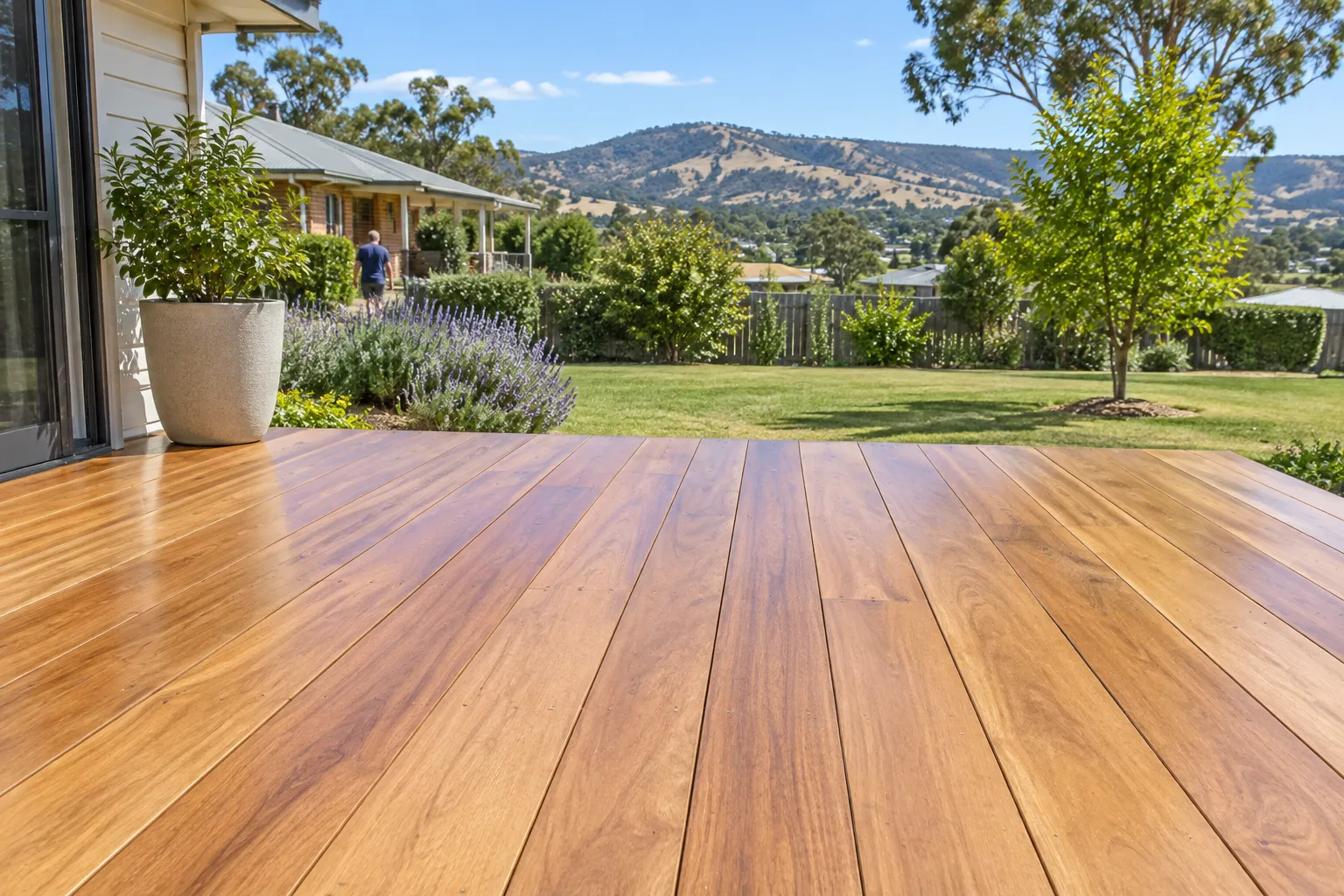
Blackbutt suits people who want a light, even, modern look, often paired with grey or white houses and pale paving. Spotted gum suits people who like a natural, mixed look with lots of character. Both darken slightly with oil and go silver grey if left unoiled. Lighter blackbutt also stays a little cooler in direct sun.
Which is harder wearing?
Both are among the hardest common decking timbers, so either handles high traffic, outdoor furniture and dogs well. Spotted gum is slightly denser, so it may resist dents a little better. In practice, both outperform merbau and treated pine for hardness. Hardness also means both need pre-drilling for every fixing.
Which is better on bush fire prone land?
Either. Both blackbutt and spotted gum are listed as bushfire-resisting timbers and can be used for decking up to BAL-29 under the bushfire building standard. On blocks rated higher than BAL-29, timber decking is restricted and non-combustible materials are usually needed. Parts of Thurgoona, Splitters Creek and Jindera are mapped as bush fire prone land.
How do they compare with ironbark?
Red ironbark is another very hard Australian hardwood, darker red-brown, and also listed as bushfire resisting. It's often a little more expensive and less commonly stocked than spotted gum or blackbutt. It suits people who want a dark, very hard deck. For most Albury decks, spotted gum and blackbutt are the more readily available choices.
What finish suits blackbutt and spotted gum?
A penetrating decking oil suits both. Clear or lightly tinted oils keep blackbutt pale and golden, while a warmer tint can even out spotted gum's colour variation. Both benefit from oiling every 12 to 24 months in Albury's sun to slow surface checking. New boards often need a few weeks to weather before the first coat.
See deck oiling and best decking oil for merbau for product guidance that applies to other hardwoods too.
How does treated pine compare with both?
Treated pine is the budget option, at about $180 to $350 a square metre installed in published guides, against roughly $350 to $600 for spotted gum. It's much softer, wears faster, needs more frequent oiling and isn't a listed bushfire-resisting timber. It's good value for small or budget decks. See treated pine decking.
Questions people ask
What is the best hardwood for decking in Albury?
For most Albury decks, spotted gum or blackbutt is the best all-round hardwood: very hard, class 1 above ground, Australian grown and listed as bushfire resisting. Choose blackbutt for a pale, even look and spotted gum for a varied, natural one. Merbau is a good option if you want a darker, even red-brown colour.
Is blackbutt cheaper than spotted gum?
They're usually priced in a similar band. Prices change with supply, grade and board size, so get quotes for both in the same grade and width. Board grade often moves the price more than the species, because higher grades with fewer marks cost more in either timber.
Does blackbutt go grey?
Yes. Like all timbers, blackbutt weathers to a silver grey if left unoiled in the sun. Some people like that look. To keep its pale golden colour, clean and oil it every 12 to 24 months. A clear or lightly tinted oil keeps it closest to its natural colour.
Is spotted gum harder than blackbutt?
Slightly. Business Queensland gives spotted gum a density of about 1,010 kilograms per cubic metre and blackbutt about 930, and density is closely linked to hardness. Both are very hard compared with merbau and treated pine, and both are tough enough for high-traffic decks.
For the wider picture, start with Border Outdoor Living deck builder.
Where these facts come from
- Business Queensland, spotted gum timber properties
- Business Queensland, blackbutt timber properties
- Queensland Government timber database, bushfire-resisting timbers
- Published installed decking prices from Australian cost guides, checked November 2026
Updated