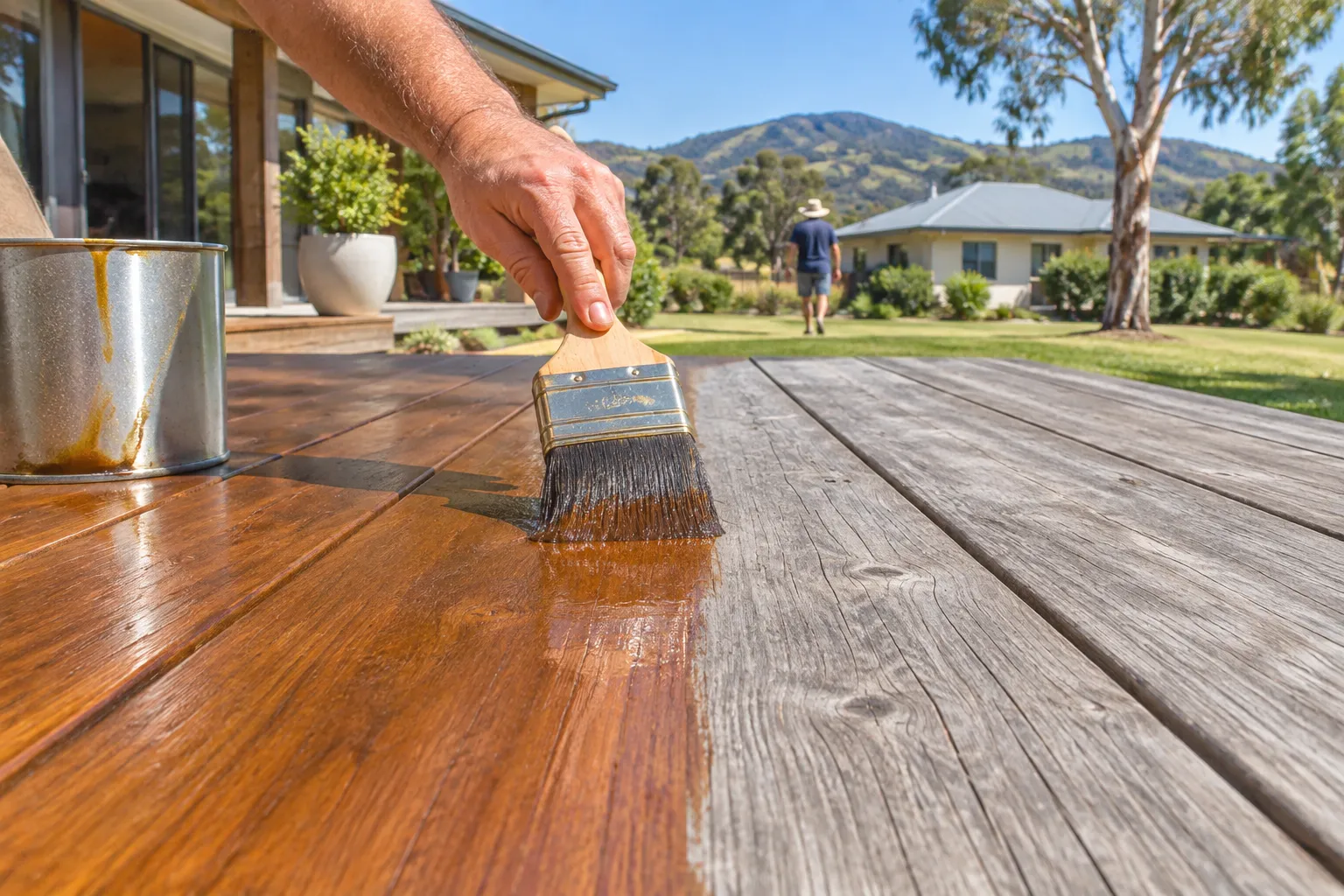
A deck stays sticky after oiling when oil is left sitting on the surface instead of soaking into the timber. The usual causes are coats that were too thick, excess oil that wasn't wiped off, oiling damp timber, oiling new hardwood too soon, or cool, humid weather that slows drying. Most sticky decks can be fixed by wiping off the excess with a rag and the right thinner or cleaner, then letting it cure. For oiling in general, see our main deck oiling, staining and restoration page.
Why does decking oil stay sticky?
Decking oil only dries properly when it soaks into the wood. Any oil left on top can't cure fully, so it stays tacky, attracts dirt and leaves footprints. Dense hardwoods like merbau and spotted gum absorb less oil than pine, so they're more prone to sticky patches if coats are heavy.
| Cause | What happened | How to avoid it |
|---|---|---|
| Coat too thick | Oil couldn't soak in | Thin coats, wipe off excess |
| No wiping | Pooled oil left on surface | Wipe after about 15 minutes |
| Damp timber | Water blocked absorption | Two or three dry days first |
| New hardwood | Tannin and dense surface | Let it weather first |
| Cool, humid weather | Slow drying | Oil on mild, dry days |
| Second coat too soon | First coat not dry | Follow the recoat time |
How do you fix a sticky deck?
Wipe off as much of the surface oil as you can with clean, lint-free rags, using a little of the solvent or cleaner the oil's label recommends, such as mineral turpentine for many oil-based products. Work along the grain. Then let the deck cure in dry, mild weather. Very heavy build-up may need a deck cleaner or light sanding before a thin fresh coat.
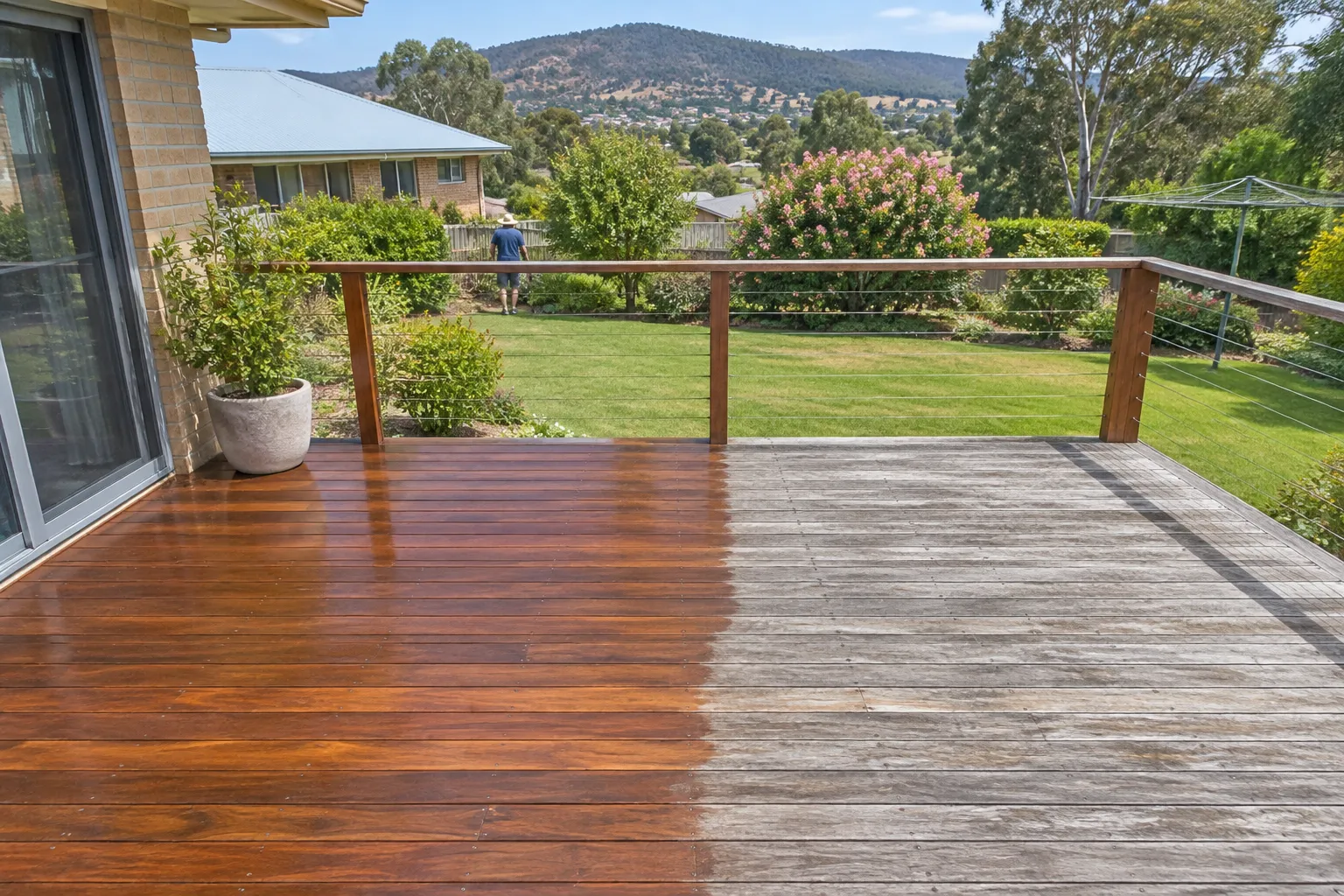
The steps:
- Test a small area with the recommended solvent or cleaner.
- Wipe along the boards with clean rags, changing them often.
- Let it dry for a day or two in mild, dry weather.
- Recoat thinly only if the timber looks dry and patchy.
Dispose of oily rags safely: lay them flat outdoors to dry, because oil-soaked rags can heat up and catch fire if bundled.
How long before you should oil a new deck?
New hardwood decks, especially merbau, usually need about 6 to 12 weeks to weather before the first oil, so tannin can leach out and the surface can open up. Oiling too soon is one of the main causes of sticky, blotchy decks. Treated pine can often be oiled sooner once it's dry. Pre-oiled boards follow the supplier's advice.
See oiling a merbau deck for merbau timing.
How long after oiling a deck can it rain?
It depends on the product and the weather. Light rain after the oil is touch dry usually does little harm, but heavy rain in the first few hours can leave spots or a patchy finish. Some water-based oils, such as Intergrain's UltraDeck, say they can withstand light rain on the day. Check the label, and aim for at least a day of dry weather after oiling.
Does weather cause sticky decks?
Yes. Cool or humid weather slows drying, so oil sits on the surface longer and is more likely to stay tacky. Cabot's lists a 6 hour recoat time at 25 degrees and 50% humidity, and longer in cooler or more humid conditions. Around Albury, mild, dry days in autumn and spring are ideal. In summer, avoid midday heat, which dries the surface too fast.
How do you stop a deck going sticky next time?
Prepare well and apply thin coats. Clean the deck, let it dry fully, sand rough spots, then apply a thin coat of oil along the grain, two or three boards at a time, and wipe off any excess after about 15 minutes. Let it dry properly before the second coat. Choose mild, dry weather, and don't oil new hardwood too soon.
See how to oil a deck for the full method.
Questions people ask
How long should decking oil take to dry?
Most decking oils are touch dry within a few hours and ready for a second coat in roughly 6 hours at around 25 degrees and moderate humidity, according to manufacturer data sheets. Cool, humid weather takes longer. A deck that's still tacky after a day or two usually has too much oil on the surface.
Will a sticky deck eventually dry?
Sometimes, slowly, in warm, dry weather, but heavy build-up can stay tacky for a long time and collect dirt. It's usually quicker and better to wipe off the excess with the recommended solvent or cleaner and let it cure. If the stickiness is only light, a few warm, dry days may be enough.
Can you put a second coat on a sticky deck?
No. Adding more oil over a sticky coat makes the problem worse, because there's even more oil the timber can't absorb. Fix the stickiness first by wiping off the excess, let it cure, and only recoat thinly if the timber looks dry and patchy afterwards.
Why is only part of my deck sticky?
Patchy stickiness usually means those boards got a heavier coat, weren't wiped, sat in shade so they dried more slowly, or were damper when oiled. Board ends and areas where oil pooled in the grain are common spots. Treat just those patches by wiping off the excess and letting them cure.
This guide is one of many on Border Outdoor Living deck builder.
Where these facts come from
- Cabot's Natural Decking Oil, product data sheet (recoat times at 25C and 50% humidity)
- Intergrain UltraDeck Timber Oil, product data sheet
Updated