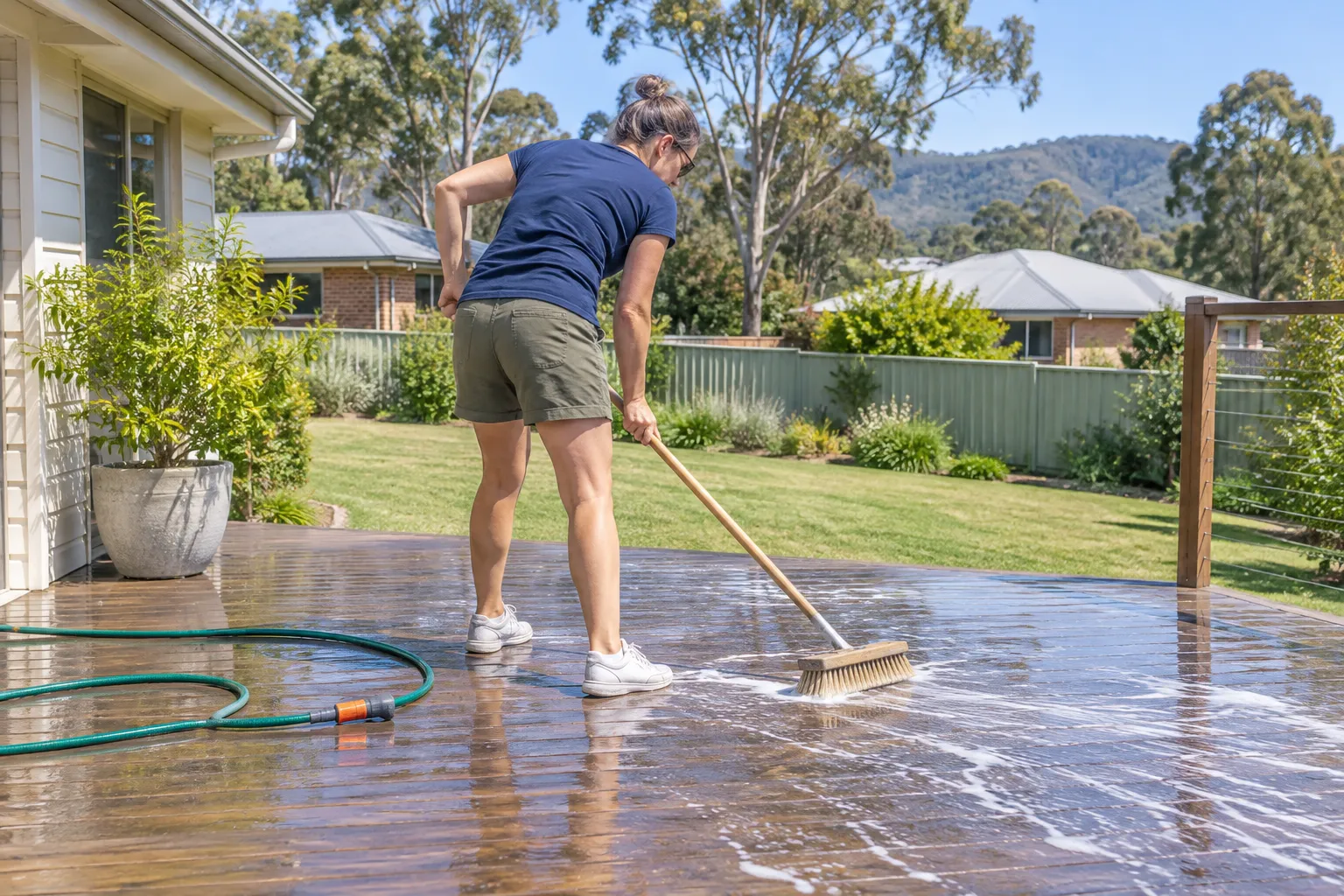
To keep timber decking clean, sweep it every week or two, clear leaves from the gaps, and wash it each season with a timber deck cleaner or mild soapy water and a stiff brush, then rinse well. Deal with spills, leaf stains, mould and rust marks as they appear. Regular cleaning keeps water draining, stops mould taking hold and helps the oil last longer. For deep cleaning before re-oiling, see how to clean a deck before oiling, and for oiling, our main deck oiling, staining and restoration page.
How often should you clean a timber deck?
Sweep a timber deck every week or two, more often in autumn when leaves fall. Give it a proper wash two to four times a year, plus a thorough clean before each re-oil. Decks under trees, near gardens or in shade need more frequent washing, because leaves and damp encourage mould and staining.
| When | What to do |
|---|---|
| Every week or two | Sweep, clear gaps |
| Autumn | Clear leaves often, especially from gaps |
| Each season | Wash with deck cleaner or mild soapy water |
| Before re-oiling | Thorough clean, then dry fully |
| After a spill | Wipe and rinse while fresh |
Why does keeping the gaps clear matter?
The gaps between boards let water drain and air move. When they fill with leaves, dirt and seeds, water sits against the board edges and on the joists below, which encourages rot, mould and cupping. A thin putty knife, a stiff brush or a leaf blower clears them. It's one of the simplest ways to extend a deck's life.
How do you remove common stains from a timber deck?
Most stains lift with prompt cleaning. Leaf and tannin stains usually come out with a timber cleaner or an oxalic-based product. Mould needs a mould treatment for decks. Rust marks from furniture or tools usually lift with an oxalic-based cleaner. Grease and food stains need warm soapy water or a degreaser made for timber.
| Stain | Usual fix |
|---|---|
| Leaf or tannin marks | Timber cleaner, oxalic-based if stubborn |
| Mould and mildew | Deck mould treatment, scrub and rinse |
| Rust marks | Oxalic-based cleaner |
| Barbecue grease | Warm soapy water or timber degreaser |
| Bird droppings | Rinse and scrub while fresh |
| Black marks around nails | Oxalic-based cleaner, then stainless fixings |
Always test a cleaner on a hidden spot first and rinse well.
How do you clean mould off timber decking?
Scrub mouldy areas with a deck mould treatment or a timber deck cleaner, leave it the time the label says, scrub again and rinse thoroughly. Then fix the cause: trim back overhanging plants, clear the gaps, improve airflow under the deck, and let in more sun where you can. Mould keeps coming back on decks that stay shaded and damp.
Can you pressure wash timber decking?
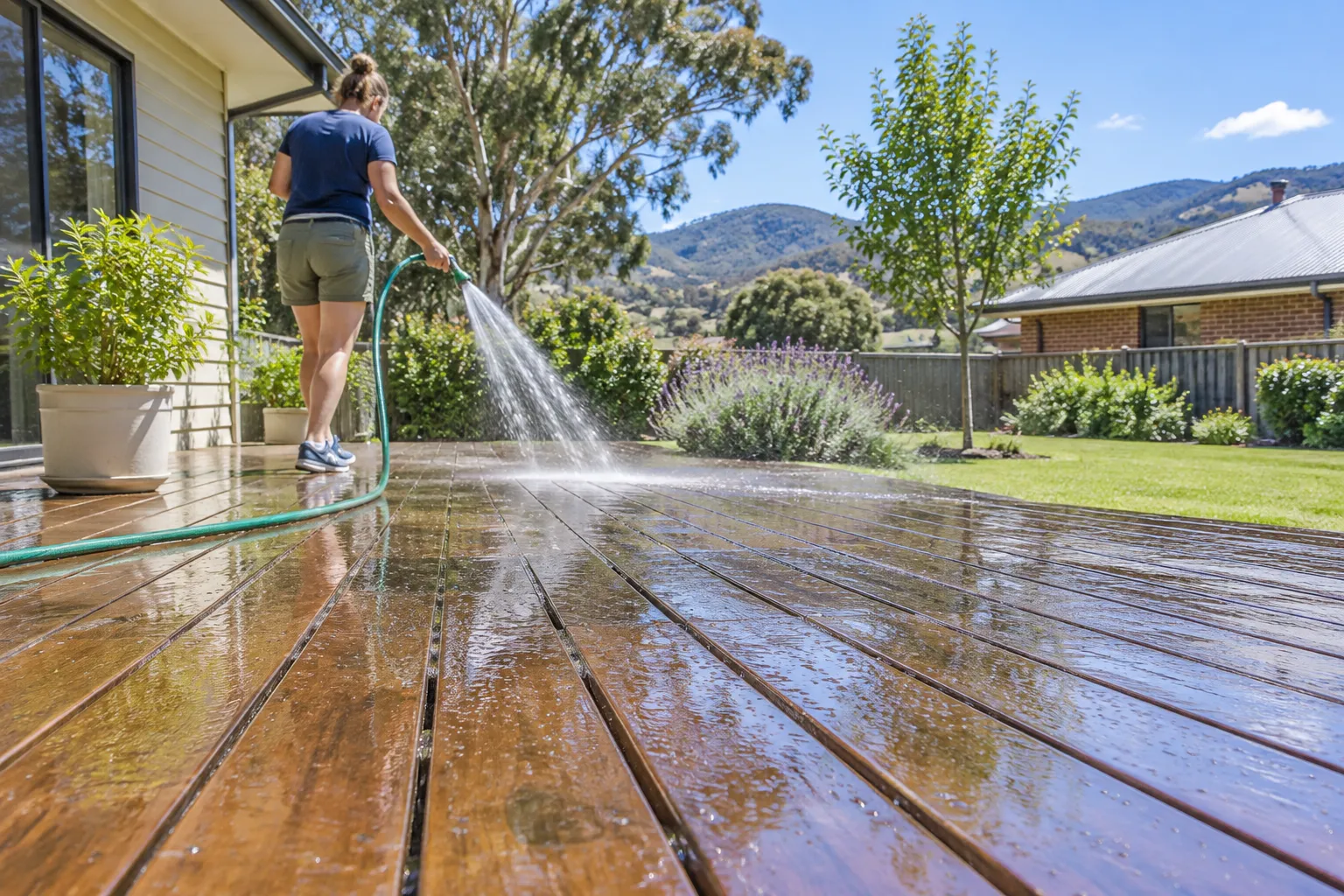
Yes, but gently. A pressure washer used too close or on a high setting raises the grain, leaves the surface furry and can cause splinters, especially on softer timbers like treated pine. Use a low setting with a wide fan nozzle, hold it well back from the surface, and move along the boards with the grain. A stiff brush and hose is often enough.
What cleaning products are safe for timber decks?
Use products made for timber decks: deck cleaners for routine cleaning, timber revivers for grey boards, mould treatments for mould, and oxalic-based cleaners for tannin and rust marks. Mild soapy water works for light grime. Avoid full-strength bleach and harsh household chemicals, which can blotch the timber and strip the oil. Rinse thoroughly after any cleaner.
How does cleaning help a deck's finish last?
Dirt, grit and pollen act like sandpaper underfoot and hold moisture against the surface, wearing the oil away faster. Mould breaks down the finish too. Regular sweeping and washing remove all of that, so the oil keeps working longer between recoats. A clean deck also shows you early when the oil is wearing, so you can recoat before the timber greys.
See how long decking oil lasts.
Questions people ask
What is the best way to clean a timber deck?
Sweep it and clear the gaps, wet the boards, scrub along the grain with a timber deck cleaner and a stiff brush, then rinse thoroughly. Do this each season. For grey boards, use a timber reviver instead. Avoid high-pressure blasting close to the surface, which damages the timber.
Can you use vinegar to clean a timber deck?
Some people use diluted vinegar for light mould or marks, but products made for timber decks are usually more effective and predictable. If you use vinegar, dilute it, test it on a hidden spot, and rinse well afterwards. For heavy mould or grey timber, a deck cleaner or reviver works better.
How do you clean a deck without damaging the oil?
Use mild soapy water or a gentle deck cleaner, a soft to medium brush, and plenty of rinsing. Avoid strong solvents, bleach and high-pressure washing, which strip the oil. Save stronger cleaners and revivers for the deep clean before you re-oil, when you'll be recoating anyway.
How do you get rid of black spots on a deck?
Black spots on a timber deck are usually mould or mildew, or, around fixings, tannin reacting with steel. A deck mould treatment, scrubbed in and rinsed, deals with mould. An oxalic-based cleaner usually lifts tannin and fixing stains, and replacing plain steel screws with stainless stops them coming back.
For the wider picture, start with deck builder albury.
Where these facts come from
- Cabot's Natural Decking Oil, product data sheet
Updated