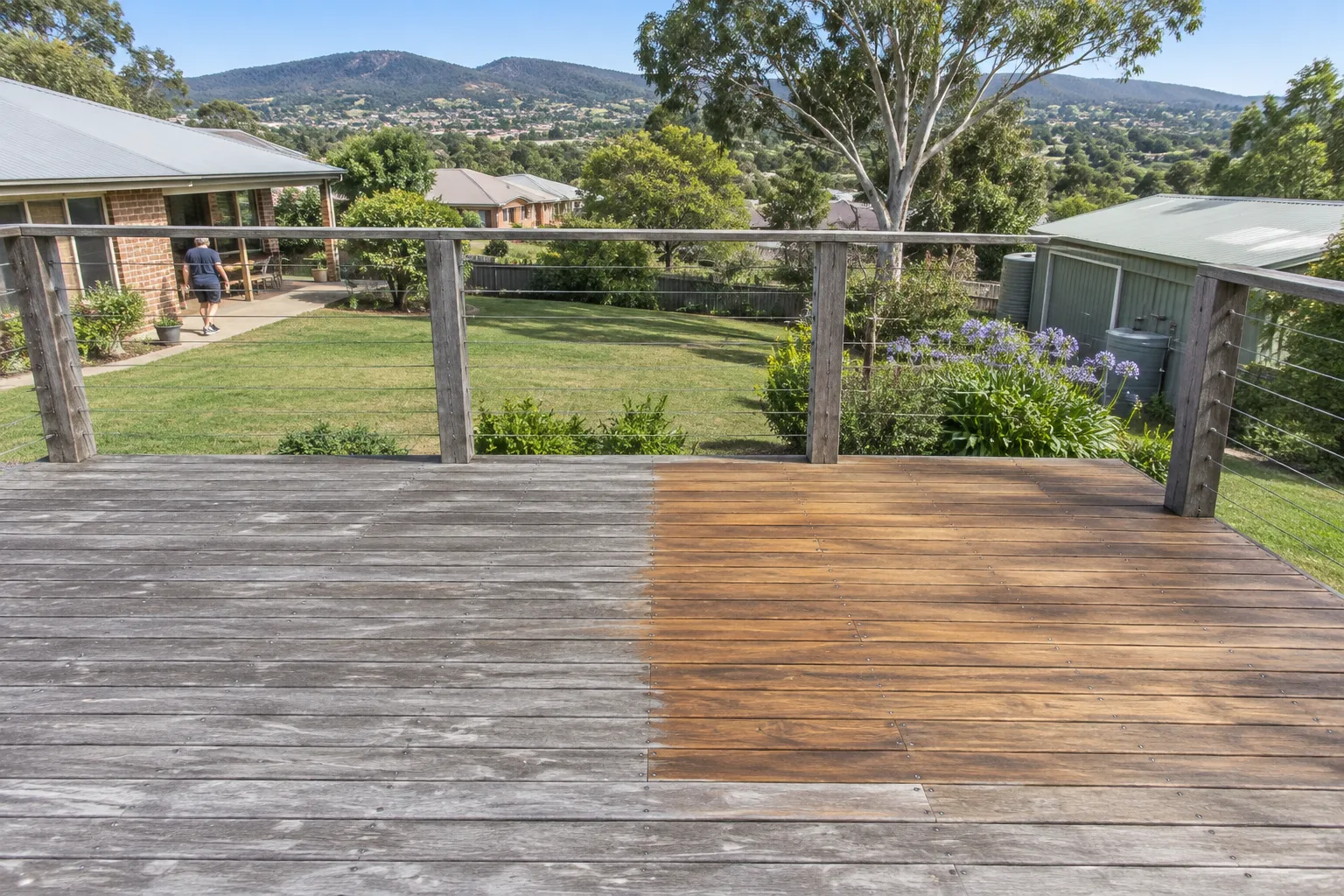
A professional deck sanding and staining job takes a tired timber deck back to fresh timber and puts on new coats of stain or tinted oil. Around Albury, published 2026 NSW price guides put a sand back and two coats at about $35 to $70 a square metre, and stripping a failed coating first at about $55 to $95. On a typical 30 square metre deck, the job usually takes two to four days, weather allowing. If you'd like it done, we'll arrange a visit and a local deck specialist comes to you with a written quote. For oiling in general, see our main deck oiling, staining and restoration page.
When does a deck need sanding, not just oiling?
A deck needs sanding when the boards are grey after cleaning, rough or furry to touch, splintering, cupped, or have patches of old film stain or paint peeling off. Fresh oil won't soak through a weathered or coated surface evenly. If a deck has been oiled regularly and is just faded, a clean and re-oil is usually enough.
| Deck condition | Usual treatment |
|---|---|
| Faded, water still beads a little | Clean and re-oil |
| Grey but smooth | Reviver, maybe light sand, then oil |
| Rough, splintering or cupped | Full sand, then stain or oil |
| Peeling paint or film stain | Strip or heavy sand, then refinish |
What does a professional sanding and staining job involve?
A typical job runs from protecting the surrounds through to the final coat. The specialist clears and cleans the deck, fixes popped screws and loose boards, sands the boards back to fresh timber with a floor or belt sander and detail sanders for edges, removes the dust, then applies two thin coats of stain or tinted oil, with drying time between.
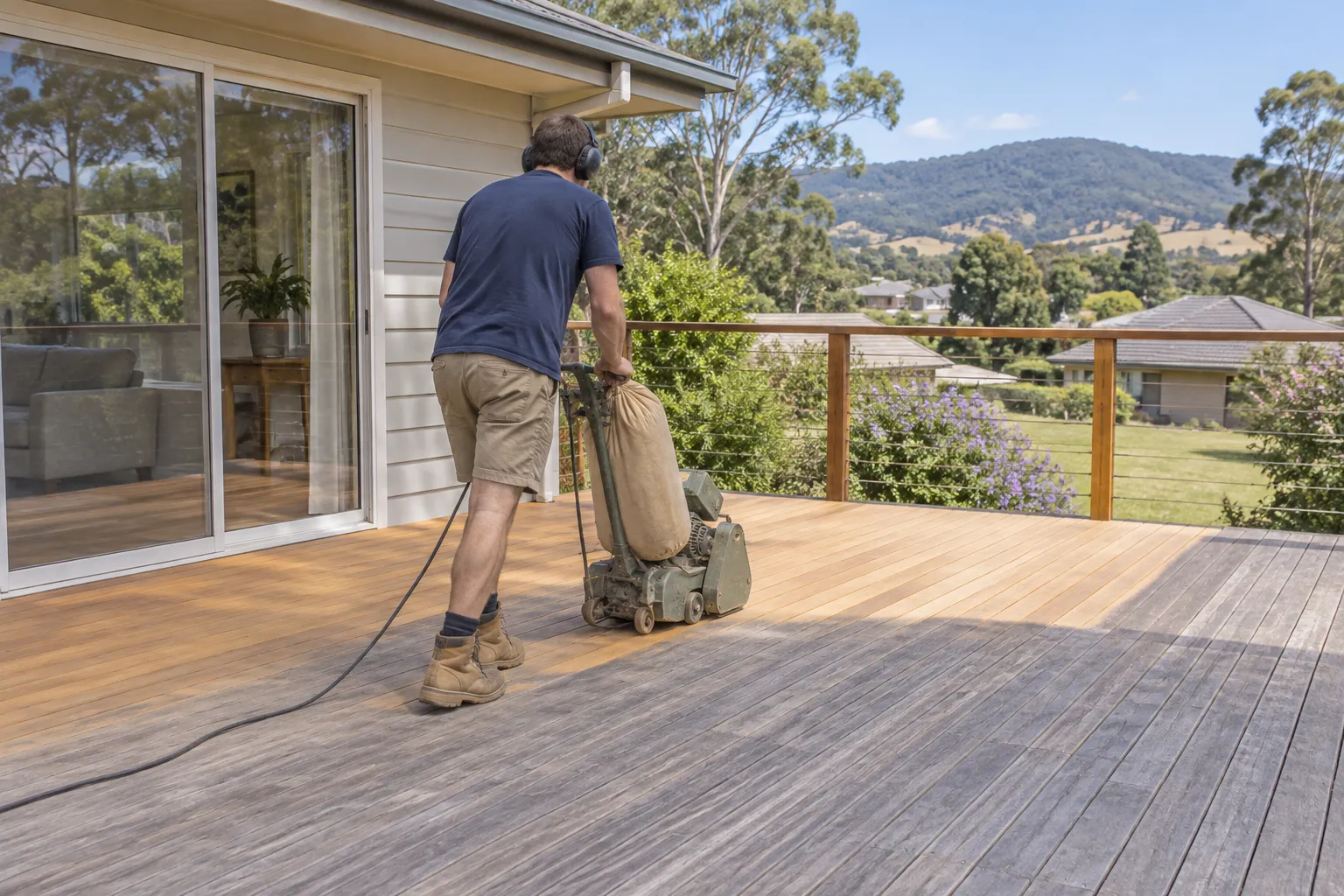
The usual steps:
- Inspect for loose boards, popped fixings and soft spots.
- Protect walls, windows, doors and garden beds.
- Clean the deck and let it dry.
- Punch or replace fixings so the sander doesn't catch.
- Sand the main area, then edges, steps and balustrades.
- Clean up the dust, including the gaps.
- Two coats of stain or oil.
How long does deck sanding and staining take?
On a 30 square metre deck with a few steps, a sand and two coats usually takes about two to four days, including drying time. Stripping an old coating, balustrades, screens and repairs add more. The deck has to be dry before work starts and between coats, so a wet spell can push the job back. You'll need to stay off the deck until the finish has cured.
What does deck sanding and staining cost?
Published NSW guides put a sand back and two coats at about $35 to $70 a square metre, and stripping a failed coating at about $55 to $95. A Canberra guide puts sanding and oiling at about $28 to $66 with $44 typical. One NSW guide estimates a 30 square metre deck prepared and given two coats at $900 to $1,900. Balustrades and steps cost more per square metre.
See deck restoration cost for the full breakdown.
What should you ask a deck sanding and staining specialist?
Ask what preparation they'll do, which sanders and products they use, how many coats, whether loose fixings and damaged boards are included or extra, how they'll protect the house and garden, how long the job will take, and how long to stay off the deck afterwards. Ask for it in writing, so you can compare quotes on the same work.
Can you sand and stain a deck yourself?
You can. A floor sander or a large orbital sander can be hired, and with patience you can get a good result. The hard parts are sanding evenly without gouging, getting into edges and between balustrades, and managing the dust. Punch down any nails or screws first so they don't tear the sanding belts. Then stain as you would any deck.
See staining timber decking and how to oil a deck.
How do you make a sanded deck last?
Keep it clean and recoat it before it greys again. In Albury's sun, a clean and recoat every 12 to 24 months stops the timber weathering back to the point of needing another full sand. Sweep often, wash it each season, use pads under furniture, and shade west-facing decks where you can. See how long decking oil lasts.
Questions people ask
How much does it cost to sand and stain a deck?
Published NSW guides put a sand back and two coats at about $35 to $70 a square metre, so a 30 square metre deck often costs around $1,050 to $2,100. Stripping an old film stain first costs more, about $55 to $95 a square metre. Steps and balustrades add to it. A written quote after a visit gives the real price.
How often does a deck need sanding?
With a clean and re-oil every 12 to 24 months, many decks rarely need a full sand. Decks left for several years in Albury's sun usually go grey and rough and need sanding before refinishing. Film stains and paint also need sanding when they fail. Regular recoats are the way to avoid frequent sanding.
Do you need to be home for deck sanding and staining?
Usually not all the time. The specialist needs access to the deck, power and water, and the furniture moved off. Sanding is noisy and dusty, so close nearby windows. Keep pets and children off the deck until the finish has dried. Be there at the end, if you can, to check the result.
Is sanding bad for a deck?
Not when it's done properly. A good sand removes only the weathered surface and leaves plenty of board thickness. Repeated heavy sanding over many years does thin the boards, which is another reason regular recoats are better than letting a deck weather badly. Thin or damaged boards can be replaced.
This guide is one of many on deck builder across Albury.
Where these facts come from
- Published deck sanding, staining and restoration prices from four Australian cost guides, checked November 2026
Updated