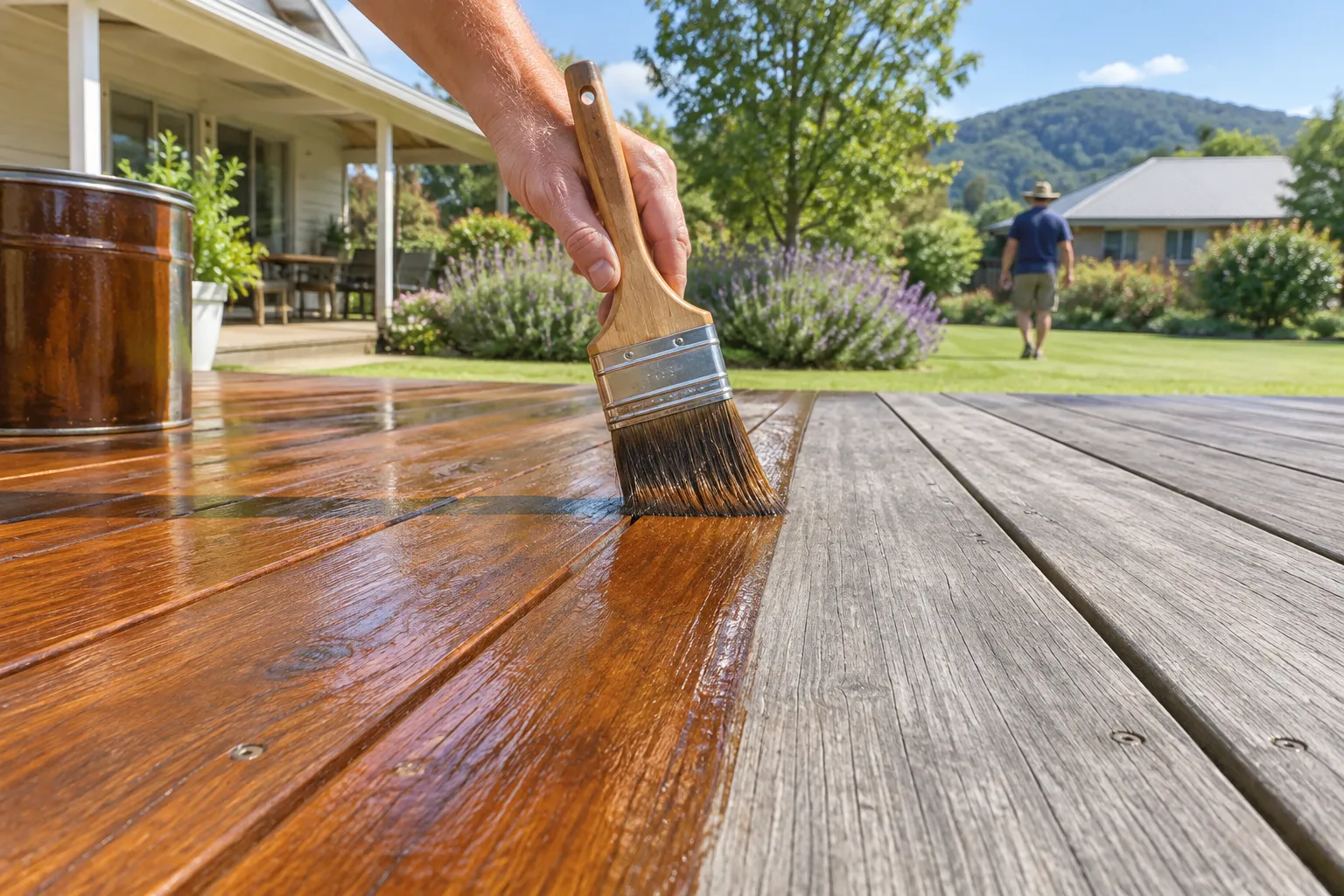
To oil a deck, clear and sweep it, scrub it with a deck cleaner and rinse, let it dry for two or three fine days, sand any rough or grey boards, then brush on a thin coat of decking oil along the grain, a few boards at a time. Wipe off any oil that hasn't soaked in, let it dry, and apply a second coat. Most decks around Albury need it every 12 to 24 months. Our deck oiling, staining and restoration page covers oil versus stain, costs and when to call a specialist. This page is the hands-on method.
What you need before you start
You'll need a deck cleaner made for timber, a stiff broom or deck brush, a garden hose, a decking oil, an applicator or a wide brush, a tray, rags, and sandpaper or a sander for rough patches. Check the weather: you need about two dry days before you start and at least one after. In summer, mild, overcast days work well.
Choosing the oil:
- Oil-based penetrating oils soak deep and enrich the colour. They usually take longer to dry.
- Water-based decking oils dry faster and clean up with water. Some say they handle light rain on the day.
- Tinted oils add colour and help match new boards to old. A "merbau" tint suits most red-brown timbers.
If you're unsure between products, see best decking oil for merbau or decking timber oil.
Step 1: Clean the deck
Move everything off the deck and sweep it, including the gaps between boards. Wet the boards, apply the deck cleaner, and scrub along the grain with a stiff brush. Leave it for the time the product says, then rinse well with the hose. A pressure washer can damage soft timber if used too close, so a hose and brush is safer.
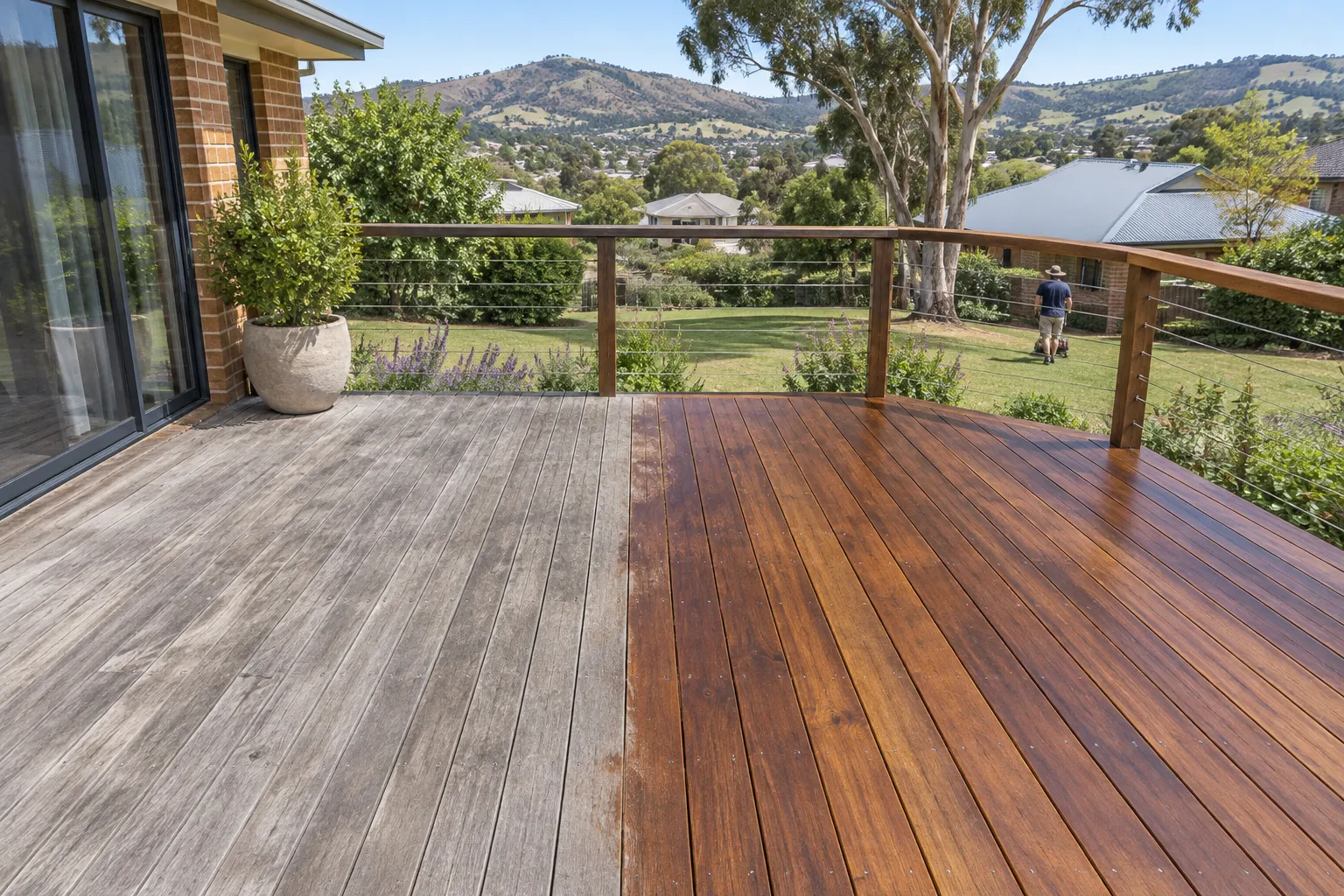
For a deck that's gone grey, a timber reviver or a cleaner with oxalic acid lifts the weathered layer and brings back the colour. Our guide on how to clean a deck before oiling goes into products and stains.
Step 2: Let it dry completely
The deck must be dry right through before you oil, usually two or three fine, breezy days after washing. Oil can't soak into damp wood, so it sits on top, stays tacky and wears off quickly. Test by sprinkling water on a board: if it soaks in and the board was already dry and pale, you're ready.
Avoid oiling the morning after a frost or heavy dew, when the timber can still hold moisture even though the top looks dry.
Step 3: Sand any rough or grey boards
If the boards are rough, splintering, grey or have patches of old film stain, sand them back to fresh timber before oiling. A light sand by hand or with an orbital sander is enough for small areas. For a whole deck, a floor sander saves a lot of time. Sweep or vacuum all the dust out, including from the gaps.
Skip this step only if the deck was oiled in the last year or two and the boards are still smooth.
Step 4: Apply the first coat
Stir the oil well, then apply a thin, even coat along the length of the boards with an applicator or brush. Work two or three boards at a time from one end to the other, so you always keep a wet edge and avoid lap marks. After about 15 minutes, wipe off any oil that's still sitting on the surface.
Tips for a good first coat:
- Thin is better. A thick coat doesn't soak in and stays sticky.
- Work in the shade. In Albury's summer, start early or late in the day.
- Do the board ends. End grain soaks up oil and needs it most.
- Keep a rag handy for drips on paving and walls.
If your deck ends up tacky days later, see why is my deck sticky after oiling.
Step 5: Apply the second coat
Let the first coat dry before the second. Cabot's lists a recoat time of 6 hours at 25 degrees and 50% humidity for its natural decking oil, and longer in cooler or more humid weather. Apply the second coat the same way, thin and along the grain, and wipe off any excess. Two coats is standard for most decks.
After the last coat, keep foot traffic off for the time on the label, usually a day, and wait two or three days before putting heavy furniture back.
How do you oil a new deck for the first time?
New hardwood decks usually need to weather before their first oil, often about 6 to 12 weeks, so tannins wash out and the surface opens up. Merbau especially bleeds red-brown tannin when new. Rinse the deck often in those weeks, then clean it, let it dry and oil it as above. Treated pine can usually be oiled sooner once it's dry. Pre-oiled boards follow the maker's advice.
See oiling a merbau deck for merbau's quirks.
How do you re-oil a deck?
Re-oiling a deck that was oiled in the last year or two is quicker: sweep, clean with a deck cleaner, rinse, let it dry, then apply one or two thin coats. There's usually no need to sand unless the boards have gone rough or grey. Do it when water stops beading on the surface, before the timber dries out and starts to crack.
How do you restore a weathered deck in Australia?
A badly weathered deck needs more than oil. Clean it with a timber reviver to lift the grey layer, sand back to fresh timber, replace any soft or split boards, tighten or replace loose screws, then oil with two coats. A restored deck can look close to new, as long as the frame underneath is sound.
For bigger jobs, see timber decking restoration. If you'd rather have it done, published NSW guides put a professional clean and re-oil at about $15 to $35 a square metre, and a full sand and two coats at about $35 to $70: see deck restoration cost.
Questions people ask
How often should you oil a deck?
Most timber decks around Albury need oiling every 12 to 24 months. Decks in full sun, especially facing west or north, need it more often. Covered decks under a pergola or patio roof last longer between coats. The simple test: when water stops beading on the boards and soaks straight in, it's time.
What should you ask before hiring someone to oil your deck?
Ask what preparation they'll do (clean, sand or strip), which oil they use and how many coats, how they'll protect walls, windows and paving from oil and dust, whether loose screws are included, and how long to stay off the deck afterwards. Ask for the quote in writing so you can compare like for like.
Do you need to be home while your deck is oiled?
Not usually. The specialist needs access to the deck, water and power, and the furniture moved off. Keep pets and children off the deck until it's dry. It's worth being there at the end to check the finish and agree when you can use the deck again.
Can you oil a deck in winter?
You can, but it's harder. Cold, damp days slow drying and frosty mornings leave moisture in the timber. If you oil in winter around Albury, pick a run of dry, mild days, start mid-morning once any dew has gone, and allow more time between coats. Autumn and spring are usually easier.
This guide is one of many on deck builder across Albury.
Where these facts come from
- Cabot's Natural Decking Oil, product data sheet (recoat times at 25C and 50% humidity)
- Intergrain UltraDeck Timber Oil, product data sheet
- Published deck oiling prices from Australian cost guides, checked November 2026
Updated