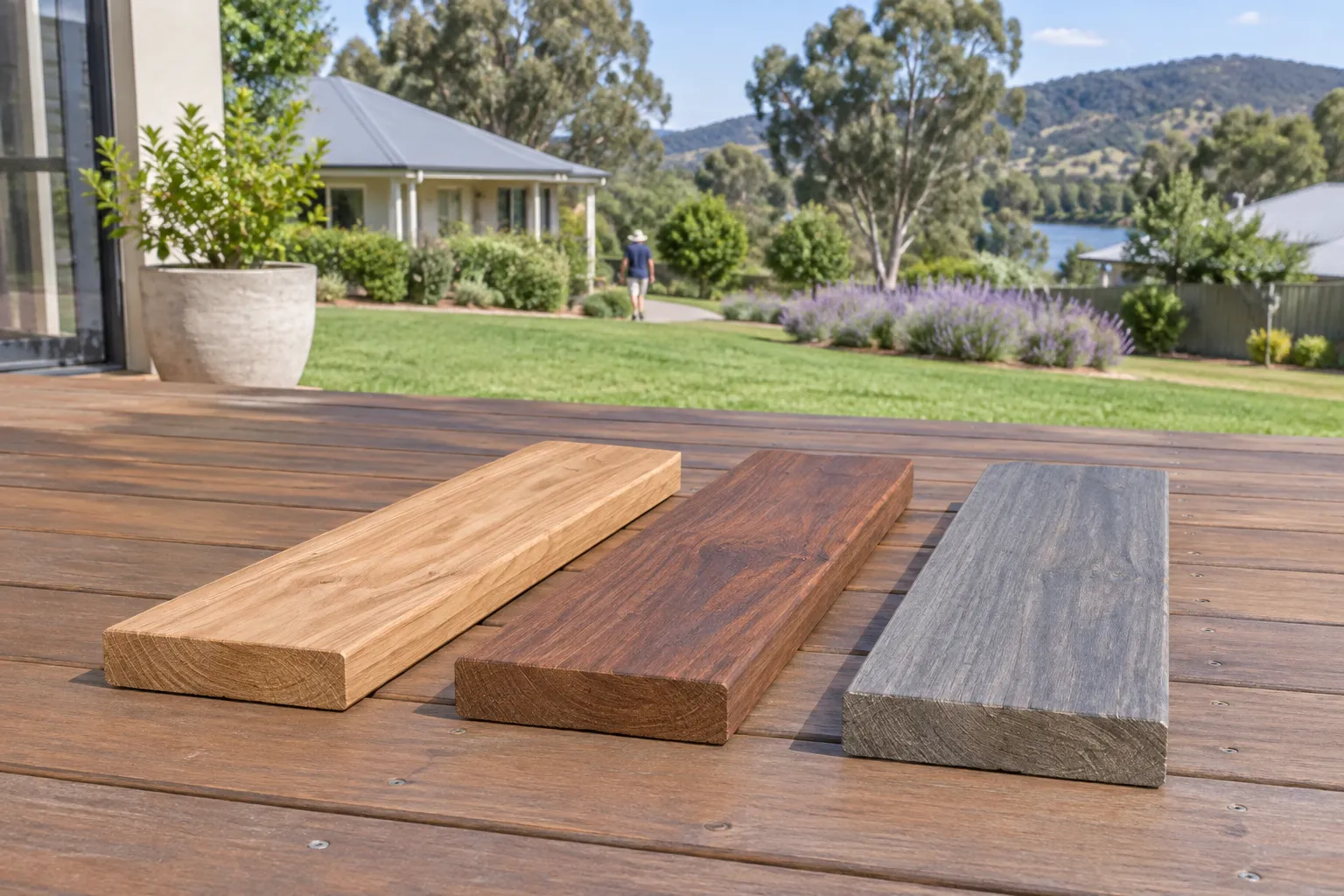
To stain timber decking, choose a stain type that suits your timber, clean the deck, let it dry for two or three fine days, sand rough or flaking areas, then apply thin, even coats along the grain, a few boards at a time, wiping off any excess. Let each coat dry before the next. Penetrating stains and tinted oils are easier to recoat than solid film stains, which peel and need sanding when they fail. For the difference between oil and stain, see our main deck oiling, staining and restoration page.
Which type of stain should you use?
Choose by how much colour you want and how much upkeep you'll do. Tinted penetrating oils add colour and soak in. Semi-transparent stains add more colour while still showing the grain. Solid stains hide the grain and last longer between coats, but crack and peel later. For dense hardwoods, penetrating products bond better than film stains.
| Stain type | Colour | Upkeep |
|---|---|---|
| Tinted oil | Light to moderate | Clean and recoat |
| Semi-transparent stain | Moderate, grain visible | Clean and recoat |
| Solid stain | Strong, grain hidden | Sand or strip when it fails |
See deck oil vs stain for more.
How do you prepare a deck for staining?
Clean the deck with a timber deck cleaner, or a timber reviver if it's grey, scrub along the grain and rinse well. Sand any rough, furry or peeling areas back to sound timber, and remove old film stain completely if you're changing products. Sweep out all the dust. Then let the deck dry fully, usually two or three fine days.
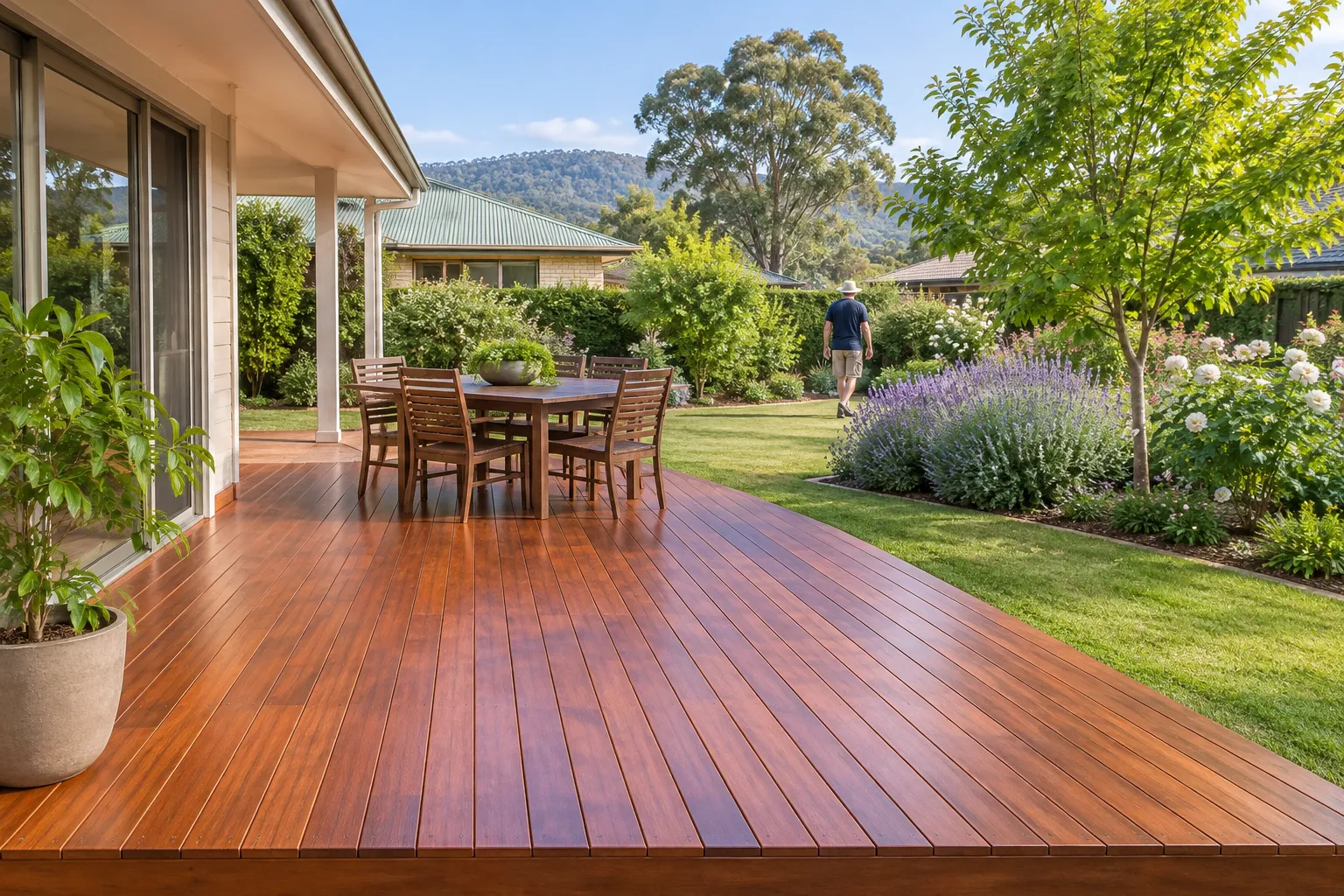
See how to clean a deck before oiling, because the same preparation applies to stain.
How do you apply stain to timber decking?
Stir the stain well and keep stirring as you go, because pigment settles. Apply a thin coat along the length of two or three boards at a time, end to end, so there's always a wet edge and no lap marks. Brush stain into the gaps and board ends. Wipe off anything that hasn't soaked in, then let it dry before the second coat.
Application tips:
- Test first on an offcut or hidden board.
- Work out of direct midday sun.
- Thin coats dry evenly and don't stay sticky.
- Don't stop mid-board, or you'll see a line.
How long should stain dry between coats?
Follow the recoat time on the label. As a guide, Cabot's lists 6 hours at 25 degrees and 50% humidity for its natural decking oil, and longer in cooler or more humid weather. Stains vary. Applying the second coat too soon can leave the deck sticky or blotchy. Keep foot traffic off for the time the label says.
Why does deck stain peel?
Deck stain peels mostly when it forms a film on top of the timber and water gets underneath, or when it's applied over dirt, damp timber, old oil or loose weathered fibres. Thick coats and solid stains peel more than thin penetrating ones. Dense, oily timbers like merbau are harder for film stains to grip.
To prevent peeling:
- Prepare thoroughly and let the timber dry.
- Use a penetrating stain on dense hardwoods.
- Apply thin coats.
- Recoat before it fails completely.
How often does a stained deck need recoating?
Most penetrating stains and tinted oils need a clean and recoat every 12 to 24 months in Albury's sun. Solid stains last longer between coats but need sanding when they fail. Covered decks under a pergola or patio roof last longer. When the colour fades and water soaks into the boards, it's time.
Published NSW guides put a professional clean and re-coat at about $15 to $35 a square metre. See deck restoration cost.
What about staining new timber?
New hardwood, especially merbau, usually needs to weather for about 6 to 12 weeks before staining, so tannin and mill glaze can wear off. Treated pine can often be stained sooner once it's dry, following the stain maker's advice. Staining too early can cause patchy colour and poor adhesion. See stain merbau decking and treated pine decking stain.
Questions people ask
Can you stain a deck without sanding?
Often, if the deck is in good condition with a penetrating finish that's simply faded. A thorough clean is enough before a recoat. You do need to sand if the timber is rough, splintering, grey after cleaning, or has peeling film stain, because new stain won't bond or look even over those.
How many coats of stain does a deck need?
Usually two thin coats on bare or weathered timber, and often one on a well-maintained deck being refreshed. More coats make the colour deeper. Too many or too thick coats can stay sticky and peel. Follow the product's directions for coverage and the number of coats.
Is it better to brush or roll deck stain?
Brushing or using a pad applicator along the grain usually gives the most even result and works stain into the grain and gaps. Rollers are faster on large flat decks but can leave too much stain on the surface, so follow with a brush or pad. Whatever you use, apply thinly and wipe off excess.
Can you stain a deck in winter?
You can, but it's harder. Cold, damp weather slows drying and leaves moisture in the timber, which can cause sticky or patchy results. In Albury's winter, choose a run of mild, dry days, start after any dew has gone, and allow more time between coats. Autumn and spring are usually easier.
The rest of our guides start from deck builder in Albury.
Where these facts come from
- Cabot's Natural Decking Oil, product data sheet
- Published deck staining prices from Australian cost guides, checked November 2026
Updated