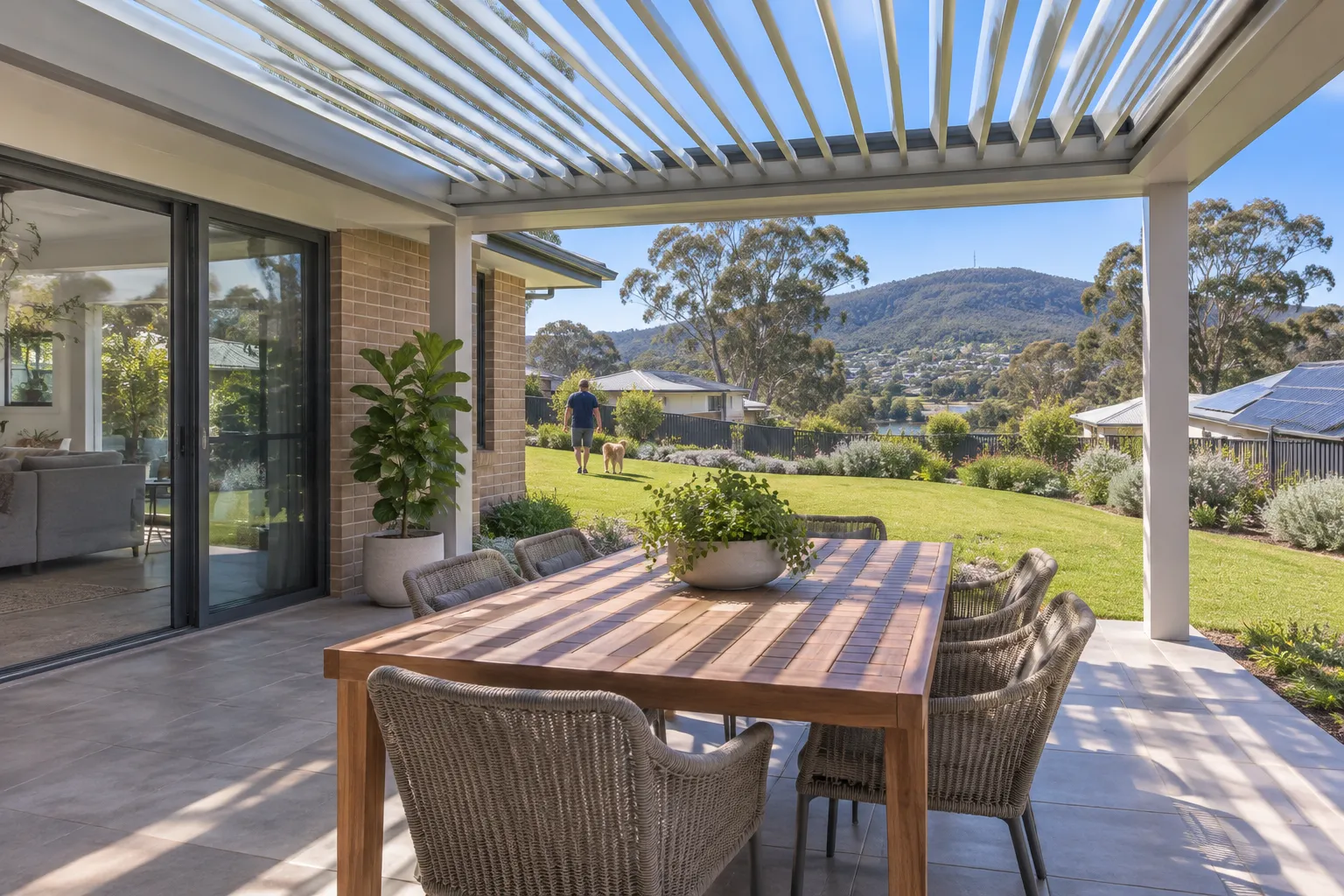
A DIY louvred pergola kit includes an aluminium or steel frame with a roof of adjustable blades you tilt to let in sun, give shade or close against rain, plus gutters built into the frame. Kits are sold in Australia in manual and motorised versions. They're one of the more demanding pergola kits to install, because the frame must be perfectly square and level for the blades to seal, and motorised kits must be wired by a licensed electrician. For pergola styles and costs, see our main deck and pergola builders page.
How does a louvred pergola work?
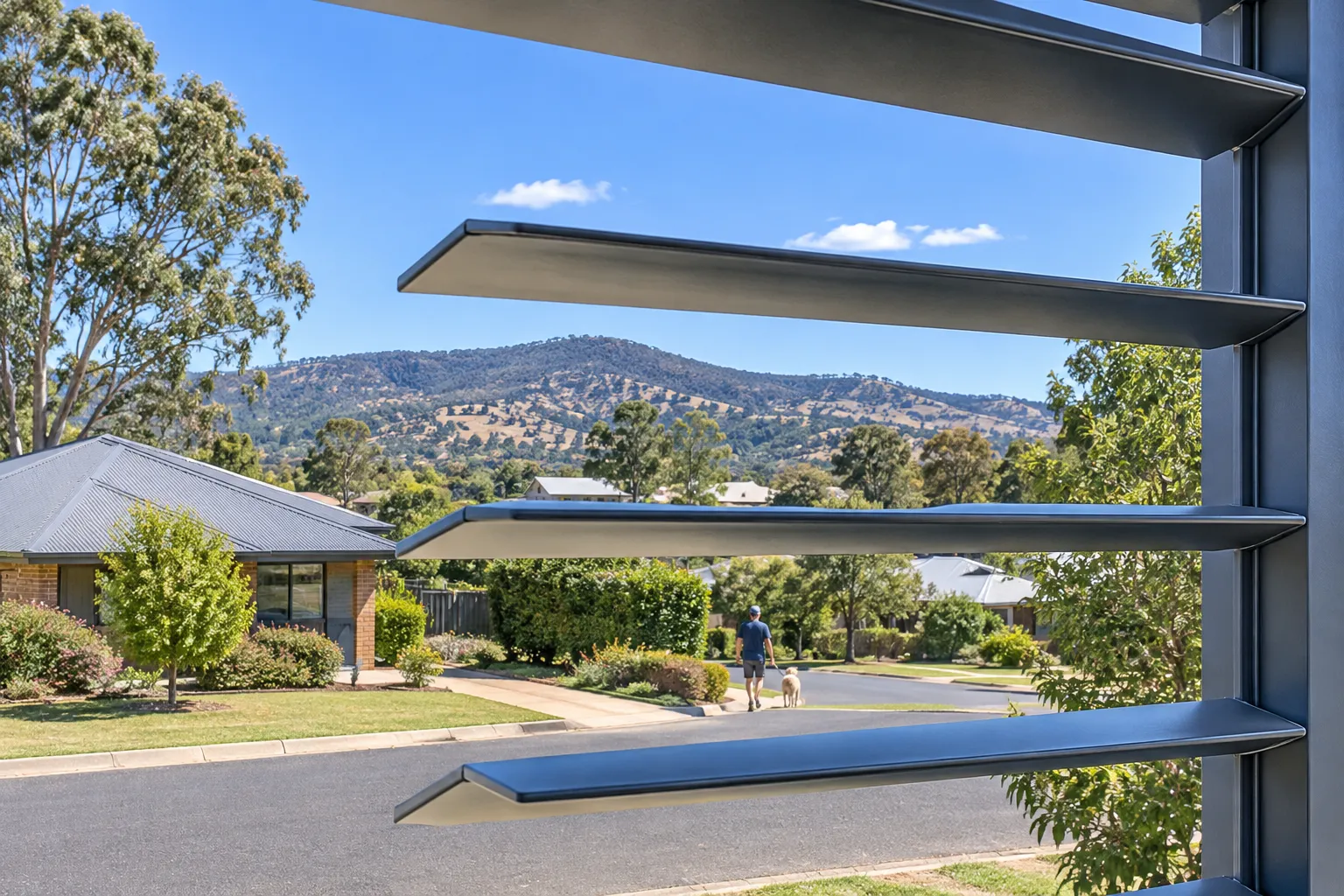
A louvred pergola has a roof made of aluminium blades on pivots. Turned flat and closed, they form a roof that sheds rain into gutters inside the frame. Tilted, they let in filtered light and air. Fully open, they let in sun. Manual kits use a crank or lever. Motorised kits use a motor and a remote, and some add rain sensors that close the blades automatically.
| Type | How it moves | Extras |
|---|---|---|
| Manual | Crank or lever | Simpler, cheaper |
| Motorised | Motor and remote | Needs power and an electrician |
| Motorised with sensors | Closes in rain or wind | More parts, more setup |
What does a louvred pergola kit include?
Most kits include the posts, beams, blades, pivots, internal gutters, downpipes through the posts, fixings and instructions, and motorised kits add the motor, controls and sometimes sensors. Footings, concrete, delivery to the backyard, electrical work and approval are usually not included. Check the list before comparing prices.
Can you install a louvred pergola yourself?
You can if you're confident with footings, precise levelling and working at height, and you have help, because the beams and blades are awkward. The frame must be square and level so the blades close and drain properly. Motorised kits must be wired by a licensed electrician. In NSW, paid residential building work over $5,000 must be done by a licensed builder.
The hardest parts:
- Footings set exactly to the kit's layout and level.
- Squaring the frame so the blades seal.
- Drainage through the internal gutters to stormwater.
- Electrical for motorised kits, which must be done by a licensed electrician.
Do louvred pergolas need approval?
Often, yes. Because closed louvres form a roof, a louvred pergola attached to the house in Victoria is generally treated like a roofed structure, and the VBA says verandahs need a building permit. In NSW, a louvred pergola can be exempt if it meets every standard for size, height, setbacks and location, but larger ones often need approval. Check before you buy.
See pergola approval.
How do louvred pergolas handle Albury's weather?
Louvred roofs suit Albury well: open in winter to let the sun in, angled in summer for shade and airflow. In heavy rain, closed blades shed water into the internal gutters, which must be kept clear and connected to stormwater. In strong wind or hail, blades are usually closed. Check the kit's wind rating suits your site.
Louvred pergola kit or a builder?
A builder is often the better choice for louvred pergolas, especially motorised or attached ones, because precision matters and mistakes are hard to fix. A kit installed yourself saves labour if you're skilled. Many builders will install a louvred kit you've chosen, or supply their own system. Ask for both options in a quote.
See pergola cost and choosing a pergola builder.
How do you build a Colorbond pergola as a DIY kit?
A DIY Colorbond pergola kit is simpler than a louvred one: posts and beams, rafters or purlins, Colorbond roof sheets, flashings and gutters. You set out and pour footings, stand and brace the posts, fix the beams and roof frame, then the sheets and gutters with the right fall. See Colorbond pergolas for roof options.
Questions people ask
Are louvred pergola kits worth it?
For many owners, yes, because they give shade, sun and rain cover in one structure, which suits Albury's hot summers and cold winters. They cost more than fixed roofs and are harder to install. If you'll use the flexibility, they're worth considering. If you'd mostly keep them closed, a fixed insulated roof may suit better.
How long does a louvred pergola kit take to install?
A builder can often install a standard louvred kit in a few days once the footings have cured. A first-time DIY install usually takes longer, often several weekends, plus time for any electrical work and approval. Motorised kits add setup time. Allow for weather delays.
Do louvred pergolas leak?
When closed, a properly installed louvred roof sheds rain into its internal gutters and stays largely watertight, though small gaps can let a little water through in heavy rain. Leaks usually come from a frame that isn't level or square, blocked gutters, or a poor connection to the house. Correct installation and clear gutters prevent most of it.
Can a louvred pergola be freestanding?
Yes. Louvred pergolas can be freestanding, on four or more posts, or attached to the house. Freestanding ones avoid fixing to the house and suit pool areas and garden rooms. They need solid footings for wind uplift. Attached ones need a strong fixing and good flashing where they meet the house.
This guide is one of many on deck builder in Albury.
Where these facts come from
Updated