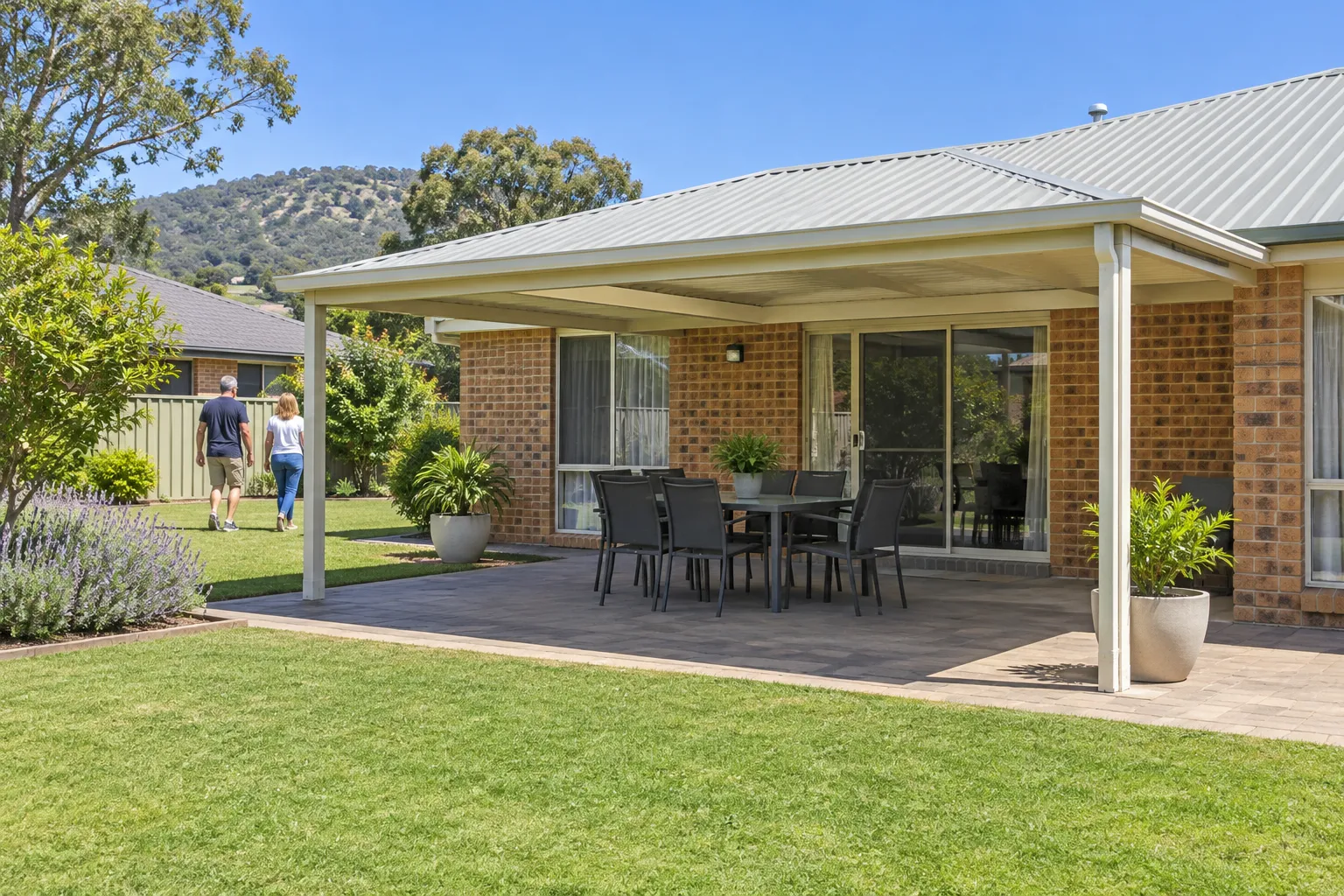
Colorbond pergola roofing gives full shade and solid rain and hail protection but makes the area underneath darker. Polycarbonate lets light through, keeping the outdoor space and nearby rooms bright, but can trap heat under clear sheets in summer and is less tough against hail. Published Victorian guides put a polycarbonate-roofed pergola at about $5,000 to $12,000 installed and a Colorbond one at about $6,000 to $15,000. In Albury's hot summers, a pale Colorbond or a tinted, heat-reflective polycarbonate suits most backyards. For styles and kits, see our main deck and pergola builders page.
How do Colorbond and polycarbonate compare?
The core trade-off is light versus shade. Colorbond is opaque steel, so it blocks the sun completely and handles hail and debris well. Polycarbonate is a clear, tinted or opal plastic sheet that lets light through, so the space feels brighter, but it can let heat through too and may mark or crack in heavy hail, depending on the product.
| Colorbond | Polycarbonate | |
|---|---|---|
| Light underneath | Low | Bright |
| Shade | Full | Partial to good (tinted) |
| Heat | Cooler under pale colours | Can get warm under clear sheets |
| Rain noise | Louder unless insulated | Moderate |
| Hail | Tough | Depends on the product |
| Guide cost (installed pergola) | $6,000 to $15,000 | $5,000 to $12,000 |
Which is cooler in summer?
A pale Colorbond roof is usually cooler underneath than clear polycarbonate, because it blocks the sun. Clear polycarbonate can create a warm, greenhouse-like space in January. Tinted, opal or heat-reflective polycarbonate sheets cut much of that heat while still letting in light. Insulated panels are the coolest of all. For west- and north-facing Albury pergolas, heat should guide the choice.
Which keeps the house brighter?
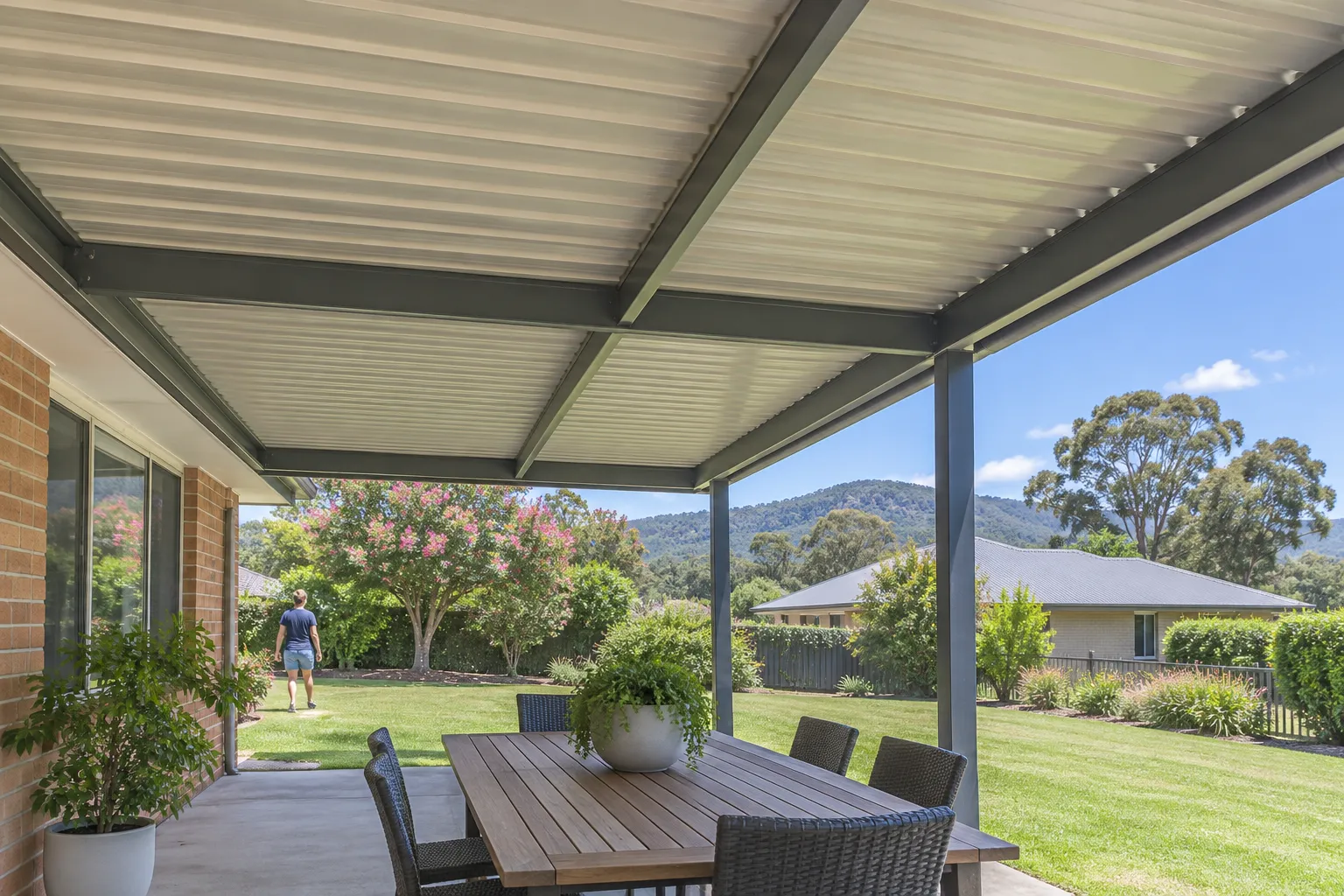
Polycarbonate, clearly. A solid roof over living-room or kitchen windows can make the inside of the house noticeably darker, especially in winter. A polycarbonate roof, or polycarbonate panels set into a Colorbond roof near the house, keeps natural light coming in. Many Albury homes use a mix: polycarbonate near the windows, Colorbond further out.
Which handles hail and weather better?
Colorbond steel is very tough against hail, falling branches and strong wind when properly installed. Polycarbonate varies a lot by product: thicker, better-quality sheets resist hail well, while cheaper thin sheets can crack or mark. Both need the right fixings and roof fall to stay watertight. Check the sheet maker's hail and warranty information.
Which lasts longer?
Colorbond roofing generally lasts a long time with little upkeep, and the colour fades slowly. Polycarbonate sheets can yellow, cloud or become brittle over time, depending on their UV protection, so quality matters. Both need gutters cleaned and fixings checked. Look at the sheet's warranty as a guide to how long the maker expects it to last.
Can you mix Colorbond and polycarbonate?
Yes, and it's common. A Colorbond roof with a strip of polycarbonate near the house keeps the windows bright, while the rest of the pergola gets solid shade. Some patio and pergola systems are designed for mixed sheets. The sheet profiles need to match so the roof stays watertight.
See Colorbond pergolas and insulated roof patio.
Do roofs change the approval rules?
In Victoria, adding any solid roof, Colorbond or polycarbonate, to a pergola attached to the house generally means it's treated like a verandah and needs a building permit, according to the VBA. In NSW, a roofed pergola can still be exempt if it meets every standard. See pergola approval.
Questions people ask
Is polycarbonate or Colorbond better for a pergola?
It depends on what you want. Choose Colorbond for full shade, toughness against hail and a cooler space under a pale colour. Choose polycarbonate to keep the area and nearby rooms bright. In Albury, a tinted or heat-reflective polycarbonate, or a mix of both, often gives the best balance of light and comfort.
Does a polycarbonate pergola roof get hot?
Clear polycarbonate can make the space underneath warm on hot days, because it lets sunlight through. Tinted, opal and heat-reflective sheets reduce that heat a lot while still letting in light. For a hot, west-facing pergola, choose a heat-reducing sheet or a solid roof.
Is Colorbond noisy in the rain?
Plain Colorbond sheet can be noisy in heavy rain and hail. Insulated panels, which have an insulating core between two steel skins, are much quieter and cooler. If the pergola is right outside a bedroom or living room, an insulated roof is worth considering.
How long does a polycarbonate roof last?
It depends on the quality of the sheet and its UV protection. Good sheets are designed to last many years and carry long warranties, while cheaper ones can yellow, cloud or become brittle sooner in strong sun. Check the warranty and the sheet's UV rating before buying.
The rest of our guides start from deck builder across Albury.
Where these facts come from
- Published installed pergola prices from Australian cost guides covering Victoria and South Australia, checked November 2026
- Victorian Building Authority, landscaping and outdoor structures
Updated