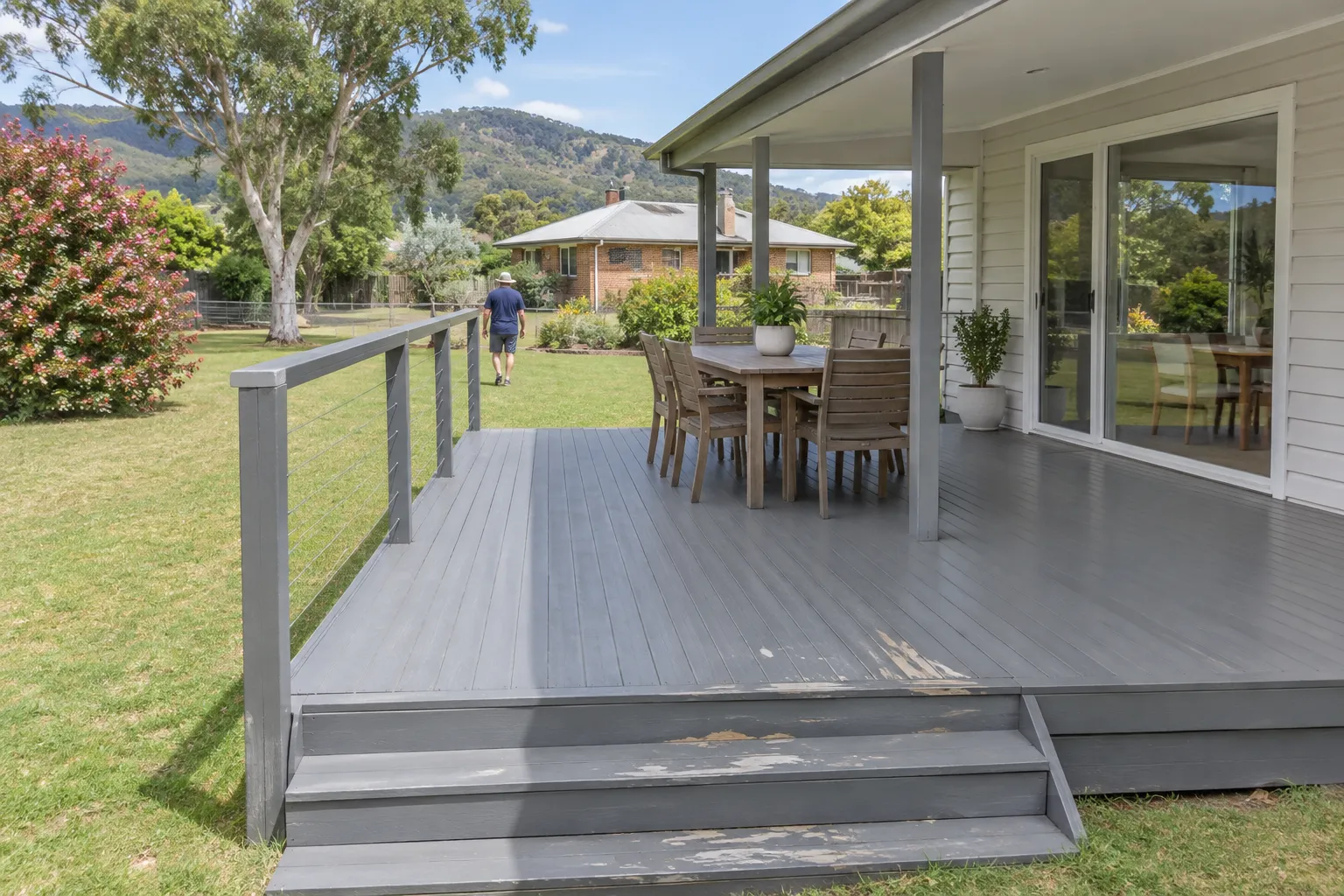
You can paint decking timber, but for most decks around Albury it isn't the best finish. Deck floors take heavy wear, water and sun, so paint tends to crack and peel, and stripping it later is the most expensive kind of deck restoration. Oils and stains soak in and are easier to recoat. Paint suits some situations: treated pine where you want a solid colour, balustrades and fascias, or matching a house. For finishes in general, see our main deck oiling, staining and restoration page.
Is it a good idea to paint a deck?
Usually not for the floor. Paint forms a film on the surface, and on a deck floor foot traffic wears it through, water gets under cracks, and it peels in patches. Recoating means sanding or stripping back. Oils and semi-transparent stains wear evenly and recoat with a clean. Painting balustrades, posts and fascias is more practical, because they take less wear.
| Paint | Oil or semi-transparent stain | |
|---|---|---|
| Colour | Solid, any colour | Tinted, grain shows |
| Wear on floor | Wears through, peels | Fades evenly |
| Water | Can trap water if cracked | Lets timber breathe |
| Recoating | Sand or strip | Clean and recoat |
| Restoration cost later | Highest | Lower |
Which timbers can be painted?
Treated pine takes paint reasonably well once it's dry, because it's pale, absorbent and low in natural oils. Dense, oily hardwoods like merbau are harder to paint: their oils and tannin can stop paint bonding and can bleed through. If you paint a hardwood, use a primer made for tannin-rich or oily timber, and follow the paint maker's advice.
Can you paint merbau decking?
You can, but it's usually not recommended. Merbau is dense and rich in oils and tannin, which can stop paint sticking and bleed through as brown stains. Painted merbau also loses the look most people choose it for. A merbau-tinted oil or a darker stain gives colour without those problems. See oiling a merbau deck.
How do you paint a deck properly?
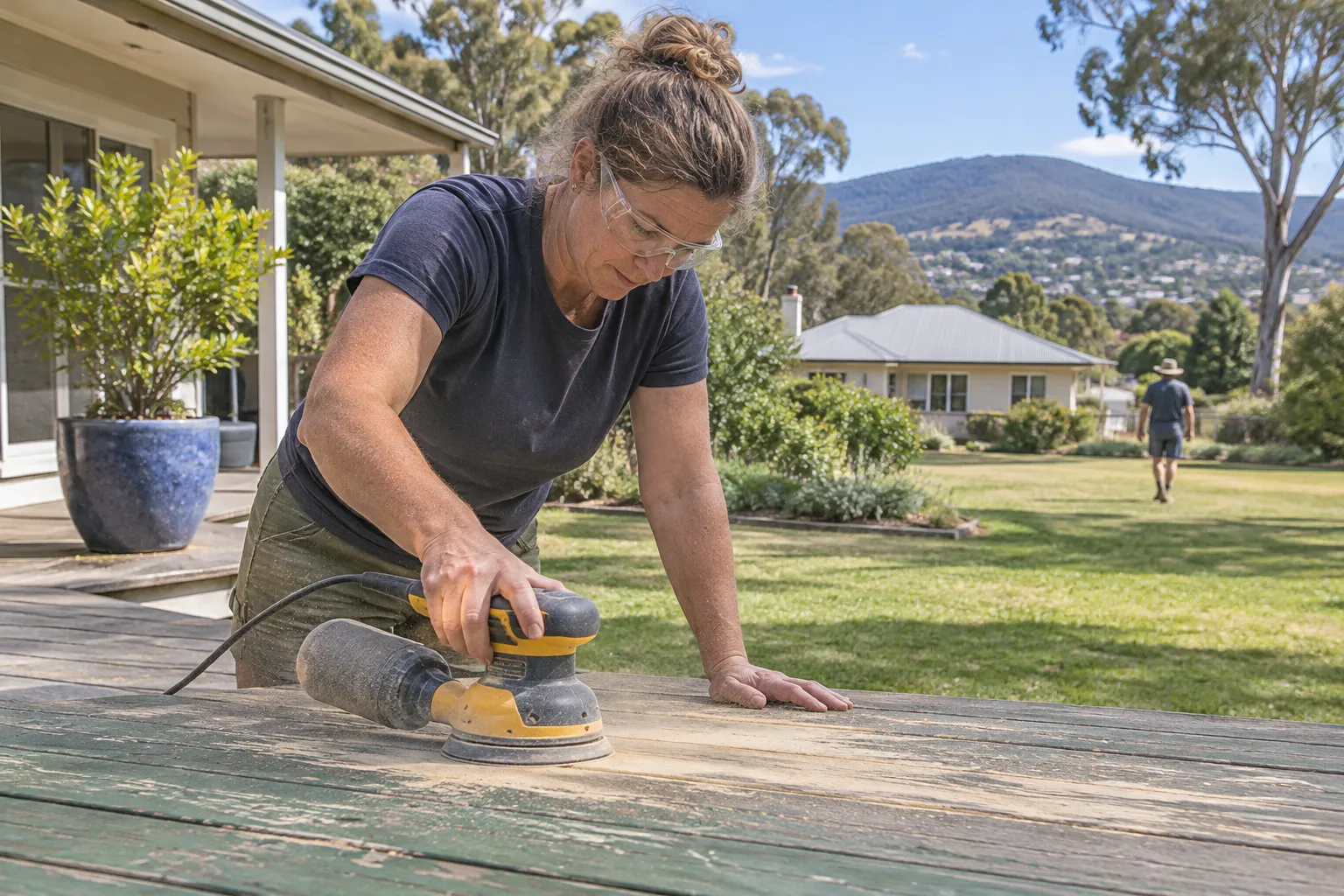
If you do paint, preparation is everything. Make sure the timber is dry, clean it thoroughly, sand to a sound, slightly rough surface, remove all dust, and seal any cut ends. Prime with a primer that suits the timber, then apply thin coats of a paint made for decks and floors, which handles foot traffic better than ordinary exterior paint.
The steps:
- Dry timber, checked with the water test.
- Clean, rinse and dry.
- Sand to a sound surface and remove dust.
- Prime with the right primer for the timber.
- Two thin coats of deck or floor paint.
- Cure fully before furniture and foot traffic.
Why does deck paint peel?
Deck paint peels when water gets under the film, when it's applied over dirt, damp timber, old oil or loose fibres, when it's too thick, or when the timber's natural oils stop it bonding. Floors also flex and get walked on, which cracks the film. Once peeling starts, water gets in behind it and it spreads.
What should you do with an already painted deck?
If it's in good condition, keep it painted: clean, lightly sand, and recoat with a compatible deck paint before it fails. If it's peeling badly, you can either strip and sand it back to bare timber and switch to oil, or prepare it properly and repaint. Stripping is hard work. Published NSW guides put stripping a failed coating at about $55 to $95 a square metre professionally.
See painting deck cost and deck restoration cost.
What are the alternatives to painting a deck?
If you want colour without paint, a tinted decking oil or a semi-transparent stain adds colour while letting the timber breathe, and recoats easily. A solid deck stain gives near-paint colour coverage with better wear than ordinary paint. If you want low upkeep and a solid colour, composite decking needs no paint or oil at all.
See deck oil vs stain and composite decking.
Questions people ask
What kind of paint do you use on a timber deck?
Use a paint made for decks and floors, which is designed to handle foot traffic, water and sun better than ordinary exterior wall paint. Use a primer suited to the timber first, especially on tannin-rich or oily hardwoods. Follow the paint maker's directions for preparation and drying.
How long does paint last on a deck?
Paint on a deck floor typically needs touching up or recoating sooner than on walls, because of foot traffic and weather. How long depends on preparation, the paint, sun and use. High-traffic paths wear first. Recoating before it peels badly avoids the cost of stripping it back.
Can you paint over a stained deck?
Sometimes, if the stain is sound and compatible, after thorough cleaning and sanding to give the paint something to grip. Painting over a penetrating oil often fails, because paint can't bond to an oily surface. Check the paint maker's advice, and test a small area first.
Is it cheaper to paint or oil a deck?
Upfront, they're similar, because preparation is the same. Over time, oil is usually cheaper, because recoating is a quick clean and re-oil, while failed paint needs sanding or stripping. Published guides put stripping a failed coating at about $55 to $95 a square metre, compared with about $15 to $35 for a clean and re-oil.
The rest of our guides start from deck builder in Albury.
Where these facts come from
- Published deck painting and restoration prices from Australian cost guides, checked November 2026
Updated