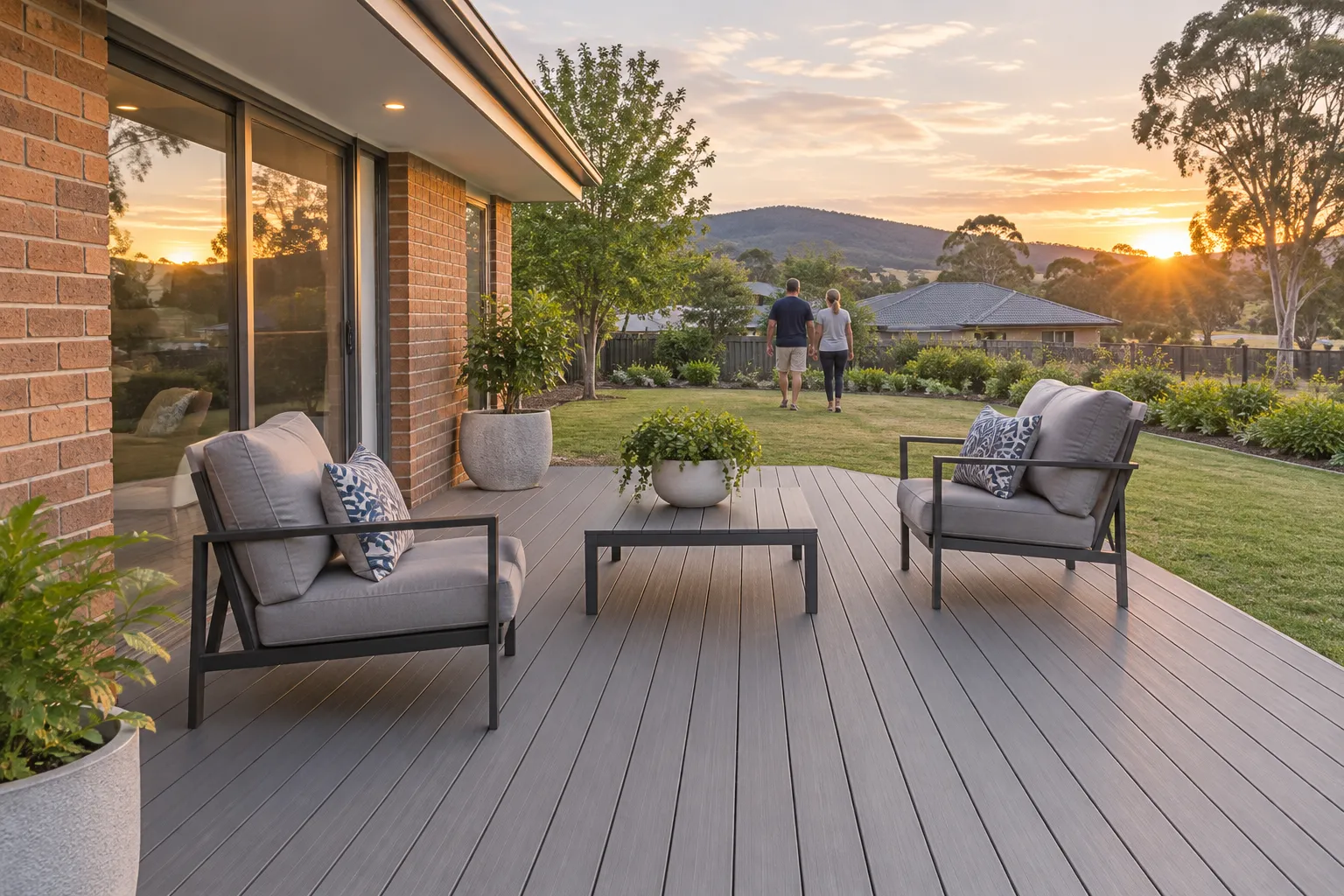
Wood plastic composite, or WPC, decking is made from wood fibre or flour mixed with plastic, usually polyethylene or polypropylene, plus pigments and additives, heated and formed into boards. It's the material behind most composite decking sold in Australia. WPC doesn't rot and resists termites, and it doesn't need oiling, but it moves with heat and needs the right frame and gaps. Trex, for example, says its Australian boards are made from 95% recycled material, including reclaimed wood and plastic film. For brands, costs and how WPC compares with timber decks, see our main composite decking page.
What is wood plastic composite made of?
WPC is typically a blend of wood fibre and thermoplastic, with small amounts of pigments, UV stabilisers and bonding agents. The wood gives it weight, stiffness and a timber-like texture. The plastic binds the fibres and keeps water out. The exact ratio varies by brand and range, and many brands now use a high share of recycled plastic and reclaimed wood.
The two main build types:
- Solid core. Dense all the way through. Heavier, stiffer and often more expensive.
- Hollow core. Has channels running along the board. Lighter and cheaper, but needs care with ends and fixings.
Either type may be capped with a protective outer shell. See capped composite decking for why that matters.
How does WPC compare with PVC decking?
WPC contains wood fibre and plastic. PVC decking is made entirely of plastic, with no wood. PVC is usually lighter and handles constant wet very well, while WPC is heavier and feels more like timber underfoot. Both can get hot in direct sun. WPC is far more common in Australia, and most composite ranges you'll see in Albury quotes are WPC.
| WPC composite | PVC decking | |
|---|---|---|
| Material | Wood fibre plus plastic | All plastic |
| Feel | Closer to timber | Lighter, more synthetic |
| Water | Resists well, especially capped | Very resistant |
| Heat | Dark colours get hot | Can also get hot |
| Availability locally | Common | Less common |
How does WPC handle Albury's climate?
WPC handles wet winters and frost well, because it doesn't absorb water the way timber does, so it doesn't rot, cup or split. Its weak point is heat: it expands in hot weather and shrinks in cold, more than timber does along its length, so end gaps matter. Dark boards also get hot underfoot on summer afternoons.
How builders plan for Albury's temperature swing:
- End gaps set to the maker's guide for the board length and the temperature on install day.
- Joists closer together, often 300 to 450 millimetres depending on the board.
- Ventilation under the deck so moisture can't build up.
- Light colours or shade on west-facing decks.
Is WPC decking better than timber?
WPC is better than timber for low upkeep: no oiling, no sanding, no rot, and it doesn't splinter. Timber is better if you want a natural look and feel, a cooler surface in pale species, the ability to sand out damage, or a listed bushfire-resisting timber. Installed costs overlap, at about $280 to $700 a square metre for standard composite and about $300 to $600 for hardwood in published guides.
For the full side by side, see hardwood decking vs composite.
Is wood plastic composite decking eco-friendly?
WPC can be a good use of recycled materials, since many boards are made from recycled plastic and reclaimed wood that would otherwise be waste. It also avoids the oils and stains timber needs. On the other hand, it's a plastic product, and recycling old boards at the end of their life is harder than with timber. Ask each brand about recycled content and take-back.
What are the downsides of WPC decking?
The main downsides of WPC are heat in dark colours, higher upfront cost than treated pine, movement with temperature, and the fact that deep scratches can't be sanded out. Cheap uncapped WPC can also fade, stain and grow mould. Most of these are managed by choosing a capped board in a sensible colour and installing it to the maker's instructions.
How is WPC decking installed?
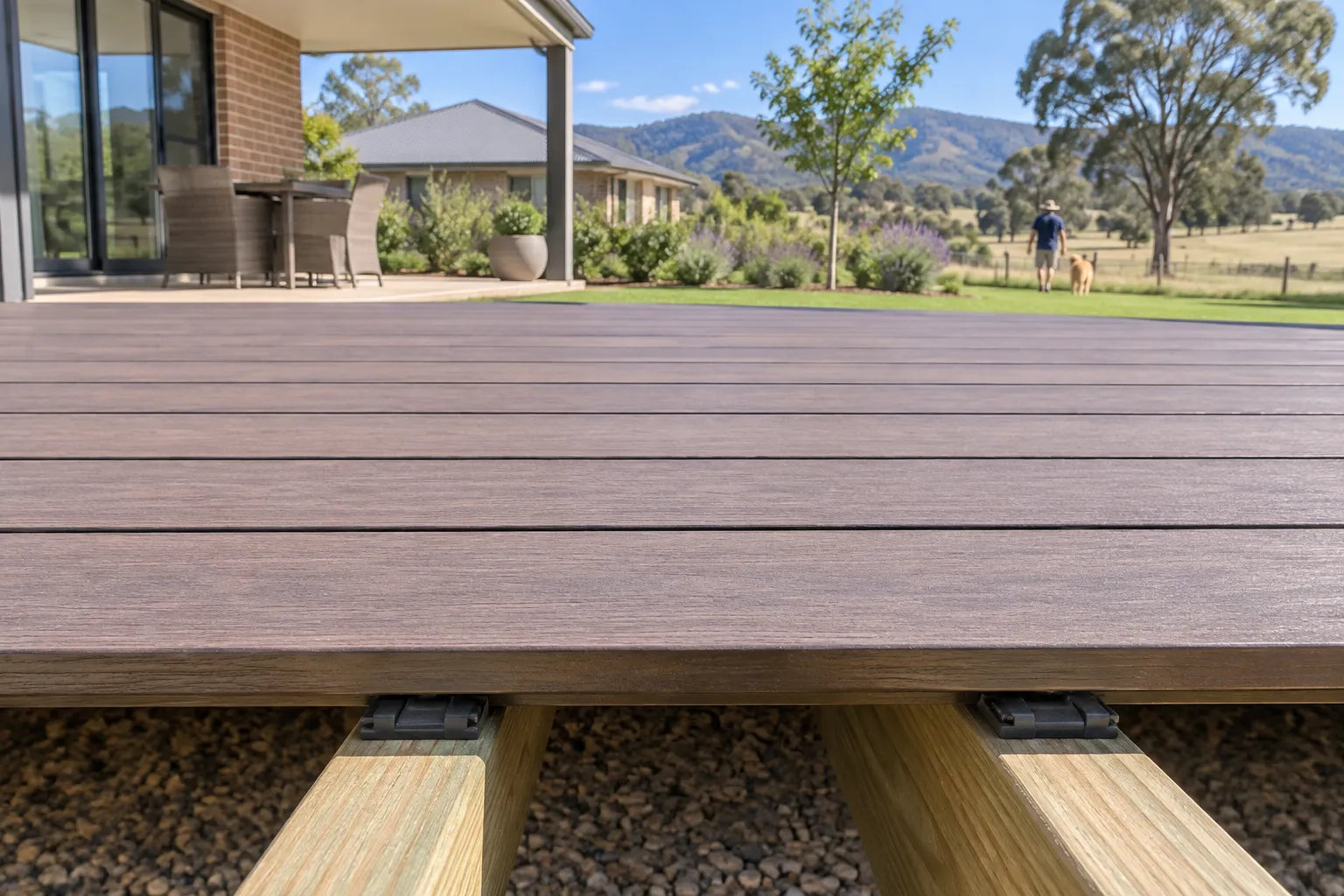
WPC boards go on a frame of treated pine or steel joists, fixed with hidden clips that hold each board and set the gap between them. The maker specifies joist spacing, end gaps, ventilation and fixings, and following them keeps the warranty valid. Boards shouldn't be screwed through the face unless the maker allows it. See composite decking installation.
Questions people ask
How long does WPC decking last?
Good capped WPC boards often carry warranties of 20 years or more, and a well-built deck can last that long or longer. The frame underneath decides a lot: a timber frame that rots will fail before the boards. A steel frame or well-protected treated pine frame helps. See how long a composite deck lasts.
Is WPC the same as composite decking?
Mostly, yes. When people in Australia say composite decking, they usually mean wood plastic composite. A few products use different mixes, such as mineral-based composites or all-PVC boards, which are sometimes also called composite. Check the product sheet to see what a board is made of.
Does WPC decking need sealing?
No. WPC boards aren't sealed or oiled like timber. They need regular washing to stop dirt, leaves and mould building up on the surface. Some brands sell specific cleaners, and their care guide sets out what's safe to use. See cleaning composite decking for how to look after it.
Can WPC decking be used around a pool?
Yes, WPC is popular around pools because it doesn't splinter or rot. Choose a capped board the maker recommends for wet areas, and a light colour so it stays cooler underfoot. Keep the pool barrier rules in mind when planning steps and edges. See composite pool decking for more.
For the wider picture, start with deck builder in Albury.
Where these facts come from
- Trex Australia, sustainable decking products
- Published installed composite decking prices from four Australian cost guides, checked November 2026
Updated