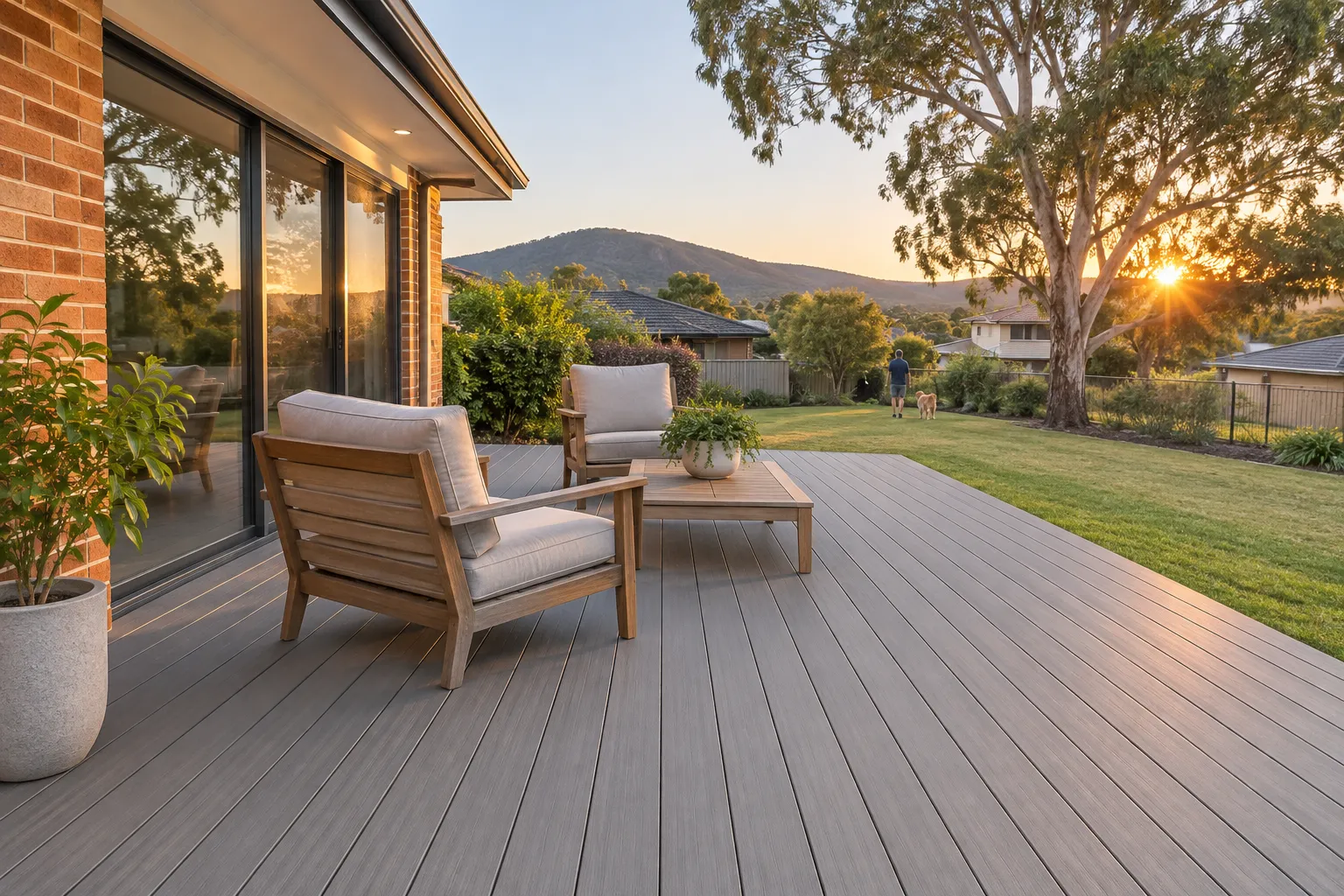
Millboard decking is a composite board made without wood. Millboard describes its material as a polyurethane resin reinforced with mineral stone, finished with its own protective surface coating, which it calls a resin mineral composite. Each board is moulded from real timber, so the surface shows natural-looking grain, knots and weathering. It doesn't rot or need oiling, and it's priced at the premium end of decking. For composite decking in general, including costs and how it compares with timber, see our main composite decking page. This page is about Millboard.
What is Millboard made of?
According to Millboard, its boards are made from a polyurethane resin reinforced with mineral stone and surfaced with a protective coating. Retailers sometimes describe the reinforcement as mineral fibres. There's no wood fibre in the board, which is the main difference from most composite decking, which is wood-plastic composite. The look comes from moulds taken from real timber.
What that means in practice:
- No wood to absorb water, so it won't swell or rot.
- A moulded surface with detailed grain and texture.
- Different behaviour from WPC, so its own installation guide applies.
For how wood-plastic boards work, see wood plastic composite decking.
How does Millboard compare with wood-plastic composite?
Millboard's main differences are its resin and mineral core, its moulded timber texture and its price. Wood-plastic composites like Trex and ModWood use wood fibre and plastic. Both types resist rot, need no oiling and suit low-maintenance decks. Millboard is aimed at people who want a very natural timber look, and it generally costs more.
| Millboard | Wood-plastic composite | |
|---|---|---|
| Core | Resin reinforced with mineral | Wood fibre and plastic |
| Look | Moulded from real timber | Embossed grain |
| Wood content | None | Usually substantial |
| Price | Premium | Standard to premium |
See best composite decking for a broader comparison.
Does Millboard suit Albury's climate?
Millboard is used in a range of climates and handles wet winters well, because there's no wood to rot or swell. Like any outdoor surface, colour and heat need thought: darker boards in full summer sun get hot, so lighter tones or shade suit a west-facing Albury deck. Check the product sheet for temperature guidance and its tested bushfire rating if your block is mapped.
On bush fire prone land, such as parts of Thurgoona and Splitters Creek, the board must suit the block's bushfire attack level. Ask the supplier for the test results for the exact range.
How much does a Millboard deck cost?
Millboard generally sits at the premium end of decking prices. Published Australian guides put premium composite decks at about $450 to $900 a square metre installed, compared with about $280 to $700 for standard composite. The exact price depends on the range, frame, height and site. A builder's written quote gives the real figure.
See composite decking cost for totals by size.
How is Millboard installed?
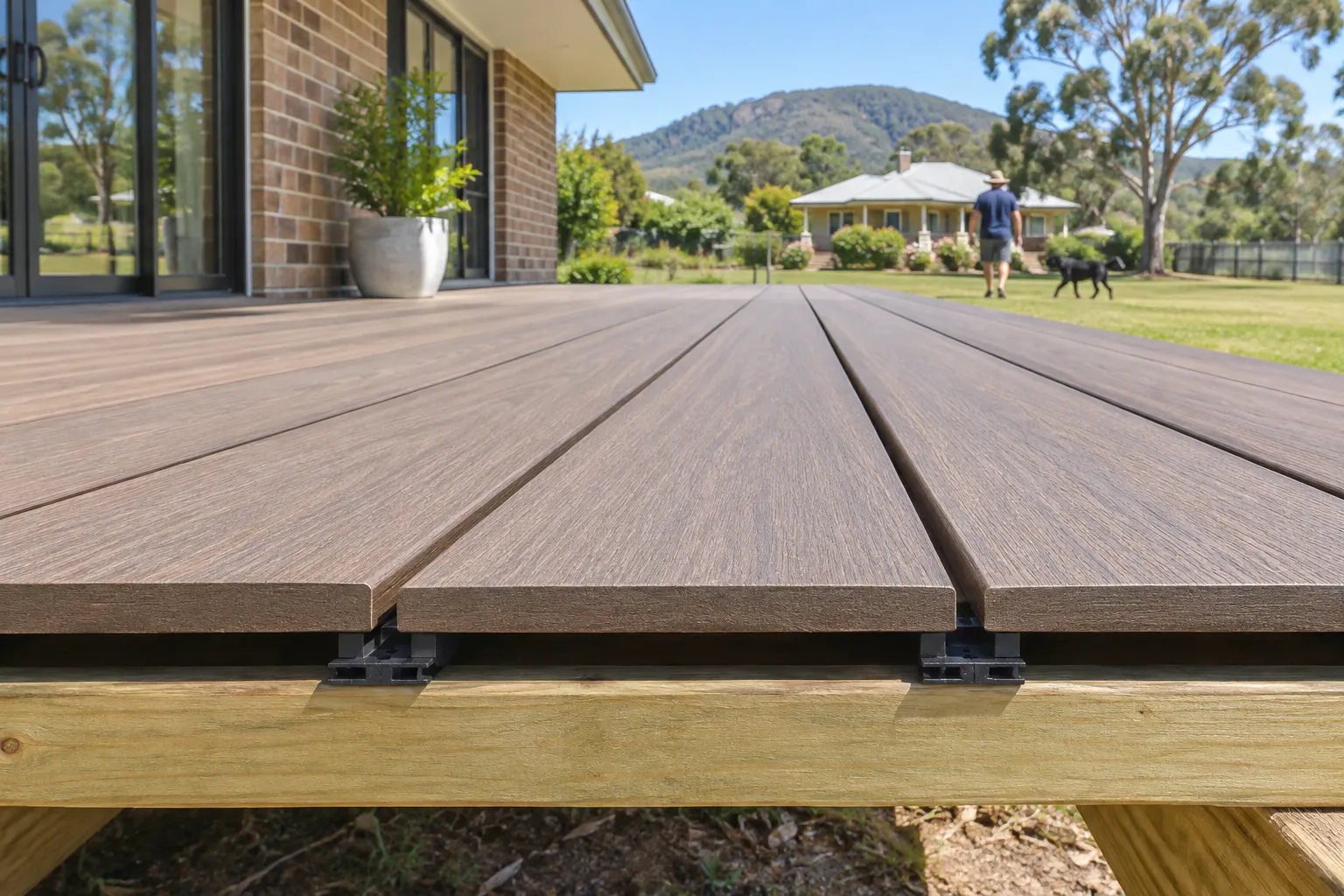
Millboard has its own installation guide, covering joist spacing, fixings and gaps. Because the material differs from wood-plastic composite, its fixing method and spacing may differ from other brands, so a builder should follow Millboard's instructions exactly. It goes on a treated pine or steel frame. Following the guide keeps the warranty valid.
For the general method, see composite decking installation.
How do you look after Millboard decking?
Millboard needs no oil or stain. Sweep it often, wash it with soapy water and a soft brush, and keep the gaps clear so water drains. Follow the maker's care guide before using any stronger cleaner. Like all decks, shady and damp areas need washing more often to keep algae away. See cleaning composite decking.
What are the downsides of Millboard?
The main downsides of Millboard are cost and availability. It's at the premium end of decking prices, and there are fewer local stockists than for the biggest wood-plastic brands, so colours and lengths may need ordering in. Like all composites, it can't be sanded back like timber if it's deeply damaged, and dark colours get warm in sun.
Questions people ask
Is Millboard real wood?
No. Millboard contains no wood fibre. It's made from a polyurethane resin reinforced with mineral stone, according to the maker, and moulded from real timber so the surface looks like weathered wood. That's why it won't rot, swell or splinter like timber, and why it doesn't need oiling.
Does Millboard get hot in the sun?
All decking surfaces warm up in strong sun, and darker colours get hotter. Choose a lighter Millboard colour, or plan shade from a pergola or patio roof, for decks that face west or north in Albury. Test samples in afternoon sun before choosing if heat is a concern.
Is Millboard worth the extra cost?
For people who want the most natural-looking low-maintenance board, many think so. Its moulded timber texture is its main selling point. If budget matters more than looks, a capped wood-plastic composite costs less and still needs no oiling. Compare samples of both in person before deciding.
Can Millboard go on a timber frame?
Yes. Millboard is laid on treated pine or steel frames, at the joist spacing and with the fixings in its installation guide. A straight, level, ventilated frame matters for any composite. A steel frame lasts longer than timber and stays straighter. See steel deck framing.
For the wider picture, start with deck builder in Albury.
Where these facts come from
- Millboard, what is Millboard decking made from
- Published installed composite decking prices from four Australian cost guides, checked November 2026
Updated