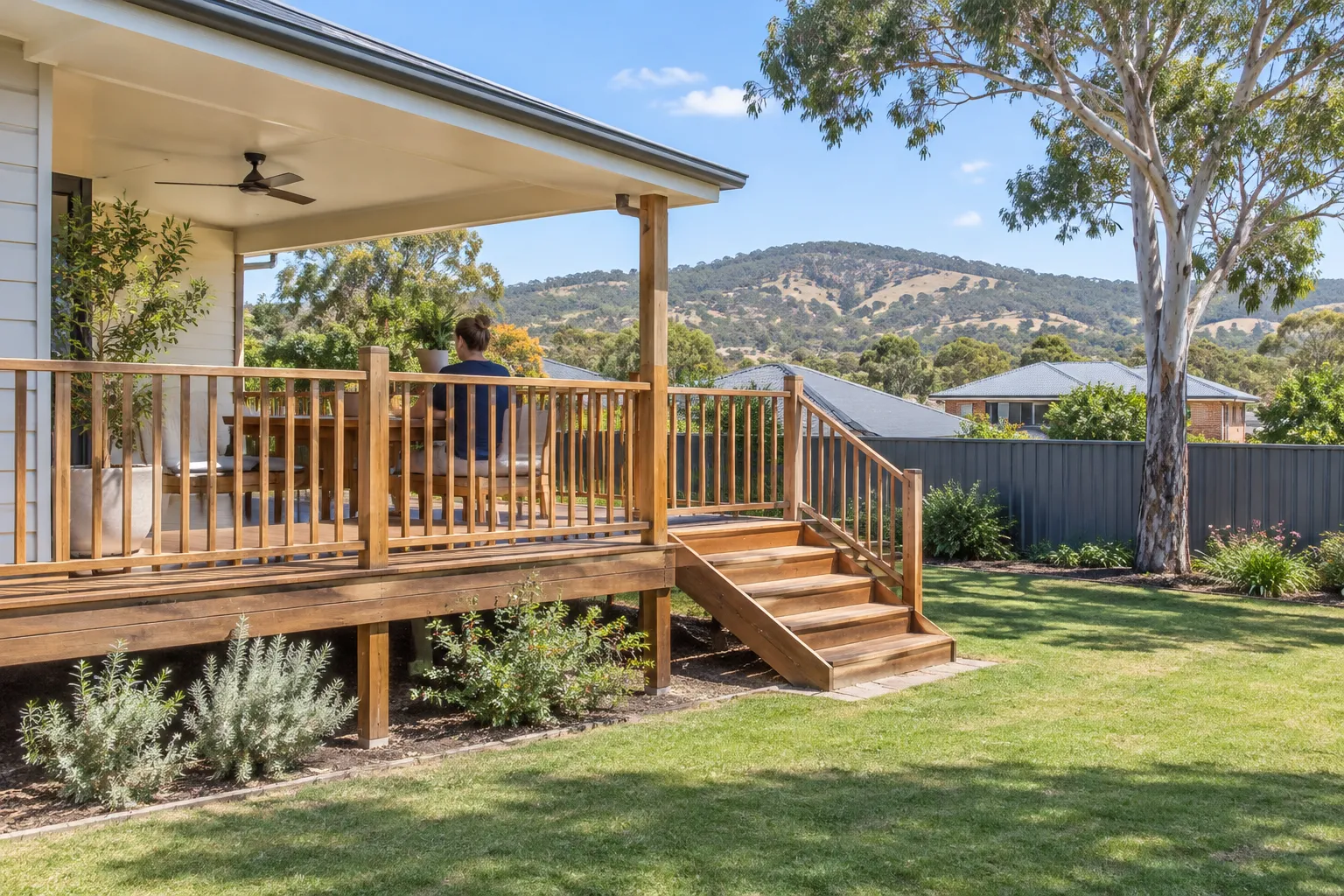
A timber decking balustrade is the barrier around the edge of a raised deck. Under the National Construction Code, a deck needs a balustrade where it's more than 1 metre above the ground below. The balustrade must be at least 1 metre high above the deck floor, with no openings wider than 125 millimetres. On decks more than 4 metres above the ground, the code also limits climbable horizontal rails. Timber balustrades look good and suit most homes, but need to be built strong enough and kept maintained. For costs and how a quote works, see our Albury deck builder home page.
When does a deck need a balustrade?
A deck needs a balustrade where the floor is more than 1 metre above the surface below, at any point along its edge, under the National Construction Code. That includes sloping blocks, where one end may be low and the other high. Stairs can need balustrades too. Below 1 metre, a balustrade isn't required by the code but can still be a good idea, especially with children.
| Fall height | Balustrade required? |
|---|---|
| 1 m or less | Not required by the code |
| More than 1 m | Yes |
| More than 4 m | Yes, and climbable rails are limited |
How high must a deck balustrade be?
A deck balustrade must be at least 1 metre high, measured from the deck floor, where a balustrade is required. On stairs, the height is measured differently, from the line of the stair nosings, and a lower height applies there. The balustrade must also be strong enough to resist people leaning or falling against it.
How big can the gaps in a balustrade be?
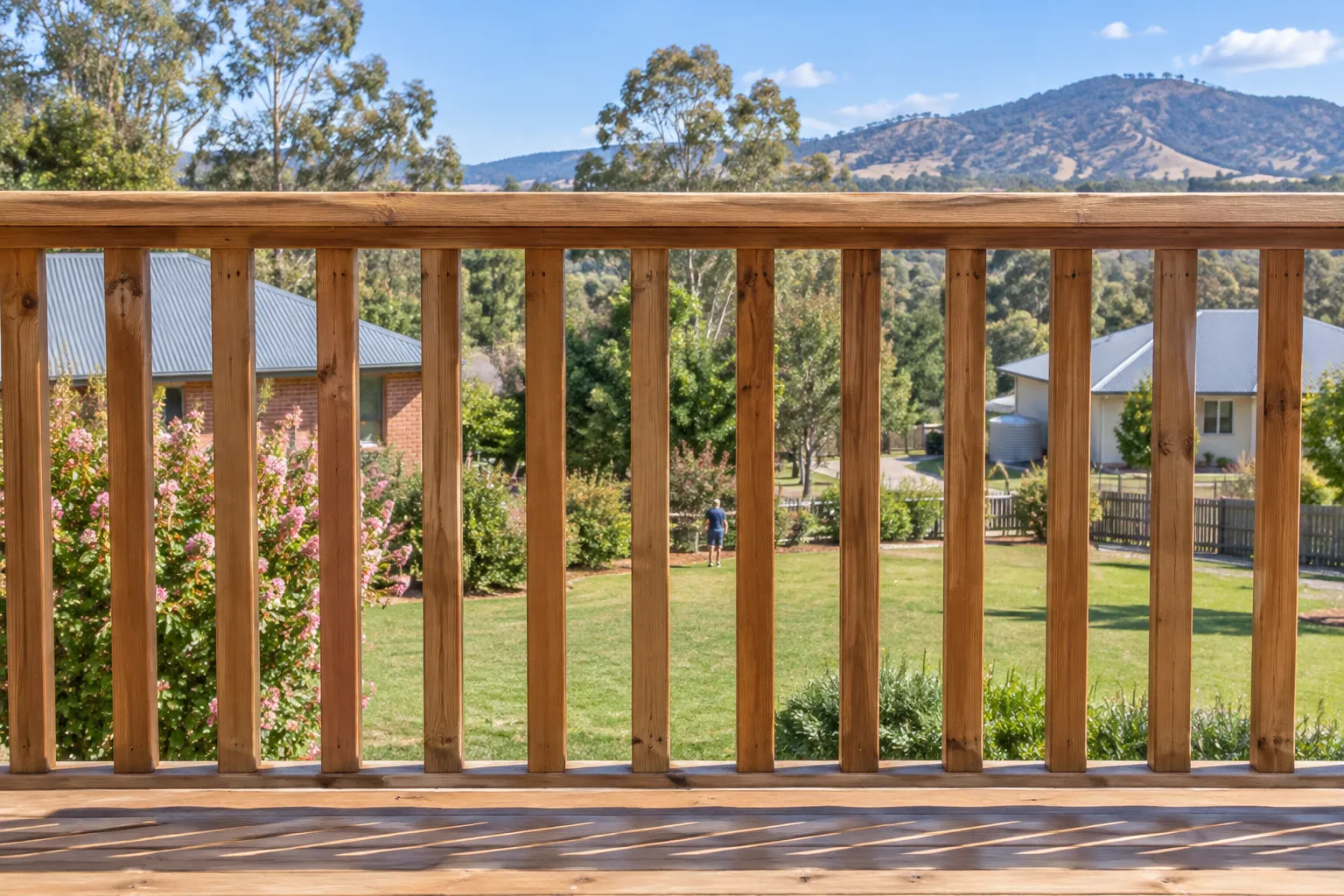
Openings in a balustrade must not allow a 125 millimetre sphere to pass through, so the gaps between balusters, and under the bottom rail, must be 125 millimetres or less. That stops small children slipping through. Timber can shrink and move, so build gaps with some margin rather than right at the limit.
What are the rules for high decks?
On decks more than 4 metres above the ground below, the National Construction Code also restricts horizontal or near-horizontal elements between about 150 and 760 millimetres above the floor that a child could climb, like a ladder. That usually means using vertical balusters, glass or other non-climbable designs on high decks, rather than horizontal timber rails or wires.
Which timber suits a deck balustrade?
Durable hardwoods like spotted gum, merbau and blackbutt make strong, long-lasting balustrades and handrails, and they're rated class 1 above ground. Treated pine is cheaper but softer and needs regular oiling or painting. Many balustrades mix materials: timber posts and handrail with steel, glass or aluminium infill. Steel posts with a timber handrail are popular for strength.
Common designs:
- Timber posts and vertical timber balusters.
- Timber posts and handrail with stainless wire on low decks (check climbability rules on high ones).
- Timber frame with glass panels for views.
- Steel or aluminium posts with a timber handrail.
Does a balustrade affect council approval?
It can. In NSW, a deck needing a balustrade is often more than 1 metre above the ground, which already takes it outside the exempt development standards for decks, so it usually needs approval. In Victoria, most decks need a building permit anyway. The building surveyor or certifier checks the balustrade against the code.
See do you need council approval for a deck and elevated deck ideas.
How do you look after a timber balustrade?
Check posts and fixings every year for movement, rot at the base, and loose balusters, especially on older decks. Oil or paint the timber regularly, because handrails take a lot of sun and hands. Replace any damaged balusters straight away, because a broken one can leave a gap wider than 125 millimetres. Pay special attention where posts meet the deck.
Questions people ask
Do I need a balustrade on a deck under 1 metre?
The National Construction Code doesn't require a balustrade where the deck is 1 metre or less above the ground below. You can still add one for safety, especially with young children, or for looks. If any part of the deck edge is more than 1 metre high, such as on a sloping block, a balustrade is needed there.
What is the maximum gap in a deck balustrade?
Openings must not let a 125 millimetre sphere pass through, so the gaps between balusters and below the bottom rail should be 125 millimetres or less. Timber can shrink, so build with a margin. On decks more than 4 metres high, climbable horizontal elements are also restricted.
Can I use horizontal rails on a deck balustrade?
On lower decks, horizontal rails or wires are often used, as long as the gaps meet the 125 millimetre limit. On decks more than 4 metres above the ground, the code restricts horizontal elements a child could climb between about 150 and 760 millimetres above the floor, so vertical balusters or glass are usually used instead.
How much does a timber deck balustrade cost?
It depends on the design, timber, length and height. Balustrades are often priced per lineal metre, and glass or stainless wire infill usually costs more than timber balusters. Published decking guides note balustrades as a significant extra on raised decks. A builder's written quote gives the real price for your deck.
Where these facts come from
Updated