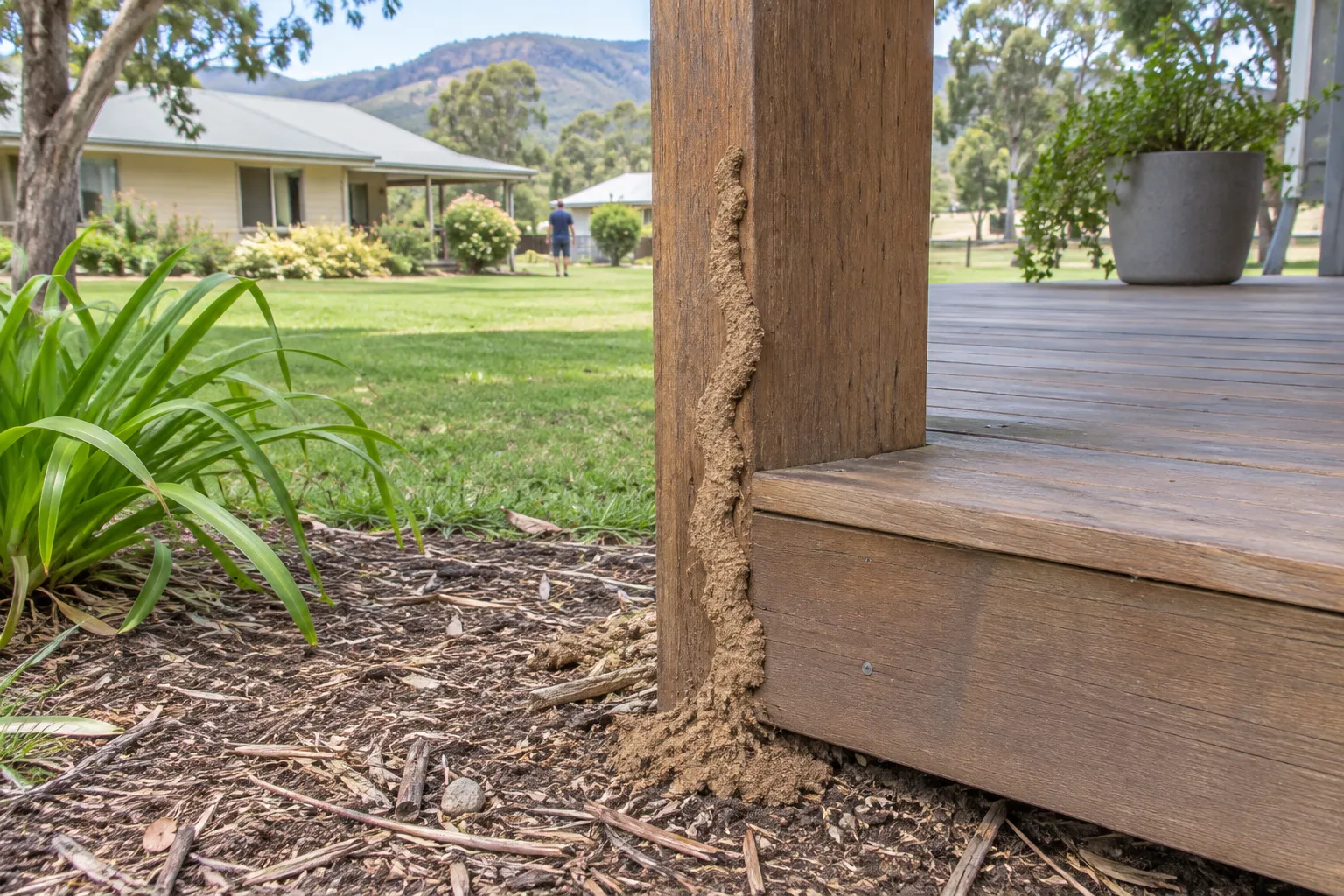
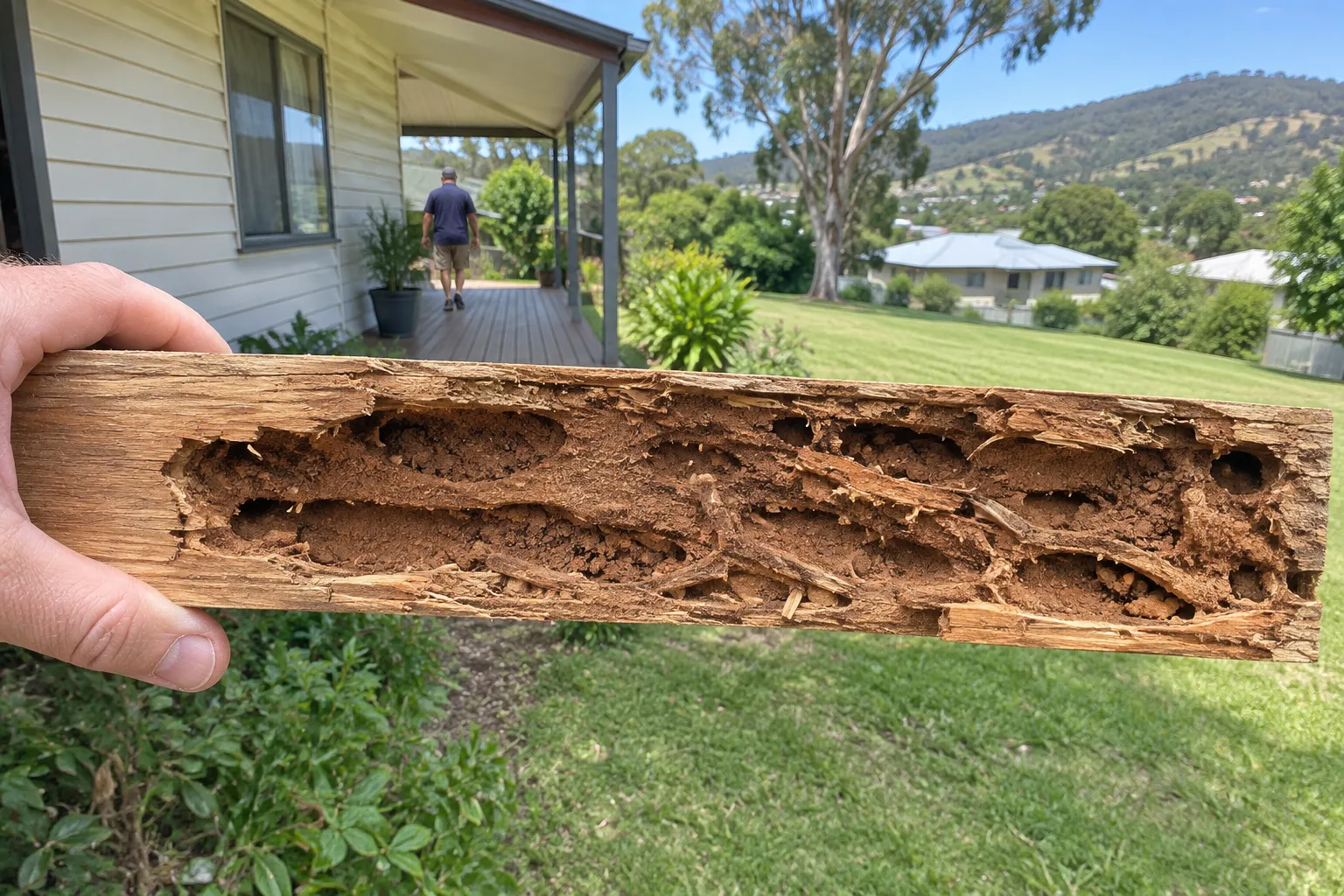
The main signs of termites in a deck are mud tubes running up posts, footings or walls, timber that sounds hollow or crumbles when pressed, soft or damaged joists and bearers, and galleries of tunnels packed with soil inside the timber. Subterranean termites work from the ground up and avoid light, so damage is often hidden inside timber and under the deck. If you find live termites, don't disturb them, and have a pest management technician inspect them, because treatment must be done by a licensed pest manager. For decks, repairs and building advice, see our Albury deck builder home page.
What do termite signs look like on a deck?
Termite activity on a deck usually shows as mud tubes, damaged timber or both. Mud tubes are pencil-width tunnels of soil that termites build to travel from the ground into timber out of the light. Damaged timber may look fine on the surface but feel soft, sound hollow when tapped, or break open to show tunnels with soil inside.
| Sign | Where to look |
|---|---|
| Mud tubes | Up posts, footings, piers, walls near the deck |
| Hollow-sounding timber | Joists, bearers, posts, steps |
| Soft or crumbling timber | Ends of joists, where timber meets soil |
| Soil-packed tunnels | Inside damaged timber |
| Sagging or bouncy boards | Above damaged joists |
Why do decks attract termites?
Decks are often close to the ground, shaded, damp and made of timber, which is what subterranean termites look for. Timber in contact with soil, stacked timber or garden beds against the deck, leaking taps, and poor airflow underneath all make it easier for termites to get in. A deck attached to the house can also give termites a hidden path into the house frame.
Risk factors to fix:
- Timber touching soil. Posts and frames should sit on brackets or concrete.
- Garden beds and mulch piled against the deck or house.
- Leaking taps or poor drainage keeping the ground damp.
- No airflow under low decks.
- Untreated or wrongly treated timber close to the ground.
How do you check a deck for termites?
Look under and around the deck with a torch. Check posts, footings and nearby walls for mud tubes. Tap joists, bearers and posts with a screwdriver handle and listen for hollow sounds, then press the screwdriver into suspect spots. Look for soft timber, especially near the ground. Don't break open mud tubes or damaged timber if you see live termites.
What should you do if you find termites?
Don't disturb them. Breaking open tubes or spraying them can drive termites elsewhere and make them harder to treat. Have a pest management technician inspect the deck and the house. Termite treatment and barriers must be carried out by a licensed pest manager in NSW and Victoria. Once they're dealt with, a builder can repair or replace damaged timber.
How do you repair termite damage in a deck?
Once termites have been treated, damaged boards, joists, bearers or posts are cut out and replaced. Badly damaged frames may need replacing completely. It's a good time to remove the conditions that attracted them: lift timber off the soil, improve drainage and airflow, and consider a galvanised steel frame, which termites can't eat.
See repair or replace deck boards and steel deck framing.
How do you protect a deck from termites?
Keep timber off the soil, use the right treated timber for each part (H4 or H5 near or in the ground), keep garden beds and mulch away from the deck and house, fix leaks and drainage, keep the area under the deck open and dry, and have regular termite inspections. Termite management systems for buildings are covered by the Australian standard AS 3660.
| Measure | Why it helps |
|---|---|
| Timber on brackets or concrete | Removes direct soil contact |
| H4 or H5 near the ground | Treated against termites |
| Clear, dry space under the deck | Termites prefer damp, hidden spots |
| Regular inspections | Find activity early |
| Steel frame | Nothing for termites to eat in the frame |
Questions people ask
What does termite damage look like on decking?
Termite damage often looks fine on the surface but the timber underneath is hollowed out along the grain, with tunnels packed with soil or a muddy material. Affected timber feels soft, sounds hollow when tapped, and may crumble. Mud tubes on posts or walls nearby are another common sign.
Do termites eat treated pine?
Treated pine is designed to resist termites, and higher hazard classes such as H4 and H5 give more protection for timber near or in the ground. Cut ends that haven't been sealed expose untreated timber inside, which termites can attack. Using the right class and sealing cut ends both matter.
Can termites get into a house through a deck?
Yes. A timber deck attached to the house can give termites a hidden route from the ground into the house frame, especially if the deck is low, damp and close to the soil. Regular termite inspections of the house and deck, and keeping the area under the deck open and dry, reduce the risk.
Do composite decks get termites?
Composite boards aren't attractive to termites, but the frame underneath is often timber, which can be. A composite deck on a treated pine frame still needs the frame protected and inspected. A composite deck on a galvanised steel frame gives termites nothing to eat in the deck itself.
Where these facts come from
Updated