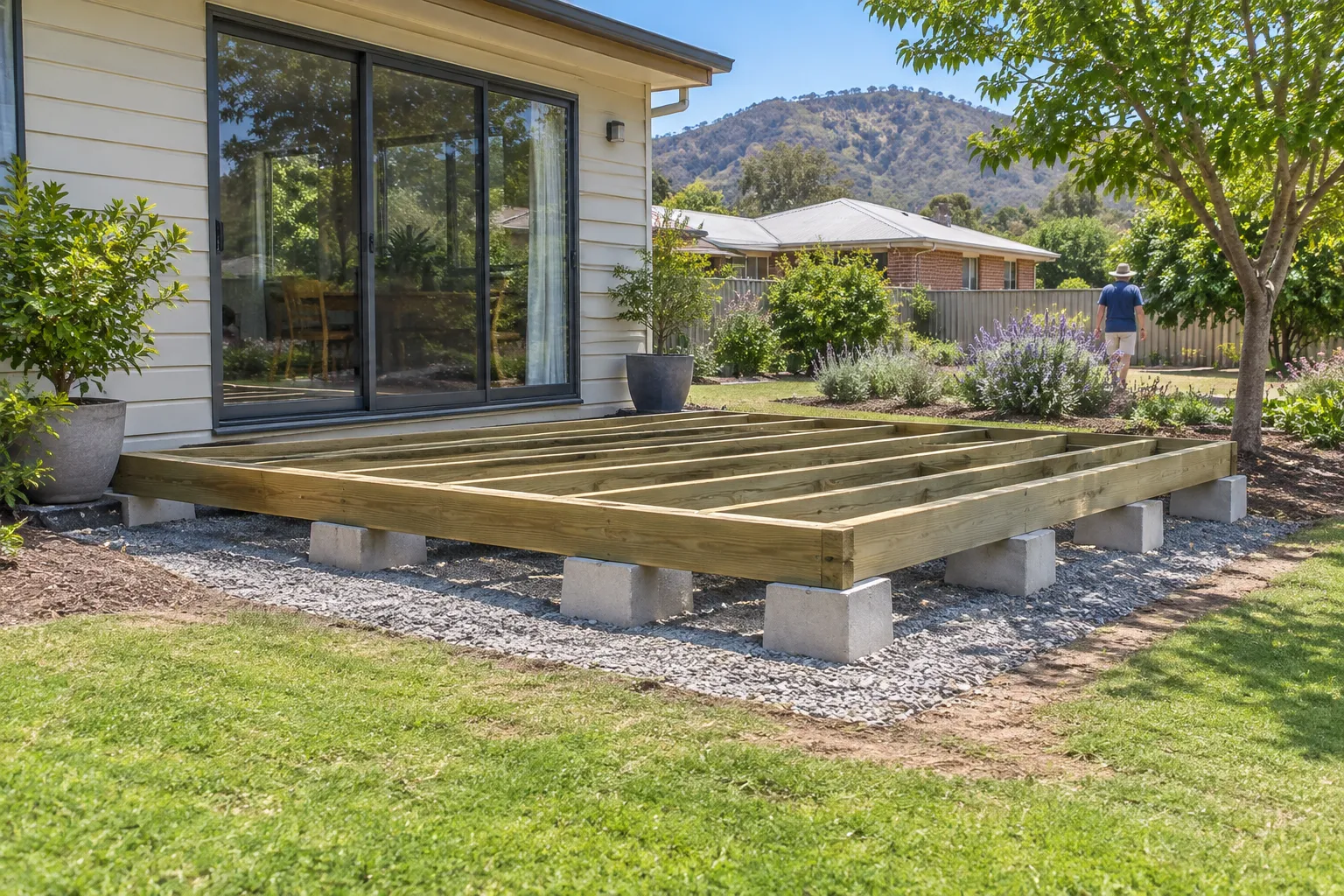
Deck blocks are precast concrete blocks that sit on the ground and hold the bearers or joists of a low, freestanding deck, instead of dug concrete footings. Adjustable pedestals do a similar job on hard, flat surfaces like concrete. They suit small, low decks on firm, level, well-drained ground, and they don't suit raised decks, decks attached to the house, or soft, reactive soils. For framing and footings in general, see our main deck framing, joists and footings page.
How do deck blocks work?
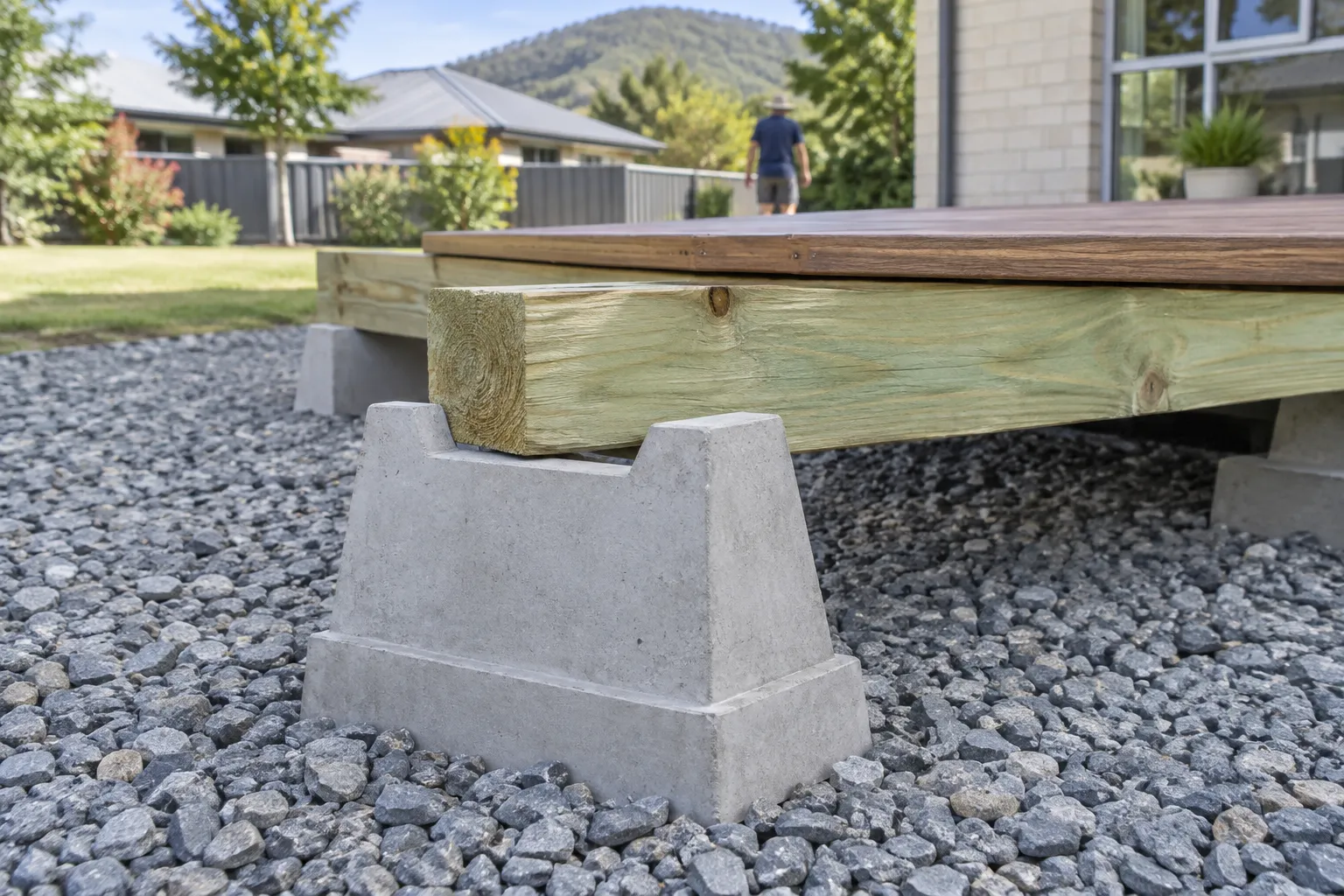
A deck block has a flat base that sits on prepared ground and a slot or seat on top that holds a bearer, joist or post. The deck's weight spreads through the block into the ground. Because they sit on the surface rather than below it, they're quick to set out and don't need concrete pouring, which is why they're popular for small DIY decks.
| Deck blocks | Dug concrete footings | |
|---|---|---|
| Install | Sit on prepared ground | Dug and poured |
| Speed | Fast | Slower, concrete cures |
| Height | Very low decks | Any height |
| Ground | Firm, level, stable | Most ground |
| Wind and uplift | Limited resistance | Anchored |
Which decks suit deck blocks?
Deck blocks suit small, freestanding, very low decks, such as a platform in the garden or a low deck at the end of a yard, on firm, level ground that drains well. They don't suit raised decks, decks attached to the house, decks with balustrades or roofs, or decks on soft or reactive soil. Anything that needs approval usually needs engineered footings.
Are deck blocks a good idea on Albury's clay soils?
Often not on their own. Much of the Albury and Wodonga area has reactive clay that swells when wet and shrinks when dry, so blocks sitting on the surface can move and leave the deck out of level. Removing topsoil and laying a compacted crushed rock base under each block helps, but on very reactive soils dug footings are usually more reliable.
How do you level a deck on blocks?
Prepare the ground first: remove grass and topsoil under each block, lay and compact a base of crushed rock, and set each block level to a string line. Small adjustments can be made with packers designed for decks. Adjustable pedestals have a screw thread for fine levelling, which is useful on concrete slabs. Check levels again once the frame is on.
What about adjustable deck pedestals?
Adjustable pedestals are plastic or metal supports with a screw-adjustable height, made for decks over hard, flat surfaces such as concrete slabs, rooftops and old paving. They let you build a level deck over a slightly uneven surface and leave space for water to drain underneath. They aren't meant for soft ground. Many composite systems are designed to work with them.
How low can a deck on blocks be?
Very low, which is the point, but the frame still needs clearance and airflow. WoodSolutions says decks with less than 400 millimetres of clearance should use H4 treated pine or a class 1 hardwood for the frame, because it stays damp longer. Make sure water can drain away from under the deck, and that the sides allow some airflow.
For building the frame, see how to build a deck at ground level and decking frame timber.
Do decks on blocks need approval?
The type of footing doesn't change the approval rules. In NSW, a deck can be exempt development if it meets every state standard, including a floor no more than 1 metre above ground and staying within size and location limits. In Victoria, most decks need a building permit. Approved decks usually need footings designed for the site.
Questions people ask
Are deck blocks as good as footings?
For a small, very low, freestanding deck on firm, stable, well-drained ground, deck blocks can work well. For raised decks, decks attached to the house, or decks on reactive or soft soils, dug concrete footings are more reliable, because they resist movement and wind uplift better.
How far apart should deck blocks be?
Block spacing depends on the bearer or joist size and the span tables for the timber, just like footings. Bigger timber spans further, so needs fewer blocks. Place blocks under the bearers at the spacing the span table allows for your timber size and grade, and add blocks where boards join.
Can you build a deck on blocks over grass?
You shouldn't put blocks straight on grass. Remove the grass and topsoil under each block, lay a compacted crushed rock base, and ideally lay weed mat under the whole deck. Grass and topsoil compress and hold water, so blocks on them sink and the timber stays damp.
Do deck blocks move?
They can, especially on reactive clay, soft ground or poorly prepared bases. Wet and dry seasons make clay swell and shrink, which can lift or drop blocks. A compacted rock base and good drainage reduce movement. On ground that moves a lot, dug footings are the better choice.
This guide is one of many on Border Outdoor Living.
Where these facts come from
Updated